Inside GM’s $900M EV Battery Bet: A High-Stakes Gamble
▼ Summary
– GM plans to cut EV costs using LMR batteries and a new $900 million Battery Cell Development Center, potentially reducing the Chevrolet Silverado EV’s price by $6,000.
– GM uses internal and external AI models to speed up vehicle development, as detailed in an upcoming article.
– SpaceX’s IPO registration includes a risk factor about issuing significant equity for future transactions, potentially affecting Tesla shareholders.
– Carvana has an option to invest in Jeff Bezos-backed EV startup Slate Auto, hinting at a deeper partnership.
– The 2026 Subaru Solterra improves power to 233 hp, range to 288 miles, and adds a NACS charging port and 14-inch touchscreen, but lacks true one-pedal driving.
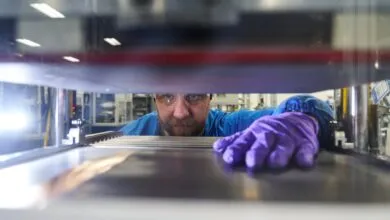
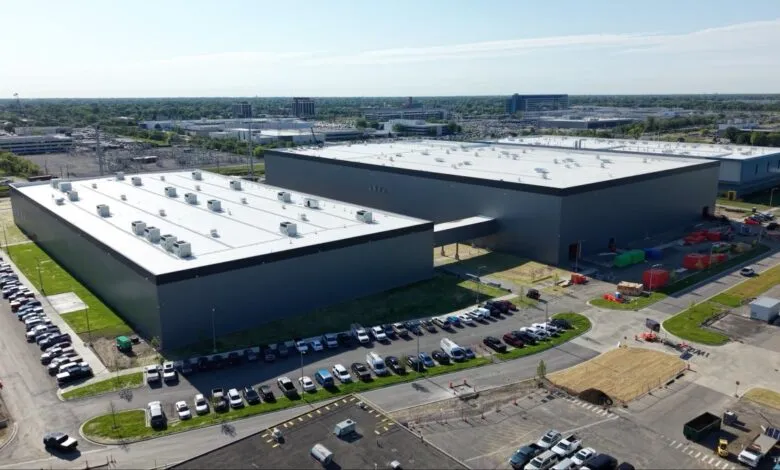
Senior reporter and resident battery expert Tim De Chant made the trek to General Motors’ sprawling Warren Technical Center outside Detroit to dig into the automaker’s strategy for slashing costs on its next wave of electric vehicles. The big takeaway? GM is placing a massive bet on LMR battery chemistry and a new Battery Cell Development Center that serves as the critical link between research and full-scale production.
Kurt Kelty, GM’s vice president of battery and sustainability, shared fresh specifics about the company’s $900 million investment and how this next-generation chemistry will preserve driving range while driving down costs. The Chevrolet Silverado EV, for example, could see a price cut of $6,000. The full story is available here.
Like nearly every major company these days, artificial intelligence makes an appearance in GM’s plans. But it plays far more than a supporting role. I recently sat down with Sterling Anderson, GM’s chief product officer, and Jason Fischer, executive director of virtual integration engineering, to discuss the internal shifts and how AI is being deployed across the business. That full article drops next week, but here’s a teaser: GM is leveraging a mix of outside AI models and in-house creations that can be applied across broad swaths of the company. The payoff? A faster vehicle development cycle. More details are coming soon, and I’ll recap it all in next week’s newsletter.
Speaking of last week, I wrote about the Ferrari Luce EV and argued that the widespread criticism doesn’t really matter. The response was fantastic. Thanks for the emails. The poll results, however, told a different story. When I asked whether readers loved, hated, or were indifferent to the Luce, about 44% landed on indifference. The remaining votes split evenly between love and hate.
The more I reflect on the Luce EV’s future, the more I suspect it may become a piece of rage-bait for the ultra-wealthy , a purchase driven by controversy, available only to those who can afford it and whom Ferrari deems worthy.
To get the Mobility newsletter in your inbox and join our polls, sign up here.
Deals!
The looming SpaceX IPO is shaping up to be the deal of the decade, especially for the bankers and CEO Elon Musk. But it could also have major consequences for Tesla shareholders.
During the IPO registration process, companies typically file numerous amendments before going public. SpaceX has already filed several. Eagle-eyed senior reporter Sean O’Kane spotted a new line in the S-1 document that carries significant weight: “We may issue a significant amount of equity in connection with future transactions.”
While SpaceX could use the expected $75 billion windfall to acquire a variety of companies, the most likely target is Tesla. That sentence, tucked into the risk factors, appears to be preparing future investors for the possibility of a major dilution event. Read the full story.
O’Kane also spotted another intriguing deal involving Carvana and Slate Auto, the electric vehicle startup backed by Jeff Bezos. According to documents obtained by TechCrunch, Carvana has secured an option to invest in Slate Auto. As O’Kane notes, this could signal a deeper partnership on the horizon.
Other notable deals:
- Layup Parts, a startup aiming to become the Amazon of composite parts, raised $42 million in a Series A led by dual-use venture fund Marlinspike, with participation from Cerberus Ventures, Pinegrove Venture Partners, and existing backers Founders Fund and Lux Capital.Notable reads and other tidbitsAvride CEO Dmitry Polishchuk shared some stats on LinkedIn about the autonomous vehicle startup. Since launching in Dallas in December, the company has completed 60,000 trips for Uber riders. Avride’s fleet, including test cars and Uber robotaxis, has driven more than 1.3 million miles, with a million of that racked up in the first five months of 2026.Lectric eBikes launched its third brand in six months, an initiative that has cost the company about $10 million. How is this seven-year-old company expanding while so many others have folded? I spoke with its co-founder to find out. Read the full story.Uber’s annual Lost & Found Index has become a quirky anthropological snapshot of its riders over the past decade. This year, the company also released a list of items left in robotaxis available through the Uber app. Some of those items are downright odd. It also got me thinking about how Uber is finding every possible way to push into and profit from the nascent autonomous vehicle industry. Case in point: Uber plans to put 500 data-collection vehicles on the road this year as part of its new AV Labs division.Waymo had two notable news items this week. One of its robotaxis was used in a burglary, and the case sheds light on how Waymo handles all that rider footage it collects. Also, the Alphabet-owned company announced a deal with B2U to use batteries from its retired all-electric robotaxis to support electricity grids in California and Texas.Woven Capital, Toyota’s growth fund, promoted Jarek Khoilian and Manas Punhani to principals. Reminder: Woven Capital launched its $800 million fund II in September 2025.One more thing …With Subaru rolling out new EVs, I figured it was time to revisit the original. I’m talking about the Solterra, born from a partnership between Toyota and Subaru to jointly develop a platform dedicated to battery electric vehicles.I spent a week with a pearl-white 2026 Subaru Solterra premium trim model starting at $38,495. Setting aside the fact that my friend’s Ring camera identified it as a mini golf cart, this EV does have something to offer. Yes, it’s basic. And no, it won’t launch off the line like a Tesla, Lucid, or Porsche Taycan. But it doesn’t need to.The headline: the Solterra has improved, and it really needed to.The 2026 model brings notable updates to power, range, and usability. The front and rear motors have been updated, along with a new controller that improves power distribution and control, producing an improved 233 horsepower (the XT trim pushes it to 388 hp). Like most other EVs, the Solterra now features an integrated NACS charging port, the system developed by Tesla. Range has improved to an EPA-estimated 288 miles, a significant jump considering Subaru increased battery capacity by only 2 kWh and still managed to add more than 50 miles of range. There’s also a preconditioning setting to prepare the battery for charging, which greatly improves charging time.Subaru also revamped the interior tech, adding a 14-inch touchscreen with Apple CarPlay and Android Auto and making wireless 15 W smartphone chargers standard.Subaru doesn’t offer true one-pedal driving in the Solterra, a standard feature among most EVs. Instead, the Solterra has paddles on the back of the steering wheel that let you increase regenerative braking if you want. But it won’t come to a complete stop like other popular EVs with one-pedal driving. While longtime EV owners might be turned off, this could appeal to buyers who want their EV to feel more like a traditional gas-powered car.