US Automakers Shift Focus From EVs to Energy
▼ Summary
– Ford announced a subsidiary called Ford Energy to sell battery energy storage systems (BESS) to utilities, industrial customers, and data centers, with first deliveries planned for late 2027.
– The announcement caused Ford’s stock price to jump 13 percent in a single day, its largest gain in years.
– Ford is shifting focus from EV batteries to battery storage after taking a $19.5 billion write-down on its EV programs, capitalizing on federal tax credits for commercial storage projects.
– Ford’s CEO Jim Farley described battery energy storage as a “high-margin opportunity,” contrasting with thin profit margins in carmaking, and the company will use its partnership with Chinese battery maker CATL.
– Other automakers, including GM and Stellantis, are also pivoting to energy storage by repurposing EV battery plants and forming partnerships with battery makers and recyclers.
US automakers have long been defined by the vehicles they produce, but a convergence of political shifts, market trends, and the AI boom is reshaping their identity. These companies are increasingly behaving like energy firms, and analysts believe this strategic pivot could offer a smoother path through the difficult electric vehicle transition. The key to success, however, remains the same technology that was once supposed to dominate their lineups: batteries.
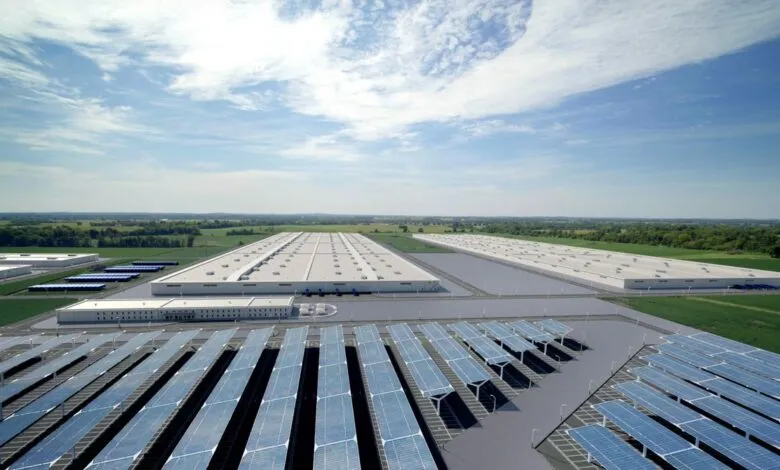
Ford made the most definitive move this week by announcing the creation of a new subsidiary, Ford Energy. This division will focus on battery energy storage systems (BESS) for utilities, industrial clients, and data centers, with first deliveries expected by late 2027. The company plans to repurpose unused production lines from a Kentucky plant originally intended for EV battery manufacturing. Investors responded enthusiastically, driving Ford’s stock up 13 percent in a single day,its biggest jump in years.
This marks a welcome shift for Ford, which took a staggering $19.5 billion write-down on its EV programs last year after canceling several current and next-generation models to refocus on hybrids. The move toward stationary storage capitalizes on continued federal support for commercial battery projects, even as GOP-led legislation last year eliminated similar incentives for EV sales. Crucially, tax credits for storage projects encourage manufacturers to eventually produce all-American batteries using domestic materials.
Ford CEO Jim Farley has described the company’s growing battery storage business as one of its “high-margin opportunities,” a stark contrast to the notoriously thin margins in traditional carmaking. The automaker will benefit from its four-year partnership with Chinese battery giant CATL, which continues to provide manufacturing expertise.
Other automakers are following a similar playbook. General Motors announced last year it would collaborate with battery recycler and storage system maker Redwood Materials. In March, GM said it would work with partner LG Energy Solution to convert an EV battery plant in Tennessee for storage production. Stellantis, which began producing batteries in Kokomo, Indiana, with Samsung SDI in 2024, has already diverted some of that output to energy storage,though it is reportedly seeking to exit that joint venture.
(Source: Wired)