Apple drastically slashes iPhone Air production amid ‘no demand’ reports

▼ Summary
– Apple is significantly cutting iPhone Air production due to disappointing sales, with orders dropping to less than 10% of September’s volume starting in November.
– Demand for the iPhone Air is weak globally, particularly outside China, with surveys showing virtually no consumer interest and no shipping delays on Apple’s website.
– Customers are favoring the more traditional iPhone 17 and beefier iPhone 17 Pro models, with demand shifting toward Pro and Pro Max versions.
– The iPhone Air, launched in September at $999, is Apple’s thinnest and lightest phone yet but has not swayed buyers prioritizing cameras and battery life.
– Similar struggles are seen with Samsung’s Galaxy S25 Edge, which had low sales leading to production halts and cancellation of its successor.
Apple is reportedly making deep cuts to production of its iPhone Air model following underwhelming consumer response, as shoppers gravitate toward the more conventional iPhone 17 and the feature-packed iPhone 17 Pro. According to a new report from Nikkei Asia, Apple is slashing iPhone Air production to near “end of production” levels, with one supply chain manager indicating that output beginning in November will fall to less than 10% of September’s volume.
The scale of the demand problem is stark. While the iPhone Air recently launched in China, weak interest in other markets appears to be driving the drastic reduction. A survey conducted by KeyBanc Capital Markets for investors revealed “virtually no demand for iPhone Air,” alongside limited consumer interest in foldable devices. The same survey noted that demand for other iPhone 17 variants remains strong, with a clear shift toward Pro and Pro Max models. Interestingly, the research also pointed out that AI capabilities have so far failed to significantly sway purchasing behavior, despite Apple’s emphasis on artificial intelligence in recent marketing.
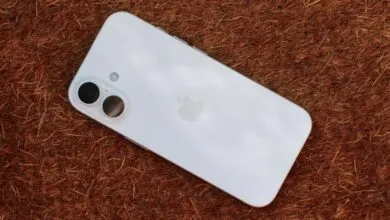
Launched in September with a starting price of $999, the iPhone Air represents Apple’s thinnest and lightest smartphone to date, measuring just 5.6mm, thinner than a standard pencil. It features a titanium frame and is remarkably lightweight, reminiscent of the iPhone 12 mini from 2020. Despite its slender profile, Apple equipped the iPhone Air with a 48-megapixel main camera identical to that found in the iPhone 17 and 17 Pro. The company also claims the device delivers excellent all-day battery life, though it falls short of the endurance offered by its more conventional siblings. To address this, Apple introduced a dedicated $99 MagSafe battery pack that can extend usage up to 40 hours.
Further evidence of sluggish demand can be seen in Apple’s online store, where the iPhone Air has remained readily available in all colors since its release. In contrast, the iPhone 17 and 17 Pro continue to show shipment delays of two to three weeks, signaling much stronger sales.
The challenges facing the iPhone Air echo similar struggles in the industry. Samsung’s Galaxy S25 Edge, for instance, reportedly sold only 1.31 million units as of August, leading the company to cancel plans for future iterations. During the same period, the Galaxy S25, S25 Plus, and S25 Ultra achieved sales of 8.28 million, 5.05 million, and 12.18 million units respectively. In response to poor performance, Samsung has halted production of the Galaxy S25 Edge and canceled the anticipated Galaxy S26 Edge.
(Source: Fortune)