Zoox Expands Robotaxi Service to Las Vegas Airport

▼ Summary
– Zoox has expanded its commercial robotaxi service in Las Vegas to include trips to and from Harry Reid International Airport, marking a significant operational milestone.
– The expansion follows a federal safety exemption granted in August that allows Zoox to operate up to 2,500 vehicles and charge for rides under relaxed motor vehicle standards.
– This new airport service gives Zoox a competitive advantage over Uber and Lyft by offering direct pickup and drop-off near baggage claim rather than requiring walks to distant curbs.
– Competition is intensifying as Tesla, Uber, Waymo, and Motional have recently received permits to launch commercial robotaxi services in Clark County.
– These new permits could result in the deployment of up to 8,000 robotaxis across the region within the next year, transforming the local autonomous vehicle landscape.
Zoox has officially expanded its commercial robotaxi operations to include Harry Reid International Airport, marking a significant milestone for the Amazon-owned autonomous vehicle company. Starting this Thursday, customers can now hail Zoox vehicles for trips to and from the airport. This strategic move unlocks one of the most critical destinations in the region, building on a series of recent regulatory and operational victories for the Silicon Valley-based firm.
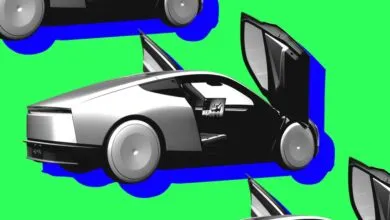
For over a decade, Zoox has been refining its self-driving technology and designing a custom robotaxi that omits traditional controls like steering wheels and pedals. While the company successfully provided rides to Las Vegas residents for the past year, it operated without the ability to charge for services. That dynamic shifted dramatically in August when federal safety regulators granted Zoox a temporary exemption from certain motor vehicle safety standards. This two-year permit allows the deployment of up to 2,500 vehicles and waives compliance with eight specific federal standards, including requirements for windshield defrosting and light vehicle braking systems.
The exemption has accelerated Zoox’s business momentum. Since receiving approval, the company began charging for rides on August 10, announced plans to test its autonomous fleet in San Diego and Houston, and published its comprehensive safety framework. These actions signal a rapid ramp-up in operational scale.
This expansion provides Zoox with a distinct logistical advantage over established ride-hailing giants like Uber and Lyft. According to Zoox, its robotaxis will pick up and drop off passengers directly at both airport terminals near baggage claim. In contrast, while competitors can drop off riders at the terminal curb, their designated pickup zones are located approximately five to ten minutes away on the upper floor of a nearby parking garage.
Although Zoox is currently the sole provider offering direct service to the Las Vegas airport, the competitive landscape is poised to intensify significantly. The city has long served as a testing ground for autonomous technologies and is expected to host numerous commercial operators within the next year. Last month, the Nevada Transportation Authority issued permits to Tesla, Uber, and Waymo to operate commercial robotaxi services in Clark County. Uber intends to fulfill these obligations through partnerships with Hyundai subsidiary Motional and Zoox itself. Collectively, these new permits could enable the deployment of up to 8,000 robotaxis across the county over the following twelve months.
(Source: TechCrunch)