Uber, Wayve Launch London’s First Robotaxi Service
▼ Summary
– Uber and Wayve launched London’s first robotaxi service using Ford Mustang Mach-Es, but every vehicle requires a licensed human driver for supervision.
– The fleet is limited to under 20 cars because Transport for London approved them as private hire vehicles rather than fully automated ones.
– This supervised model means the service cannot yet demonstrate the economic benefits of full autonomy compared to traditional minicabs.
– The launch serves as a strategic milestone for Uber in a crowded market, preceding potential entry by competitors like Waymo and Baidu.
– The technology used is considered a generation behind fully driverless systems operating in the US, reflecting current regulatory constraints in the UK.
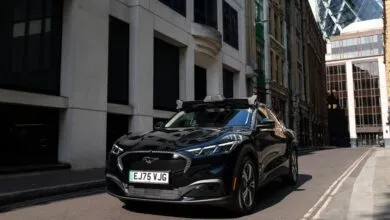
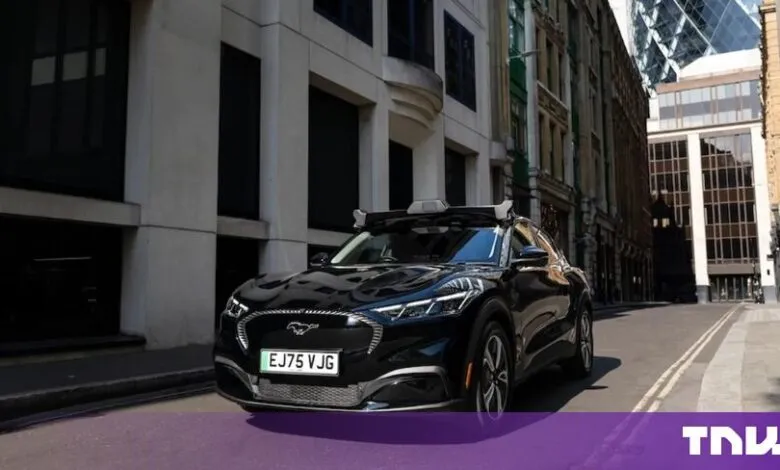
Uber and Wayve have officially launched London’s first robotaxi service, marking a significant milestone in the capital’s transportation landscape. However, this debut comes with a crucial caveat: every vehicle on the road is accompanied by a licensed human driver ready to intervene. Operating out of a fleet of Ford Mustang Mach-Es, the service began carrying passengers on Thursday under a supervised model that prioritizes regulatory compliance over full autonomy.
Regulatory Framework and Safety Protocols
The partnership divides responsibilities clearly: Uber manages the physical fleet and operations, while Wayve, the Cambridge-based technology firm, provides the underlying driving software. While Uber had opened a waitlist for the service in June, the primary hurdles encountered since then have been regulatory rather than technical. The initial phase involves fewer than 20 vehicles, with Transport for London (TfL) granting permission for up to 15 cars during a one-year trial period in August.
Crucially, TfL has classified these modified Wayve vehicles as private hire vehicles (PHVs) rather than automated vehicles. This classification mandates that a licensed PHV driver must be present and legally responsible for the car throughout every journey. Achieving true driverless status requires a separate Automated Passenger Services permit, issued by the Driver and Vehicle Standards Agency (DVSA) under the Automated Vehicles Act. Neither company has yet completed this distinct approval process.
Sarfraz Maredia, Uber’s head of autonomous mobility, emphasized that the timeline for removing drivers remains undefined. “That process is still playing out,” Maredia stated, confirming that the fleet size will expand gradually. He declined to provide a specific date for when the service might transition to fully autonomous operation.
User Experience and Economic Realities
For consumers, the experience mirrors standard ride-hailing but with subtle differences. Riders cannot specifically request a robotaxi; instead, the app may match them with one automatically. Fares remain identical to other Uber services, and the interface omits the tipping prompt. Passengers retain the right to decline a trip if assigned to an autonomous-equipped vehicle.
From a regulatory perspective, TfL has maintained strict oversight. A spokesperson for the authority highlighted their commitment to safety standards. “Safety is our top priority. Any new vehicle licensed to carry passengers on London’s roads must align with our Vision Zero goal,” the spokesperson said. The regulator retains full monitoring and enforcement powers throughout the trial period.
However, the presence of a paid safety driver significantly impacts the economic viability of the service. Running a car with a supervisor costs roughly the same as a traditional minicab, meaning this deployment cannot currently demonstrate the cost efficiencies that typically drive interest in autonomous technology.
Competitive Landscape and Technical Approach
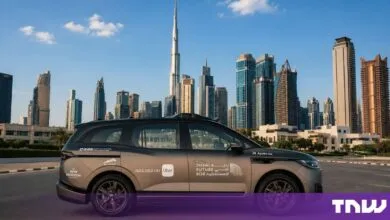
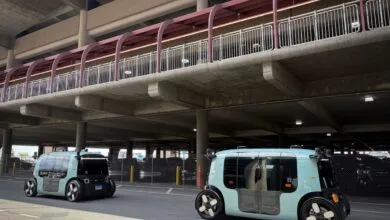
Being the first to launch in London holds strategic value given the crowded market. Competitors such as Waymo and Baidu are also preparing to enter the UK market. By launching a supervised service now, Uber and Wayve can establish a foothold before rivals arrive. Yet, the capability gap is evident. Waymo already operates fully driverless fleets in 14 US cities, placing Uber’s London offering a generation behind its primary global competitor.
This supervised approach is consistent with Uber’s broader European strategy. Its recent entry into Zagreb and a pilot in Tokyo with Nissan both utilize safety drivers. For Wayve, London serves as a rigorous testing ground for its end-to-end driving model. Unlike competitors that rely on pre-mapped high-definition data, Wayve trains its AI to navigate dynamically. The company has invested heavily in the computational infrastructure required for this stack, securing funding from AMD, Arm, and Qualcomm alongside a Series D round.
London presents unique challenges for this technology. The city’s narrow streets, complex bus lanes, frequent roadworks, and legacy road layouts offer a far more difficult environment than the wide grids found in many American cities where robotaxis operate. Furthermore, the service must contend with organized opposition from black cab drivers, who have raised concerns about the economic impact of algorithmic competition. A small, supervised fleet allows regulators to manage these tensions while keeping the licensing debate open. Until the DVSA permit is secured, this service remains a sophisticated form of driver assistance rather than true automation.
(Source: The Next Web)