Google Display vs Demand Gen: What You Gain and Lose

▼ Summary
– Google is deprecating standalone Display campaigns and migrating them to Demand Gen, with the ability to create new ones disabled in January 2027.
– The migration tool allows advertisers to update live campaigns while preserving 42 days of performance history to minimize learning periods.
– Migrated campaigns will be restricted to Google Display Network inventory initially, though other channels can be added later.
– Several bid strategies and ad formats like Manual CPC and HTML5 ads are unsupported in Demand Gen, requiring advertisers to switch alternatives.
– Demand Gen offers expanded reach through Discover and Maps networks along with unique ad formats, despite current limitations on specific features.
The End of Standalone Display Campaigns
The era of granular control within the Google Display Network is coming to a close. Following the earlier deprecation of Dynamic Search Ads, Google has confirmed that standalone Display campaigns will be retired in favor of Demand Gen. This move aligns with a broader strategy to push advertisers toward more automated, AI-driven campaign structures. With the user interface for legacy formats effectively disappearing, marketers are left to navigate the transition to platforms like Smart Shopping, Discovery, and Local campaigns.
The decline of traditional Display usage has been gradual but steady. As Demand Gen evolved to offer similar capabilities with greater automation, advertisers naturally shifted their budgets. To facilitate this shift, Google introduced a migration tool in June following the May announcement. The rollout is phased, with a critical deadline set for January 2027, when the ability to create new standalone Display campaigns will be permanently disabled. While auto-migration is expected later in 2027, the exact start date remains unspecified.
Navigating the Migration Process
For advertisers who have accessed the migration tool, the process allows for the transfer of live campaigns while preserving 42 days of performance history. This feature is designed to minimize the learning period required for the newly created Demand Gen campaigns. However, the resulting campaigns will be configured specifically for the Google Display Network only. Advertisers can expand into other channels after the migration is complete.
Performance fluctuations are likely during this transition. A key technical detail to note is that the daily budget spent up to the moment of migration will not carry over into the new Demand Gen structure. Furthermore, certain bid strategies and ad formats currently available in Display are unsupported in Demand Gen. The platform currently supports Target CPA, Target ROAS, and Maximize Clicks.
If your current setup relies on Manual CPC, Viewable Impressions, or Pay for Conversions, you must switch to an alternative bid strategy. Additionally, Demand Gen does not support bid adjustments, seasonality adjustments, or portfolio bidding. Legacy assets such as business data feeds, uploaded HTML5 ads, and third-party ads are also incompatible, though Google plans to introduce support for the latter two by late 2026. Studies for Brand Lift and Search Lift are similarly unavailable for GDN within Demand Gen.
Expanded Reach and New Features
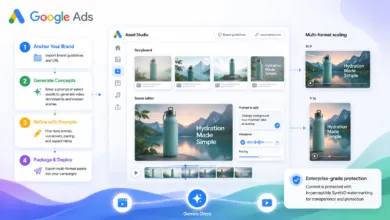
Despite the loss of specific controls, Demand Gen offers significant advantages in terms of inventory and creative tools. Advertisers gain access to networks beyond the Display ecosystem, including Discover and Maps. The platform also introduces unique ad formats and generative image tools that were previously unavailable in standalone Display campaigns.
Lookalike Audiences Evolve
A major shift has occurred in how Lookalike Audiences function. Previously a strict targeting method based on similarity thresholds, these audiences were updated in March 2026 to serve as “audience suggestions.” Google now uses seed lists as signals to help its models identify high-intent customers outside the original similarity parameters. If you plan to use these segments, be aware of a potential latency period of up to 96 hours between segment creation and population.
View-Through-Conversion Optimization
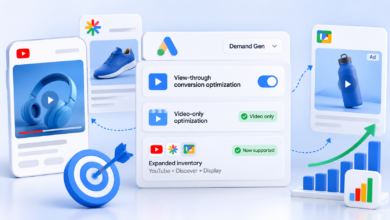
Introduced in April, view-through-conversion optimization allows campaigns to optimize bids for users who view a YouTube or Discover ad without clicking but convert later. This feature is particularly valuable for campaigns struggling to generate enough direct conversions for conversion-focused bidding. Notably, Google announced in July that Demand Gen campaigns running on Discover using this optimization will shift from CPC to CPM billing.
YouTube Affiliate Integration
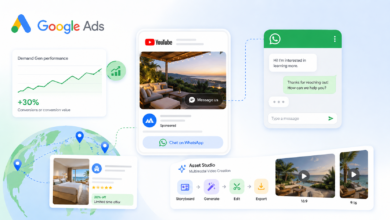
Demand Gen also enhances interaction with YouTube audiences through new formats. A recent pilot program, the Affiliate Partnership boost, allows advertisers to incorporate organic YouTube affiliate videos directly into their campaigns. This integration opens new avenues for leveraging creator content within paid media strategies.
Strategic Preparation for Q4
With the auto-migration date still pending, proactive planning is essential. Migrating before the fourth quarter requires careful timing to account for potential performance volatility during peak shopping seasons. Advertisers should build out audience segments early to accommodate the lookalike population latency and prepare for the loss of advanced bid adjustments like seasonality tweaks.
While the removal of granular controls may feel restrictive, the transition offers an opportunity to refine strategies around intent-based targeting. Success in this evolving landscape depends on agility rather than mastery of every technical toggle. By treating this migration as a strategic shift rather than a mere administrative task, advertisers can leverage sophisticated AI tools to maintain competitiveness.
(Source: Search Engine Land)