Gatik Raises $200M After Securing PepsiCo Deal
▼ Summary
– Autonomous vehicle startup Gatik has secured $200 million in funding led by Qatar Investment Authority and Koch Disruptive Technologies.
– This investment follows a multi-year commercial agreement with PepsiCo and brings Gatik’s total raised capital to approximately $500 million since 2019.
– The company specializes in short-haul middle-mile delivery using self-driving box trucks for customers like Walmart, Kroger, and Tyson Foods.
– Gatik recently achieved a major milestone by removing safety drivers from its commercial routes, allowing fully driverless operations across various weather conditions.
– A key partnership involves deploying 41 driverless trucks to distribute Frito-Lay products between distribution centers and stores in Texas and Arkansas.
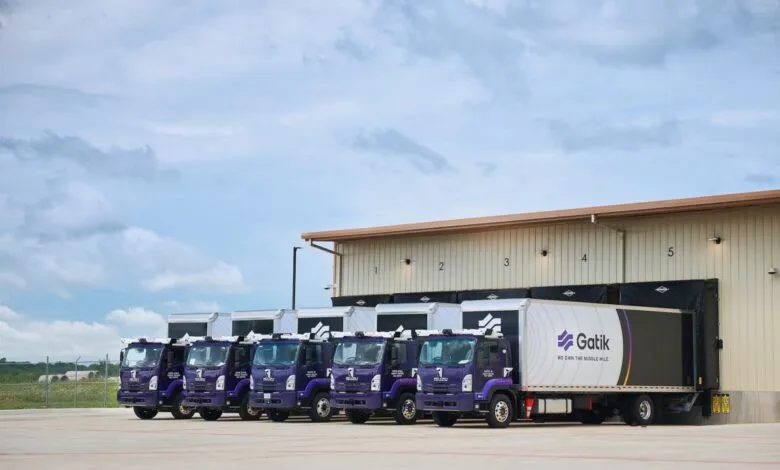
Gatik, the autonomous vehicle developer specializing in self-driving box trucks, has successfully closed a $200 million funding round. This significant capital injection arrives just two months after the company secured a multi-year commercial partnership with beverage giant PepsiCo. The investment was led by the Qatar Investment Authority and Koch Disruptive Technologies, with additional contributions from Millennium Management, ARK Invest, and Intact Private Capital. Based in Santa Clara, California, Gatik has now accumulated approximately $500 million in total funding since emerging from stealth mode in 2019, though the firm did not disclose its current valuation.
This latest raise represents the largest single round for the startup to date, signaling a pivotal transition from a pilot-phase entity to a mature operator of commercial driverless logistics. The company is now executing fully autonomous operations for multiple clients across various urban centers.
“These are all long-term investors,” Gatik co-founder and CEO Gautam Narang said in a recent interview. “All the scale-up plans that we have and the growth that we have in mind for the next few years , these are the kind of financial partners that can help us.”
Dominating the Middle-Mile Niche
In a crowded autonomous sector where competitors focus on sidewalk robots, robotaxis, or long-haul heavy trucks, Gatik has carved out a distinct position in middle-mile delivery. The company’s strategy centers on short-haul logistics, initially deploying fixed routes under 10 miles. Over time, this capability expanded to dynamic routes involving dozens of stops and covering distances up to 400 miles.
Gatik operates as a dominant force in this specific segment, serving high-profile clients such as Loblaw, Kroger, Tyson Foods, and its original partner, Walmart. The company’s technology allows its fleet of driverless box trucks to handle food and beverage distribution with increasing complexity and range.
The startup reached a major operational milestone last year by removing safety drivers from its commercial routes entirely. Today, Gatik operates dozens of fully autonomous trucks across several markets. These vehicles are designed to function reliably in diverse environmental conditions, including light rain and snow.
“The technology has evolved and matured a lot over the last few years, especially with the latest generation of our tech,” Narang said, noting that the company’s third-generation self-driving trucks operate around the clock on surface streets and highways.
Scaling Operations and Revenue
While Gatik has not released exact fleet counts or listed every client, its most visible partnership involves PepsiCo. In this arrangement, 41 driverless box trucks transport Frito-Lay products like Cheetos and Doritos from distribution centers to retail locations in Dallas, Phoenix, and Northwest Arkansas. This strategic focus on middle-mile logistics has yielded substantial financial results, with Narang stating that the company has secured $600 million in contracted revenue.
The new capital will accelerate Gatik’s expansion efforts, which include growing its workforce beyond its current 350 employees. The company intends to hire additional engineers and operational staff while entering new geographic markets or deepening its presence in existing ones.
(Source: TechCrunch)