Wearable tech is stuck in an existential limbo
▼ Summary
– Google’s Pixel Watch 5 testing reveals the wearable industry’s shared goal of AI coaches, preventive health alerts, and personalized recommendations, though companies lack a clear path to achieve it.
– Google sees wearables as an ecosystem of diverse accessories, not a single device, with “glanceable” interactions on wrist devices benchmarked at seven seconds, and is passing on smart rings in favor of expanding the Fitbit Air.
– Google is cautious about adding microphones to wearables like the Fitbit Air due to privacy concerns, noting the tech is viable but user sentiment and customer value are unresolved.
– The article questions whether AI can deliver personalized health advice across diverse user needs, as current wearables suffer from cluttered apps and data fatigue, with Google admitting AI is a yearslong work in progress.
– Privacy backlash, such as against Meta’s smart glasses, highlights challenges for AI wearables, though Google experiments with concepts like cameras that sense without recording to address concerns.
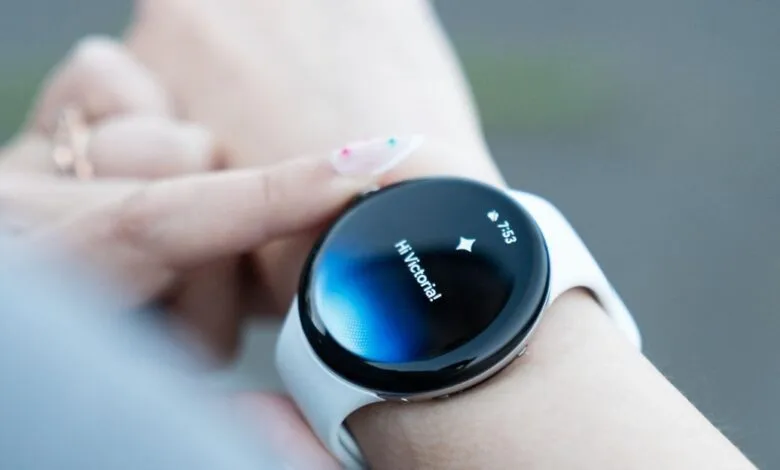
For the past week, I’ve had the Google Pixel Watch 5 strapped to my wrist. On the surface, it’s a perfectly standard modern smartwatch. Scratch that surface, though, and it feels like a piece of a wearable future that’s currently up in the air. Nearly everyone I talk to in the industry shares the same vision: your next fitness tracker will come with an AI coach, proactive “check engine” alerts for hidden health issues, and hyper-personalized recommendations built around your life. That’s the pitch, anyway. The reality is that nobody seems to have a clear roadmap for getting there.
Take AI coaches. The best ones are still overly chatty, latch onto a random detail from setup, and demand constant hand-holding. Proactive health alerts? They’ve saved lives, sure, but they also trigger health anxiety and drag companies into expensive regulatory battles. Personalized health insights sound great, but they require massive amounts of private data and still stumble over AI’s well-documented flaws. Right now, most people still see wearables as glorified step counters.
“Historically, wearables have been very focused on hardcore health enthusiasts,” says Rishi Chandra, Google’s vice president of health and home, during a roundtable with reporters in New York ahead of Made by Google. Tech companies usually play their cards close to the chest, but Google is unusually eager to lay out its vision. “There’s a huge market of people who are not thinking about their health every day. Today, wearable penetration is about 30 percent. 70 percent of the population has no notion of wearables,” Chandra adds.
Wearable tech, in other words, is still in its infancy. The smartwatch isn’t the final destination. And the sheer volume of personal data these devices can capture complicates things further. That’s a big reason why, at last year’s Made by Google event, Chandra and Sandeep Waraich, Google’s senior director of wearables, told me the future of AI gadgets wouldn’t be a single device. It would be an entire ecosystem of varied accessories.
Since then, I’ve seen plenty of evidence supporting that multi-wearable thesis. Companies are pivoting hard to AI glasses, or as Google calls them, “intelligent eyewear.” Meanwhile, screenless Whoop clones and smart rings are flooding the market. Some wearable makers are even ditching health tracking altogether. Startups like Vocci, Taya, and Sandbar are selling rings and pendants that record and transcribe your thoughts using AI.
None of these are proven ideas. The sheer variety of approaches signals that the industry is throwing wearable spaghetti at the wall, hoping something sticks and becomes the next smartphone. As a senior wearable reviewer, this is both thrilling and frustrating. Thrilling because, hey, weird experimental products! Frustrating because, no, weird experimental products that don’t work as advertised! Still, there’s a kernel of truth in this scramble for new form factors and use cases.
“Wearables are a great conduit for presence. And it goes both ways. As AI reaches you in a respectful way, and as you want to interact with it, these interactions will become more frequent, but also quicker and glanceable,” says Waraich, noting that Google currently benchmarks wrist-based interactions at around seven seconds. The real question is figuring out which surface suits which task. Checking your calendar, for instance: phone, tablet, laptop, or, with the Pixel Watch 5’s new Proactive Assistance feature, your wrist?
Google has had deep internal debates about the pros and cons of various wearable shapes. Smart rings, for example, are something the company constantly gets asked about, but they’re not on the short-term agenda. “To be clear, we’re not closing the door on [smart rings],” Chandra says. “But our belief right now is that there’s so much headroom on a wrist-worn wearable … I think the Fitbit Air is going to have far bigger expansion opportunities given how simple and easy it is for everyone to use it.”
So Google just launched the minimalist Fitbit Air and is passing on rings for now. Maybe the next step is an “Ultra” Pixel Watch, like Samsung and Apple have done? Not according to Waraich, who says the current Pixel Watch is where Google sees its premium tier. Chandra adds that the company is wary of stretching itself too thin.
Google has a hypothesis about what wearables should be. It’s testing that hypothesis through product launches and software updates, watching closely to see how we, the wearable lab rats, react. The experiment is ongoing.
Another big debate: just because you can add a microphone, should you? Slapping mics into something like the Fitbit Air so it doubles as an AI memory, similar to Amazon’s Bee device, raises serious questions. “At this point, it’s not a technology issue. It’s a user-sentiment, privacy issue. If you [add] a mic, it’s not just that it’s learning from you. It’s learning from the environment. So I think we’re being cautious about how to push that in the right way,” Chandra says. He notes it would’ve been trivial to stuff microphones into the Fitbit Air, but the real problem is whether it adds any customer value. “I don’t know yet if we have, as a tech industry, have figured out the right balancing act there.”
Having tested several AI wearables, my answer is a resounding no. This type of tech often makes me feel like a spy. Just look at the defunct Amazon Halo trackers, which not only analyzed your emotions from your voice but also generated deeply unsettling 3D body models to estimate body fat. Just because AI wearables can track new things doesn’t mean they should.
Smart glasses face the same problem, as seen with the recent privacy backlash against Meta’s “pervert glasses.” Some of that is Meta’s own doing. Some of it, Google argues, is about time and place. Chandra suggests people might be more open to ambient computing, where devices are always listening, inside the home rather than out in public.
Still, Google is committed to experimenting. Waraich floated an idea: what if the camera in smart glasses acted purely as a sensor without recording? The glasses would see what you see and answer questions about your environment, but nothing would be saved. In theory, this could mean automatically logging your food without taking a picture. A blind person could ask AI about their surroundings, and passersby wouldn’t worry about being photographed. I love the concept, but good luck convincing the masses that it’s actually different.
This is the existential problem at the heart of my beat. How can any AI wearable be versatile enough to handle every individual’s privacy preferences and health journey? Hardware differentiation is easy. Casual users get a Fitbit Air or Oura Ring. Tech enthusiasts get a Pixel Watch or Apple Watch. Ironman competitors know exactly which Garmin or Coros suits them. But the software experience is another beast entirely. Right now, you can pick from multiple form factors, but they all deliver the same cluttered app and data fatigue. That’s hardly personalized health. My current health journey, fixing a borked metabolism, requires one set of advice. A cancer patient needs something completely different. So does a hypochondriac or a college athlete. Maybe you want a drill-sergeant coach. I’d rather throw my hands up. It’s already hard enough for people to be wise and judicious about their health, to accept limits and practice compassion without overindulging. How can any single LLM achieve that wisdom? How can one unified software experience meet infinite individual needs?
I asked both Chandra and Waraich this. They were optimistic that AI will get there eventually, but admitted it isn’t there now. They acknowledged this is a yearslong journey requiring immense effort, plus a lot of societal and cultural debates along the way. After a decade on this beat, my wearable bullshit radar is finely tuned. Since Wear OS 3, Google has genuinely welcomed frank feedback whenever I or other reporters have grilled them. I can’t say the same for every gadget maker out there.
I also can’t tell whether Google’s bets on the Pixel Watch 5, Fitbit Air, and its AI coach are the right ones. Maybe skipping smart rings is a miss. Maybe an AI hardware ecosystem of diverse accessories is the ultimate move. I’ll give Google credit for being candid about the privacy, culture, design, and tech logistics layered into this era of wearables. That said, whenever I zoom out, I can’t shake the feeling of being on a hamster wheel. Testing each new smartwatch, smart ring, or smart glasses, I keep running toward this vaguely defined, AI-powered wearable future. I just don’t feel any closer to reaching it.
(Source: The Verge)