US AI lets Ukraine’s drones track targets autonomously
▼ Summary
– Ukrainian forces have used $400 Shrike drones with explosive payloads to destroy Russian armored vehicles and helicopters, and are now upgrading them with AI for autonomous target tracking.
– The Ukrainian military began receiving AI-equipped Shrike drones in mid-July, with plans to deliver 50,000 units using Auterion’s Skynode S strike kits in coming months.
– Operators can manually fly the drone, designate a target up to half a mile away, and switch to fire-and-forget mode, while retaining abort or retarget options via radio signal.
– The AI relies solely on the drone’s onboard camera for tracking, enabling strikes on moving targets without GPS, which is resistant to signal loss or jamming.
– Shrike drones have already hit vehicle-size targets like tanks, artillery, and electronic warfare systems, and reportedly downed two Russian Mi-28 helicopters worth up to $19 million each.
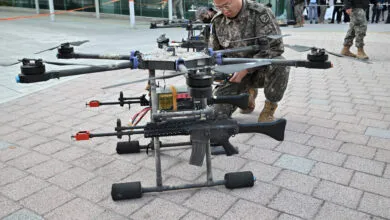
Ukrainian forces have already inflicted heavy losses on Russian armor and even downed helicopters using $400 Shrike drones packed with explosives. Now, thousands of these small unmanned aircraft are being outfitted with an artificial intelligence system that lets them lock onto and pursue moving targets with no human input.
Starting in mid-July, the Ukrainian military has been taking delivery of Shrike drones from the Ukrainian manufacturer SkyFall that feature AI-driven autonomy hardware and software built by the U. S. company Auterion. The two firms intend to ship 50,000 drones fitted with Auterion’s Skynode S strike kits over the next several months.
With this setup, an operator can pilot the Shrike first-person view (FPV) drone into a combat zone, pick out a target as far as half a mile away, and then “flip the switch to turn it into fire-and-forget terminal guidance mode,” according to Lorenz Meier, co-founder and CEO of Auterion, in an interview with Ars.
Meier noted that the operator retains the ability to abort an attack or redirect the drone to a new target while a radio link remains active. However, the drone can independently track and impact its target even if that link drops, whether from buildings or terrain blocking the signal or from enemy jamming on the same frequencies.
Auterion’s software relies exclusively on visual data from the Shrike’s primary onboard camera to lock onto targets. This means the drone can strike moving objects without any dependence on GPS, a major edge in modern warfare where GPS jamming is widespread.
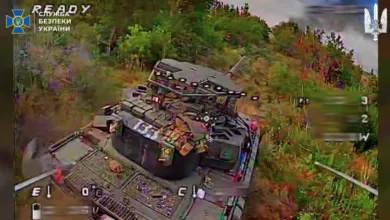
That capability could boost the hit rate of remotely piloted Shrike drones that have already destroyed numerous vehicle-sized targets since Russia’s full-scale invasion of Ukraine began in 2022. Those kills include armored tanks, electronic warfare systems, artillery pieces, and rocket launchers. According to the Kyiv Independent, Shrike drones have also shot down two Russian Mi-28 helicopters, each valued at up to $19 million.
(Source: Ars Technica)