Jack Dorsey’s Buzz takes on Slack with team chat for AI agents

▼ Summary
– Jack Dorsey announced Buzz, a group chat platform for workplace teams and AI agents, built by his company Block and positioned as a challenger to Slack and GitHub.
– Buzz is described as model-agnostic, decentralized, self-sovereign, and open source, and merges workflows like AI agent collaboration and GitHub project management into one workspace.
– Because Buzz is open source, developers can customize their own instance by building and deploying new features directly from the source code.
– Competitor Centaur, created by Paradigm CTO Georgios Konstantopoulos, offers a similar open source “virtual employee” that operates within Slack or via an API.
– Buzz is in its early stages, with a free desktop app available for macOS, Windows, and Linux, and its code uploaded to GitHub.
Jack Dorsey, the co-founder of Twitter and Block, has unveiled a new workplace communication tool called Buzz. The platform is designed to directly challenge established players like Slack and GitHub by creating a unified chat environment where both human employees and AI agents can collaborate seamlessly.
Announcing the launch on X, Dorsey described Buzz as “model-agnostic, decentralized, self-sovereign, and open source.” Far from being a mere side project, Buzz was developed by Dorsey’s company Block, the parent organization behind Square, Cash App, Afterpay, and Tidal. The product aims to streamline the growing complexity of modern work, where teams increasingly rely on AI agents to handle tasks across multiple platforms.
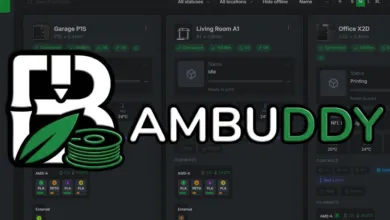
The core value of Buzz lies in its ability to consolidate different workflows into a single interface. While its layout resembles Slack, Buzz offers native integration for AI agents and allows users to manage GitHub projects directly from the same window. This eliminates the need to jump between disparate apps to track progress or assign work.
Because the platform is open source, development teams have the freedom to customize their own instance of Buzz. If a specific feature is missing, engineers can build and deploy it themselves, leveraging full access to the source code to tailor the environment to their exact needs.
Dorsey is not alone in reimagining workplace chat for the AI era. Georgios Konstantopoulos, CTO and partner at Paradigm, recently introduced a similar open source tool called Centaur. He positions it as a “virtual employee” that can operate within Slack or through an API. Konstantopoulos noted that there is significant potential for agents that live inside Slack, especially in enterprise settings where self-hosting is critical for security and control. He emphasized that teams want to use these agents within their existing communication tools.
For early-stage startups already integrating AI agents into their operations, Buzz and its competitors offer a compelling alternative to traditional chat platforms. However, Buzz itself acknowledges that it remains in its “early stages,” suggesting that teams should proceed with caution before migrating entirely. The free desktop app is currently available for macOS, Windows, and Linux, with the full source code published on GitHub for developers to explore.
(Source: TechCrunch)