Databricks CEO: 2026 Is the Year of AI Agents

▼ Summary
– Databricks CEO Ali Ghodsi said 2026 is “a terrible year to go public” because SpaceX, Anthropic, and OpenAI are set to absorb over $200 billion in IPO capital, crowding out other tech offerings.
– SpaceX plans the largest IPO in history on June 12 at a $1.77 trillion valuation, while Anthropic filed at $965 billion and OpenAI targets up to $1 trillion.
– Databricks, valued at $134 billion, will wait for a quieter window, prioritizing a fair valuation over a “crazy” one to avoid the trap of post-IPO share price collapses seen in 2022.
– The company can afford to wait due to over $5.8 billion in recent capital raises, a $4.8 billion revenue run rate with 55% growth, and positive free cash flow.
– Ghodsi’s decision is driven by a desire for employee liquidity through a public market, as the three mega-offerings also absorb IPO infrastructure like banks and roadshow attention.
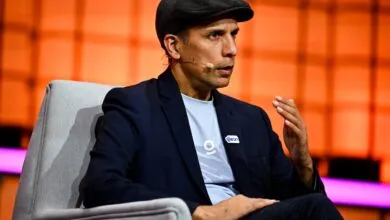
The AI IPO boom is creating an extraordinary bottleneck in public markets, and Databricks CEO Ali Ghodsi has made it clear his company won’t be part of the traffic jam. In a blunt assessment, he declared 2026 “a terrible year to go public,” as three colossal offerings prepare to vacuum up over $200 billion in investor capital.
The data and AI infrastructure company, valued at $134 billion, is widely considered a prime IPO candidate. Yet Ghodsi told Bloomberg Television on Thursday that while Databricks will eventually list, it will not do so this year. The reasoning centers on an unprecedented market logjam. SpaceX is expected to debut as early as June 12 with a staggering $1.77 trillion valuation, planning to sell 555.6 million shares at $135 each in what would be the largest IPO in history. Anthropic has filed at a $965 billion valuation, and OpenAI is preparing its own filing targeting up to $1 trillion.
Ghodsi’s logic is brutally practical. When three companies are collectively seeking to raise upwards of $200 billion from public investors, every other tech IPO risks being treated as a sideshow. Institutional allocation budgets are finite, and these three mega-offerings will consume a disproportionate share of them. There is also a valuation concern. Ghodsi has previously warned about the trap that caught many tech companies in 2022, when newly public firms were forced to prioritize margins after their share prices collapsed. “If I wanted to have a crazy, crazy valuation, we would have gone public in the last 12 months,” he told Fortune in December. “We just want to have a fair valuation that we can continue growing into.”
Databricks can afford to wait. The company raised over $4 billion in its Series L in December 2025 at the $134 billion valuation, then added $1.8 billion in debt financing from JPMorgan and private credit lenders in January 2026. It has crossed a $4.8 billion revenue run rate, growing more than 55% year on year, and is generating positive free cash flow. The stated motivation for eventually listing is employee liquidity. “We want to create a market transaction mechanism for our employees,” Ghodsi said. That is a practical concern for a company whose stock options and RSUs have been priced against a series of private-market valuations that have no public-market equivalent.
Ghodsi’s decision highlights a second-order consequence of the AI IPO boom. The three mega-offerings are not just absorbing investor capital. They are absorbing the infrastructure of going public itself: the banks, the analysts, the roadshow schedules, the media attention. A $134 billion data platform listing in the same quarter as a $1.77 trillion rocket company is a footnote, regardless of how strong its fundamentals are. Other potential IPO candidates face the same calculus. Any company valued below $500 billion risks being crowded out of the conversation entirely. The irony is that 2026 may be remembered as both the best and worst year for tech IPOs: the best for the handful of companies large enough to command attention, and the worst for everyone else.
Databricks competes with public companies such as Oracle and Snowflake in the data and AI infrastructure market. By waiting, Ghodsi is betting that a quieter window, perhaps in 2027, will let Databricks command a premium rather than being priced as a warm-up act. Given that the company has $6 billion in recently raised capital and no immediate need for more, the patience costs nothing except the liquidity its employees are waiting for.
(Source: The Next Web)