Trump’s AI order and smart glasses for warfare

▼ Summary
– Anduril and Meta are prototyping an augmented-reality headset for the military that could allow drone strikes via eye-tracking and voice commands.
– Anduril’s Quay Barnett envisions integrating drones and soldiers into a cyborg-like system where they share information and make decisions as one.
– President Trump signed an AI executive order that expands model oversight to mitigate security threats, asking companies to voluntarily submit models for testing.
– The order is a slimmed-down version of one Trump shelved in May and marks a strategic shift in his AI strategy.
– A war over AI regulation is approaching in the US, as the technology already makes online crimes easier.
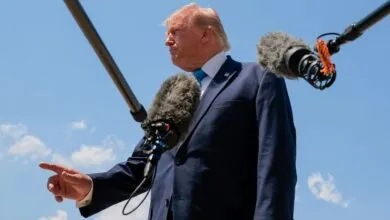
President Trump has signed a new executive order on AI that significantly expands oversight of advanced models. The directive is designed to address growing security concerns surrounding artificial intelligence, with the government requesting that companies voluntarily submit their models for testing before public release. This latest action represents a notable pivot in Trump’s approach to AI governance, arriving as a more streamlined version of the order he previously shelved in May. The move signals an intensifying battle over AI regulation in the United States, as federal policy struggles to keep pace with rapid technological development.
Meanwhile, the defense firm Anduril has unveiled fresh details about its augmented-reality headset prototype, developed in partnership with Meta for military applications. The system envisions soldiers controlling drone strikes through eye-tracking and voice commands, a capability that blurs the line between human intuition and machine precision. Quay Barnett, a former Army Special Operations officer leading the project at Anduril, describes the goal as optimizing what he calls “the human as a weapons system.” His vision is deeply cyborg-inspired: drones and soldiers will share a unified field of perception, exchange data instantly, and act as a single decision-making entity on the battlefield.
This story has been adapted into the latest episode of MIT Technology Review Narrated, our weekly podcast available on Spotify and Apple Podcasts.
Beyond these headlines, the broader implications of AI are already reshaping everyday life. Experts warn that generative AI tools are making online crimes easier to commit, from sophisticated phishing scams to automated fraud. Meanwhile, a previous Trump administration’s AI policy has been dismissed by critics as a distraction, failing to address the core challenges of safety, bias, and accountability. As the technology accelerates, the gap between policy and reality grows wider, demanding a more serious reckoning with how AI will be governed in the years ahead.
(Source: MIT Technology Review)