Feds Struggle to Seize Supercomputer from Climate Research Center
▼ Summary
– The Trump administration abruptly announced in December the shutdown of the National Center for Atmospheric Research (NCAR), a federally funded facility in Colorado that supports weather and climate research.
– The government ordered UCAR, which manages NCAR, to help transfer its Wyoming supercomputing center to a different operator, prompting UCAR to sue and win a preliminary injunction halting the transfer.
– NCAR is a Federally-Funded Research and Development Center that provides facilities and equipment for large-scale academic research, operating since the 1960s as a critical global resource.
– The government solicited public feedback on the shutdown decision, but UCAR preemptively sued, seeking an injunction to prevent the supercomputing center transfer.
– Judge Brooke Jackson ruled the case was justiciable under the Administrative Procedures Act, noting that government officials told UCAR in February that the supercomputing center’s transfer was already decided.
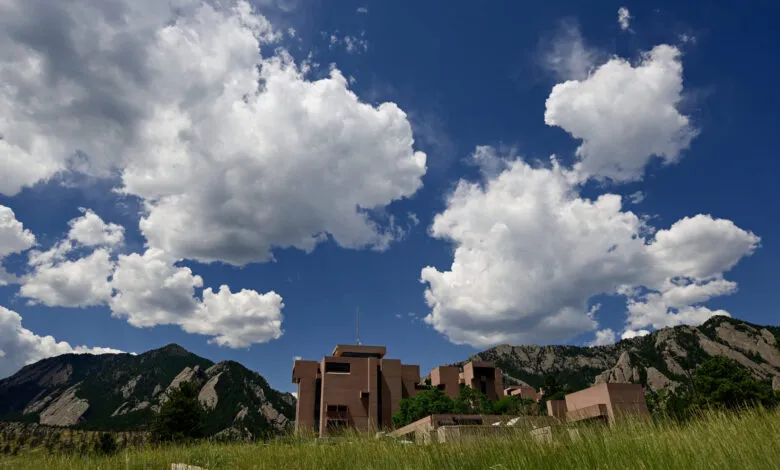
In December, the Trump administration stunned the scientific community by announcing plans to shut down the National Center for Atmospheric Research (NCAR), a Boulder, Colorado-based hub that enables researchers to study weather, climate, atmospheric chemistry, and related fields. The decision came as a surprise because the government had never flagged any major management issues with NCAR or its affiliated supercomputing center in Wyoming.
Despite that, the administration directed the University Consortium for Atmospheric Research (UCAR) , which operates NCAR under contract with the National Science Foundation , to help prepare for transferring the Wyoming facility to a new operator. UCAR responded by filing a lawsuit. On Monday, the organization secured a preliminary injunction that temporarily blocks the transfer.
NCAR is classified as a Federally-Funded Research and Development Center, meaning it does not pursue its own research agenda. Instead, it provides facilities, equipment, and expertise to support academic projects that are too large or complex for individual researchers to handle. Established in the early 1960s, NCAR has become an indispensable resource for the global atmospheric science community.
That made the government’s sudden move to dismantle the center and redistribute its assets , including research aircraft and the supercomputing facility , all the more jarring. Officials opened a public comment period on the decision, but UCAR chose not to wait. As part of its lawsuit, the consortium requested a preliminary injunction to halt the supercomputing center’s transfer.
To win that injunction, UCAR had to demonstrate that it was likely to succeed on the merits of its case and that it would suffer irreparable harm without court intervention.
Judge Brooke Jackson ruled that the matter fell within his court’s jurisdiction under the Administrative Procedures Act. The government had argued that no final decision had been made, making the lawsuit premature. But Jackson pointed to evidence that as early as February , before the public comment period had even closed , government officials were already telling UCAR that the National Science Foundation had decided to transfer stewardship of the supercomputing center.
(Source: Ars Technica)