▼ Summary
– The global hair-transplant market is estimated at $7.33–$11.61 billion in 2024, with Turkey’s medical tourism generating $3 billion in 2025, partly from aesthetic procedures.
– Hair transplantation in Turkey is promoted through popular culture, including viral social media posts and celebrity ads, such as Shaquille O’Neal’s joke in Turkcell’s 5G commercials.
– Turkey’s success in hair transplants stems from innovative adaptation of non-medical tools, like dental motors and sapphire blades, combined with Anatolian craft culture and microsurgical techniques.
– The industry evolved from Health Tourism 1.0 in the late 1990s, pioneered by Dr. Mustafa Tuncer, who aimed to bring European patients to Turkey by building high-standard clinics.
– Dr. Burak Tuncer emphasizes that hair is treated with the same care as vital organs, as damaged roots during transplants result in permanent loss of unique tissue.
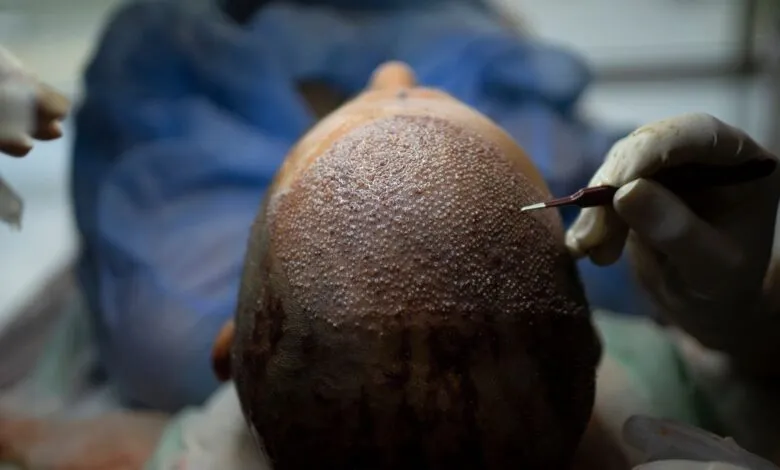
The hair transplant industry in Turkey has exploded into a global phenomenon, but its rise is built on more than just low prices and skilled surgeons. It is a story of repurposed medical technology, algorithmic precision, and a deep cultural understanding of what hair means to human identity.
From an evolutionary standpoint, human hair is largely a relic. It still serves a few practical roles, like shielding the scalp from UV rays and helping regulate body temperature, but it is no longer critical for survival. Yet, for millennia, our subconscious minds have used hair density, along with skin clarity and dental health, as a quick visual gauge of a person’s vitality, youth, and fertility. Hair has become a powerful symbol of identity and self-confidence, deeply woven into social communication.
This psychological need has fueled a massive global industry. The global hair transplant market was valued between $7.33 billion and $11.61 billion in 2024, according to various research firms, and these figures do not account for the underground economy. Turkey has captured a stunning share of this market. Ministry of Health data shows that 1.39 million people traveled to Turkey for medical treatments in 2025, generating $3 billion in medical tourism revenue. While exact figures for hair transplants are not broken out, experts estimate that roughly one-third of those visitors came for aesthetic procedures.
The cultural footprint of this industry is unmistakable. Turkish Airlines has earned the playful nicknames “Turkish Hair Lines” or simply “Turkish Hair,” and Istanbul Airport is often called “Istanbul Hairport.” The phenomenon has even penetrated global pop culture. Last March, a viral social media post featured a picture of soccer star Andrés Iniesta with a full head of hair, captioned “There won’t be a single bald Spaniard left in the world.” The post was a pointed response to Spanish Prime Minister Pedro Sánchez’s stance on the Iran war, a position Turkey supports, and it made headlines on Spanish news. Similarly, American basketball legend Shaquille O’Neal’s joke in a Turkcell 5G ad, where he appears in a long curly wig and declares, “I’m here for a hair transplant,” is likely to be a lasting cultural reference.
Turkey’s dominance in this field cannot be explained by cheap labor and favorable exchange rates alone. It is the result of a bold, chaotic, and highly innovative evolution. This evolution has involved adapting motors originally designed for dental drills and sapphire blades used in eye surgery, all while drawing on Anatolia’s ancient craft culture and the master-apprentice relationship transferred to microsurgical techniques.
The institutional foundation for this success was laid in the late 1990s. At that time, Turkey’s most famous figures were traveling to Europe for cosmetic procedures. Dr. Mustafa Tuncer, after attending the Medica trade show in Düsseldorf in 1999, had a radical vision. “If Turkey’s celebrities are going to Europe for cosmetic surgery,” he declared, “I will build the best hospital, hire the best doctors, and bring Europeans to Turkey.” This marked the beginning of Health Tourism 1.0, with fully equipped institutions combining plastic surgery and hair transplantation under one roof.
Today, Dr. Burak Tuncer, medical director of the Esteworld Health Group and a second-generation leader of this vision, emphasizes that the philosophy goes far beyond cosmetics. “Hair is a tissue that cannot be replaced or cloned,” he explains. “If roots are damaged during the hair transplant process, whether while being extracted or implanted, we permanently lose that unique tissue. That is why we treat every single strand of hair with the same value and care as we would a kidney or a heart.” This meticulous, almost surgical reverence for each follicle is the true secret behind Turkey’s disruption of the global hair transplant industry.
(Source: Wired)