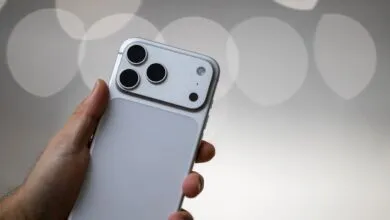
Apple’s iPhone Camera Roadmap Reveals a Costly Upgrade

▼ Summary
– iPhone 18 Pro models will feature a variable-aperture main camera, replacing the current fixed-aperture design.
– The new variable aperture lens will have a 50% higher average selling price than Apple’s current 7P lens system.
– Apple will source 40-50% of these components from Sunny Optical, with Largan remaining the main supplier.
– For 2028 iPhones, Apple plans to replace flip-chip packaging with an improved chip-on-board design for the ultra-wide camera module.
– Sunny Optical is positioned to be a supplier for the 2028 ultra-wide module, but no details on the COB improvements were provided.
Analyst Ming-Chi Kuo has released fresh insights into Apple’s future iPhone camera strategy, revealing a major hardware shift for the ultra-wide lens and a notable cost jump for the main camera. Here is what we know.
The iPhone 18 Pro is expected to introduce a variable-aperture Main camera later this year, a significant departure from the current fixed-aperture design. But this upgrade comes with a price. Kuo reports that the new variable aperture lens will carry an average selling price 50% higher than Apple’s existing high-end 7P lens system.
Apple plans to source between 40% and 50% of these components from Sunny Optical, a supplier already providing the compact camera module (CCM) for the MacBook Neo. Largan will remain Apple’s primary supplier for the majority of these parts.
While this component cost increase alone may not force Apple to raise prices on the iPhone 18 Pro and iPhone 18 Pro Max, the timing is unfortunate. Apple is already facing rising memory costs that are squeezing its profit margins.
Looking further ahead, Kuo also shared details about camera modules expected for the 2028 iPhone lineup. According to the analyst, the ultra-wide CCM in that generation will drop flip-chip packaging in favor of an improved chip-on-board (COB) design.
This means Apple is moving away from the current method, where the image sensor is mounted face-down and connected to the module substrate via tiny solder bumps. Instead, the company will adopt a refined COB approach for the ultra-wide camera. Kuo did not specify what improvements to the COB design convinced Apple to abandon flip-chip packaging, though he noted that Sunny Optical is “well positioned to become a supplier” for this future component.
Kuo’s full report also touches on Sunny Optical’s work with optical components for a rumored OpenAI smartphone and another pocket or mobile device.
(Source: 9to5Mac)