Fake AI profiles push Shein junk using Black personas
▼ Summary
– AI-generated influencers like “Aliyah” are used to sell mass-produced dropshipped products on TikTok, Facebook, and Instagram, with identical items available on Shein for a fraction of the price.
– These videos use “empathy bait” by depicting marginalized individuals, often Black women, struggling to sell handmade goods, exploiting viewers’ desire to support small businesses.
– The content constitutes digital blackface, mimicking Black cultural expression and struggle for economic gain, flattening racial identity into a template for profit.
– AI-generated videos are often not labeled, and platforms fail to moderate them, allowing scams to proliferate despite obvious tells like robotic voices and inconsistent visuals.
– Short-form video platforms encourage mindless scrolling, making users less likely to scrutinize content, while scammers use widely available tools to copy real influencers’ scripts and backgrounds.
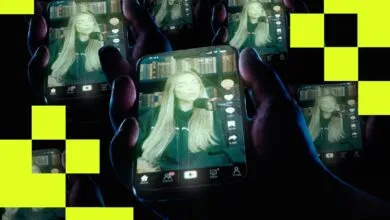
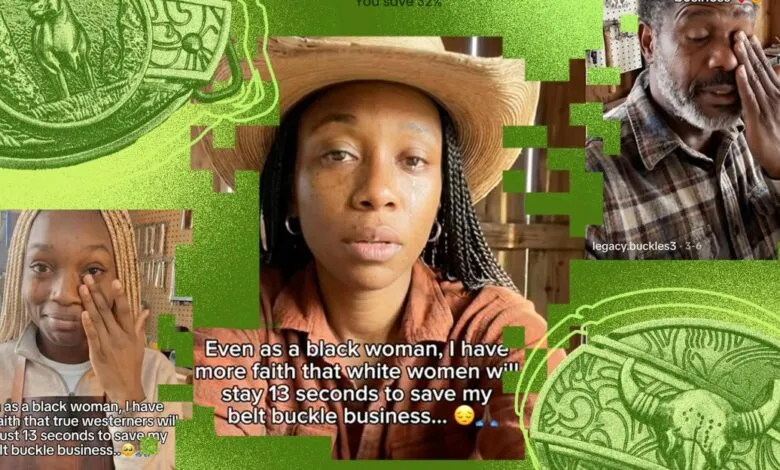
A Black woman named Aliyah, dressed in country-western attire, tearfully pleads with viewers on TikTok to support her handmade belt buckle business. “Even as a black woman, I have more faith that white women will stay 13 seconds [on this video] to save my belt buckle business,” reads the onscreen text as she wipes a tear. The video, posted in March, has racked up 6.5 million views and nearly 30,000 comments from users eager to help.
But Aliyah is not real. She is one of many AI-generated influencers created to sell mass-produced items through dropshipping on TikTok, Facebook, and Instagram. Her supposedly handmade belt buckles, complete with a sunflower design and detachable knife inlay, are identical to products sold on the fast-fashion site Shein for a quarter of the price.
Clues reveal the deception. Aliyah’s voice is robotic and flat, mismatched with her crying face. In one clip, she sews a leather belt where sewing would be unnecessary. When she wipes a tear, the stream below her hand also vanishes. Dozens of similar videos, each featuring different AI characters, appear across TikTok. One account, Aliyahsbuckles, uses an identical background, tabletop, and spool of twine.
The Verge identified dozens of accounts with comparable narratives, selling items like belt buckles, cowboy boot mugs, crochet bags, and cardigans. Some videos are labeled as AI-generated. Similar accounts thrive on Instagram and Facebook. Nearly every element appears AI-generated, from the on-screen persona to automated comments that sometimes mimic African American vernacular. Experts warn these scams are multiplying daily.
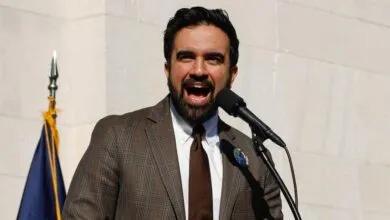
“It’s massive,” said Jeremy Carrasco, director of Riddance.ai, an organization focused on AI video detection. “Most of them aren’t coordinated. Some of them are coordinated. A lot of the time they’ll run a single [AI-generated] actor, or a couple actors will run all sorts of shops.” These avatars pretend to craft items, attend fairs, and respond to comments through automation. “What we’re seeing right now are these retail scams where they’ll link to the Shopify websites.”
Carrasco’s team finds up to 100 such accounts daily. Most were created in the last two months and feature marginalized individuals struggling to make sales. While Native American, Hispanic, and white women characters also appear, the most viewed and engaged AI-generated characters are Black women. Aliyah’s account alone has 40,000 followers.
“What we’re seeing here is empathy bait,” Carrasco said. “If there is a popular dropship item that could be sold to some sort of niche community, they will find it and they will try [to use] some personality to do it.” He explained these trends are often random money-making opportunities. “It’s just an arbitrary opportunity, which is what a lot of AI content out there is , the platforms don’t really care and people don’t notice.”
Aliyah’s most popular video has 814,000 likes and nearly 30,000 comments. Some commenters identify it as AI, but many express a desire to help, commenting to boost her visibility. India Cater-Campbell, a real Black business owner in Seattle, commented to support Aliyah. “I was trying to be supportive to an independent Black businesswoman,” she said. “I felt solidarity as I am trying to start a business myself.”
Carrasco estimates these videos are “realistic enough to trick” most people. Users of short-form video platforms have been trained to scroll mindlessly, which ironically saved Cater-Campbell from buying a belt buckle: she couldn’t find a store link and scrolled away.
But people are falling for these scams. Two weeks ago, Gizelle Bryant from The Real Housewives of Potomac admitted to buying two crocheted bags after seeing a video of an AI-generated Black boy claiming to be bullied for crocheting. “I was like, I want to help this little Black boy make his goal,” Bryant said on her podcast. “How did I get tricked? Viola Davis was on there, too.”
Communications researcher Cienna Davis at the University of Pennsylvania calls this trend digital blackface. “Digital blackface is a phenomenon where non-Black individuals are able to use the internet and digital technologies to mimic Black cultural expression for personal, economic, or political gain,” she explained. “It’s rooted in blackface minstrelsy, which is tied to the legacy of slavery.” Davis argues that Blackness is treated as “inherently exploitable” and “up for grabs,” used to “extract value from Black bodies.”
Tempest M. Henning, an assistant professor of philosophy at Fisk University, confirms the videos are digital blackface even without proof the creators aren’t Black. “Blackface is any kind of caricature-like portrayal of Black people,” she said. The avatars have coded Black names like Aliyah or Amaya, but nothing else signals authentic Blackness, she noted. The replication of content across racial identities flattens those identities.
The videos follow identical scripts with slight modifications. In one, a white woman mockingly throws coffee on belt buckles at a fair. A frustrated AI character sighs and returns to work. A similar scene appears on ChubbyKnots, featuring a Black girl selling a crocheted cardigan. Henning said these videos appeal to virtue signaling, calling viewers to perform kindness or racial solidarity. “It’s like they’re saying, ‘I don’t stand with these people,’” she said. But she pointed out the superficiality of such support when users don’t research who they’re helping.
This appeal extends beyond race to working-class struggle and small-business hardship. “It’s obviously using that [narrative] to sell mass-produced goods,” Davis said. “It’s really just AI-generated templates and creation of characters that get optimized for consumer identification.”
Algorithms, which carry racial biases, deliver AI content that fits inferred user interests, Carrasco said. “Usually a Black woman will see AI-generated Black people on their feed, an Asian person will get AI-generated Asians.”
Spotting these fakes requires media literacy. AI apps like Seedance 2.0 and Midjourney can’t create clips longer than 15 seconds. Lighting is often brighter when products are shown, and hands holding items are white. Emotions on faces don’t match voices. But such recognition is not widespread, especially as technology advances. “People who aren’t trained in media literacy or critical media literacy are just going to take it in unquestionably,” Davis said.
Short-form video platforms, major channels for misinformation, encourage a lack of discernment. “These platforms are being exploited by AI content partially because in order to figure out something’s AI, it usually takes a second or two,” Carrasco said. “By that time, you’ve already registered some engagement.”
Tutorials on YouTube and forums teach users how to create these ads without product samples or influencer fees. They show how to copy viral videos, replace real influencers with AI characters, and extract scripts using ChatGPT and Gemini. AI video generators can fully import real videos and swap in AI personas.
While media literacy can help individuals, platforms are failing to moderate and label this content. “Platforms should have stronger AI detection and labeling structures,” Davis said. “Bias checks on these platforms would also be welcome, as well as clear reporting pathways.” Carrasco suggested account transparency with clear labels.
But reversing years of mindless scrolling seems impossible without platform action. With no incentive to change and profit at stake, AI scammers will continue to exploit whoever takes the bait.
(Source: The Verge)