Leverage B2B PR to Influence AI Recommendations
▼ Summary
– 71% of B2B software buyers use AI chatbots to research vendors, and over half begin their buying process with an AI query.
– AI-generated answers typically surface only four to seven brands per category, with five brands capturing 80% of top responses.
– AI systems weigh source authority, entity clarity, and consistency across the web to decide which brands to surface and recommend.
– A dual-path PR strategy combines earned media for human buyers with structured content and consistent entity signals for AI systems.
– Brands must track decision outcomes to identify misalignments, such as being incorrectly categorized or framed as secondary, in AI responses.
B2B brands are discovering that simply appearing in AI-generated search results isn’t enough to win over buyers. The real challenge lies in how these systems frame, compare, and recommend vendors throughout the purchasing journey , a distinction that carries increasing weight as more software buyers bypass traditional research channels.
A March 2026 G2 survey of over 1,000 B2B software buyers reveals a seismic shift: 71% now use AI chatbots to research vendors, and more than half initiate their buying process with an AI query. This means brands only appear in responses when AI systems can confidently interpret, verify, and position them relative to competitors.
B2B purchasing is inherently collaborative, involving multiple decision-makers who each conduct independent research. Yet a growing portion of vendor comparisons now happens inside an AI tool before any human discussion occurs. Research from Magenta Associates underscores the stakes: just five brands capture 80% of top AI-generated responses in any given B2B category. Where Google once offered 10 blue links on a first-page result, AI-generated answers typically surface only four to seven brands.
These AI shortlists aren’t random. They’re built on systems that weigh source authority, entity clarity, and cross-web consistency. Brands must optimize for these signals or risk exclusion, even if they’ve secured impressive press coverage. The solution is a dual-path PR strategy paired with decision-outcome tracking to earn influence in an AI-mediated buying environment.
Think of dual-path PR like a resume navigating an applicant tracking system. A hiring manager needs narrative, personality, and clear structure. The tracking system needs structured formatting, precise keywords in the right fields, and consistent information across platforms. A beautifully written resume that can’t pass the system never reaches the manager. Similarly, if AI systems can’t parse, cite, or connect your brand to a clear entity, you won’t reach buyers.
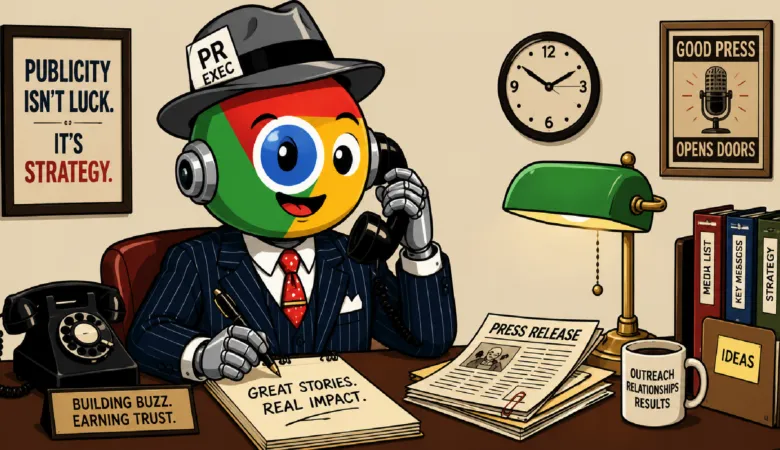
The first path PR manages is earned media , analyst coverage, trade placements, bylines, and broader brand marketing visibility. These reach buyers directly and build credibility over time. Working alongside that is a second path built around structured content, distributed presence, and consistent entity signals. AI systems use these to decide whether a brand is trustworthy enough to surface and recommend. Both paths draw on the same PR activity, but their architectures differ substantially.
To succeed, brands must track what AI actually surfaces. A brand might appear in an AI answer as a historical reference, a minor entry in a comparison list, or even as a counterpoint to another vendor’s positioning. New tools can measure decision outcomes by mapping a brand’s presence across queries with buying intent, such as narrowing a vendor field or drafting a shortlist. They also track AI perception , how the system characterizes a brand’s positioning and category authority, and how frequently the brand appears in results.
A brand might surface consistently but be described in ways that undercut its actual positioning. For example, it could be labeled a small-business tool when it serves enterprise accounts, or framed as a secondary option compared to a competitor. Decision-outcome tracking surfaces these misalignments so brands can refine how AI systems interpret and position them.
The earned media model still works, so you don’t need to scrap your PR playbook. Coverage that generates backlinks, supports broader marketing visibility, signals expertise across authoritative domains, and establishes consistent entity relationships will still reach human buyers. Buyers continue researching across search engines, AI tools, analyst content, and industry publications. Brands that influence both traditional discovery and AI-generated recommendations will hold a stronger position throughout the buying journey.
(Source: MarTech)