Google’s new AI ads turn marketing into conversations, not clicks

▼ Summary
– Google is shifting advertising toward AI-powered intent prediction and automation, aiming to qualify leads earlier in the customer journey rather than just generating volume.
– Business Agent for leads introduces conversational AI within Search Ads, allowing customers to ask detailed questions about services or pricing before clicking.
– New features like lead intent scores and journey-aware bidding prioritize predicted business outcomes over raw conversion volume, reducing low-quality leads.
– AI Max extends algorithmic optimization to Search campaigns, expanding targeting beyond keywords, but risks over-trusting automation without rich offline conversion data.
– Google’s measurement tools, such as qualified future conversions, use predictive models to estimate downstream behaviors, increasing advertiser dependence on non-auditable AI forecasting.
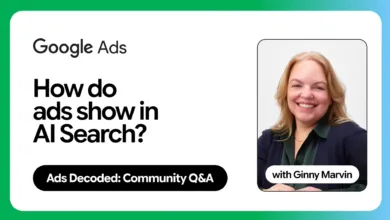
Google is quietly engineering a fundamental shift in how digital advertising works. The latest wave of updates across Google Ads, Analytics, creative tools, AI, lead generation, and measurement, unveiled in a detailed post by Google Ads Liaison Ginny Marvin, reveals more than 40 new features. But beneath the surface of conversational AI and predictive attribution lies a much larger transformation: Google is redefining advertising around intent prediction, AI-assisted decision-making, and automated systems that qualify users long before they ever become customers.
The core problem these launches address is one every lead generation marketer knows intimately: the gap between generating leads and generating good leads. Google’s solution is to turn ads into conversations. Take Business Agent for leads, for example. Instead of a simple click-to-landing-page experience, Google is embedding conversational AI directly into Search Ads. Prospective customers can now ask detailed questions about services, pricing, or availability, and receive answers grounded in a business’s website content. This fundamentally changes the ad’s role. Historically, lead generation followed a straightforward path: click, visit the landing page, fill out a form. Now, Google is inserting AI-powered qualification and reassurance right into the ad itself. For trust-sensitive sectors like finance, legal, healthcare, or home services, this could dramatically alter lead quality dynamics. A lead arriving after an interactive conversation is a very different prospect than someone who clicked impulsively on a headline.
This signals a broader strategic pivot: intent is becoming more important than volume. Many of the features Marvin outlined, including lead intent scores, journey-aware bidding, qualified future conversions, and enhanced spam filtering, are all designed to reduce the influx of low-quality leads. In theory, this solves a genuine industry frustration where campaigns optimise for cheap conversions that rarely turn into customers. But there’s a trade-off. As Google handles more of the qualification, forecasting, attribution, and optimisation process, advertisers lose visibility into how decisions are made. This becomes even more critical as AI-driven campaign systems expand.
AI Max feels like the next evolution of Performance Max. It applies broader algorithmic exploration logic to Search campaigns, allowing Google’s systems to expand targeting and discover additional query opportunities beyond traditional keyword intent. For ecommerce advertisers with strong revenue tracking and reliable first-party data, this could unlock meaningful scale. For lead generation advertisers without robust offline conversion data, however, the risks are much higher. This is where many may repeat the mistakes seen during Performance Max’s early rollout: over-trusting automation without feeding back enough business-quality signals. AI systems optimise based on the data they receive. If a campaign only tracks form fills, Google will optimise toward more form fills, regardless of whether those leads ever become customers. That’s why many of Google’s launches now focus heavily on offline conversion imports, first-party data integration, unified enhanced conversions, and CRM connectivity.
The advertisers who can feed richer revenue and sales-quality signals back into Google Ads will likely gain the biggest advantage in this new AI-led environment.
Measurement itself is becoming predictive. Features like Attributed Branded Searches and qualified future conversions aim to connect ad exposure with downstream behaviours that may happen months later. Instead of simply measuring what happened historically, Google increasingly wants to estimate what will happen next. This could help advertisers better understand long buying journeys where awareness campaigns influence conversions far outside traditional attribution windows. But it also creates growing dependence on AI-generated forecasting systems that advertisers cannot independently audit in full. This may become one of the biggest strategic conversations in PPC over the next few years: how much visibility are advertisers willing to trade for automation and efficiency?
Creative production is also evolving into infrastructure. Asset Studio is growing into a full-scale AI creative production ecosystem, where Google no longer treats creative generation as separate from media buying. The platform increasingly wants to generate assets, analyse them, optimise them, and test them automatically at scale. For lean marketing teams, this could dramatically reduce production bottlenecks and lower creative costs. But if AI-generated creative becomes widely accessible to everyone, differentiation becomes even more dependent on brand strategy, audience understanding, and first-party insights rather than production capability alone.
Individually, many of these launches may feel incremental. Taken together, however, they reveal a much larger shift. Google is steadily positioning itself as the infrastructure layer behind modern advertising decision-making, aiming to facilitate customer conversations, qualify leads, generate creative, optimise budgets, predict future outcomes, and unify measurement across channels. For advertisers, the challenge now is balancing automation with visibility. AI systems can absolutely improve performance. Predictive models can uncover opportunities humans miss. Automation can unlock efficiency at enormous scale. But the marketers who succeed long term will likely still be the ones who understand which signals actually matter, what drives genuine business outcomes, and when human judgement needs to override the machine.
(Source: Search Engine Land)