Russian satellites close in on ICEYE radarsat
▼ Summary
– Four Russian military satellites (Kosmos 2610–2613) changed their orbits to match a Finnish-American radar surveillance satellite (ICEYE-X36) in the last week.
– The orbit changes were identified through open source tracking data and revealed by retired Air Force intelligence officer Greg Gillinger.
– The four Russian satellites adjusted their orbital inclinations by less than a degree, a maneuver that consumes significant fuel.
– The maneuvers position the Russian satellites to routinely pass near the ICEYE satellite, which provides radar imagery to the US military and European governments.
– ICEYE also supplies imagery to Ukraine’s military, and its CEO met with Ukrainian President Volodymyr Zelenskyy last year.
At least four Russian military spacecraft have recently altered their trajectories to closely align with a Finnish-American radar surveillance satellite, intensifying concerns about Moscow’s activities in an increasingly crowded orbital environment. The orbital shifts were detected using publicly available tracking data and reported on Friday by Greg Gillinger, a retired Air Force space intelligence officer, in a special edition of his Integrity Flash newsletter. The publication is produced by Integrity ISR, a private firm specializing in “combat-proven operational support and elite training that enhances mission success across ISR, cyber, space, and targeting domains.”
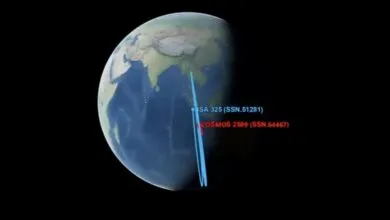
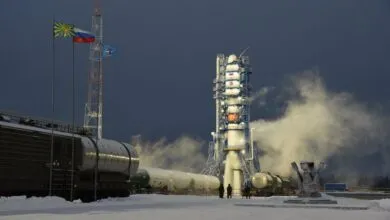
The satellites in question, designated Kosmos 2610 through 2613, were launched together on April 16 aboard a Soyuz-2.1b rocket from the Plesetsk Cosmodrome in northern Russia. Over the past week, each of these four platforms adjusted its orbital inclination,the angle of its path relative to the equator,by less than one degree. While such a minor tweak might seem trivial, executing a plane change of this nature consumes considerable fuel. The delta-v, or velocity change, required for this adjustment is roughly equivalent to the energy needed to boost a satellite’s altitude by more than 100 miles.
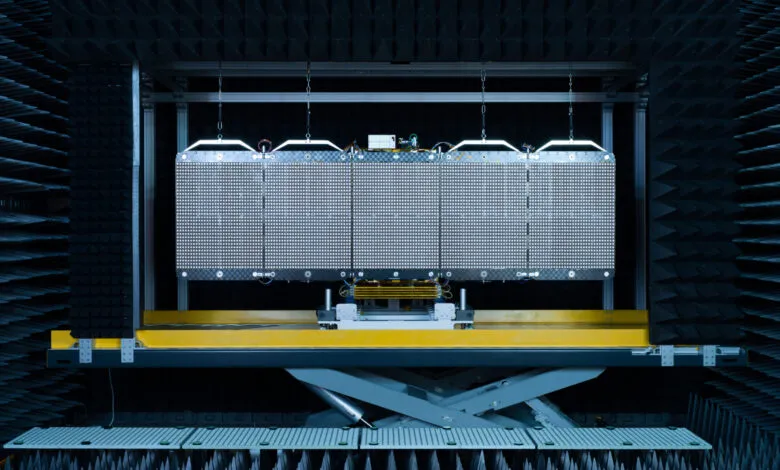
The result is that these Russian spacecraft are now positioned to regularly pass near ICEYE-X36, a commercial radar surveillance satellite owned by the Finnish-American company ICEYE. This imaging platform is part of a broader fleet that delivers all-weather radar imagery to the U. S. military and European governments. ICEYE also supplies critical reconnaissance data to Ukraine’s armed forces in their ongoing conflict with Russia. The company’s co-founder and CEO, Rafal Modrzewski, met with Ukrainian President Volodymyr Zelenskyy last year, underscoring the strategic importance of these capabilities.
(Source: Ars Technica)