Company Develops Invisible Face ID Technology
▼ Summary
– The notch, a prominent cut-in on older smartphones like the iPhone X, has largely been replaced on modern phones by floating punch-hole cameras, though notches remain common on laptops like MacBooks.
– Apple’s Dynamic Island on the iPhone 14 is a pill-shaped camera cutout that remains large due to its Face ID system, but it could shrink with new under-display camera tech from Metalenz.
– Metalenz’s optical metasurfaces use a flat-lens system with nanostructures instead of multiple traditional lenses, and over 300 million are already used in consumer devices for time-of-flight sensors.
– The company’s metasurfaces can capture polarization data, enabling systems to identify unique light signatures from objects like black ice, which can be used for driver alerts.
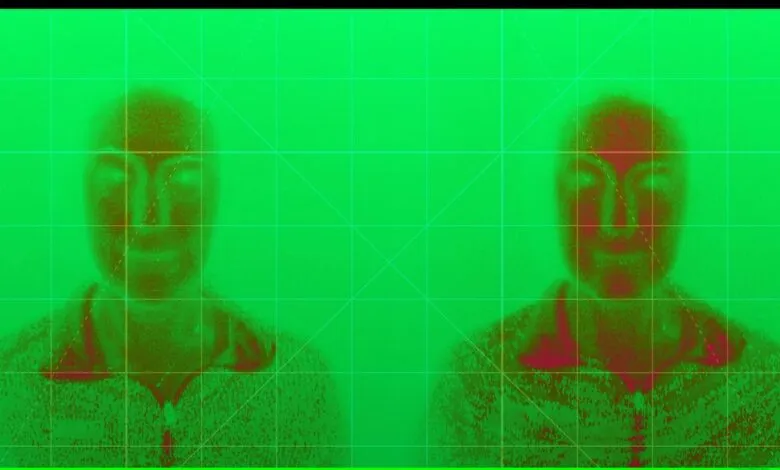
– Metalenz developed Polar ID, a facial authentication platform that uses polarization data to distinguish real skin from 3D masks, making it more secure than Google’s face unlock system.
The notch has long been a polarizing design element in consumer electronics. From the iPhone X to the LG G7, that dark cutout at the top of the screen was a necessary evil for housing front-facing cameras and sensors. While many modern smartphones have slimmed down to floating punch-hole cameras, Apple’s Dynamic Island remains one of the largest cutouts on the market, primarily because it contains the Face ID biometric system. Android phones, with few exceptions like Google’s Pixel line, generally lack a secure facial authentication equivalent, so their camera holes can be smaller. But that could soon change.
At Display Week 2026, Boston-based optics startup Metalenz unveiled a new under-display camera technology that could dramatically shrink the space needed for facial recognition. The key is their optical metasurfaces technology, a flat-lens system that occupies a fraction of the volume of traditional multi-lens elements. Instead of bending light through multiple layers of glass or plastic, a single lens covered in microscopic nanostructures handles the job. More than 300 million of these metasurfaces are already in consumer devices, replacing bulky optics in time-of-flight sensors used for depth mapping and autofocus.
Metalenz has also pioneered a method for capturing polarization data. When light strikes materials with different properties, it produces a distinct polarization signature. For example, light reflecting off black ice has a different signature than light bouncing off dry asphalt. With machine learning, a system can instantly detect black ice and alert a driver. The same principle powers Polar ID, the company’s facial authentication platform designed to rival Apple’s Face ID. By analyzing the polarization of light reflected from a person’s skin, Polar ID can distinguish a real human face from a high-quality 3D mask, something even Google’s Pixel face unlock system has struggled with. This makes it not just smaller, but potentially more secure than existing alternatives.
(Source: Wired)