Elon Musk Says He Started OpenAI to Prevent a ‘Terminator’ Future
▼ Summary
– Elon Musk and Sam Altman faced each other in federal court over Musk’s lawsuit regarding OpenAI’s shift from nonprofit to for-profit, which could affect OpenAI’s IPO plans.
– Musk argued the case’s outcome could set a precedent for charitable governance, warning that siding with Altman would legitimize exploiting nonprofit assets.
– Musk’s attorney stated Musk pushed for AI safety regulations since college, co-founding OpenAI as a nonprofit after government inaction, partly to counter Google’s AI progress.
– Musk testified that a small for-profit arm for OpenAI was acceptable initially, but he objected when Microsoft invested $10 billion in 2023, moving key assets to the for-profit entity.
– OpenAI’s attorney countered that Musk was aware of plans for large corporate investment since 2018 and only sued after launching his own AI competitor, xAI, in 2023.
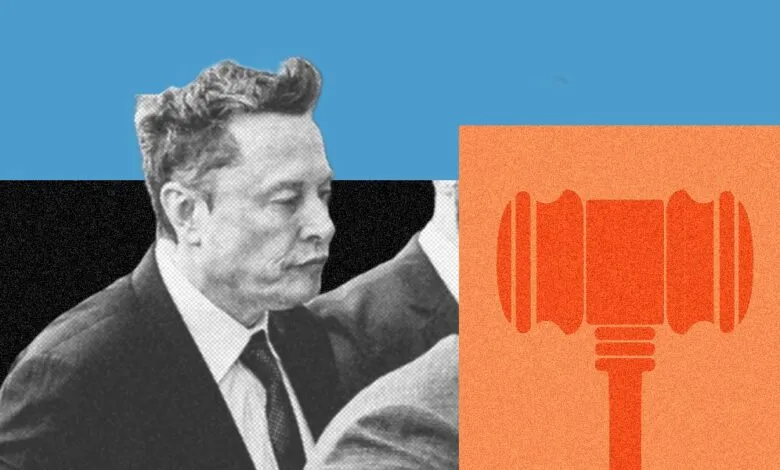
Elon Musk took the witness stand Tuesday in a federal courtroom alongside Sam Altman for the first time, as the high-stakes legal battle over OpenAI’s transformation from a nonprofit into a multibillion-dollar enterprise unfolds. The trial, stemming from Musk’s lawsuit against Altman, could result in financial damages and, more critically, governance changes at OpenAI that may complicate its anticipated initial public offering as soon as this year.
From the outset, Musk framed his case as having implications far beyond OpenAI itself. If the jury sides with Altman, Musk argued, it would “give license to looting every charity in America” and undermine the “entire foundation of charitable giving.” He addressed a panel of nine jurors advising US District Judge Yvonne Gonzalez Rogers on the appropriate ruling.
Musk’s attorney, Steven Molo, told the court that his client has worried about computers surpassing human intelligence “since he was a young man in college.” In 2015, Musk lobbied governments to regulate the development of artificial general intelligence, including a meeting with then-President Barack Obama. “But the government was not stepping up,” Molo said. “Elon felt he had to do something.”
Around that time, Musk met Altman, a then-30-year-old investor “whom he didn’t know very well,” according to Molo. Together, they launched OpenAI as a nonprofit to counter Google’s unchecked progress on AI, which they viewed as a threat. “My perspective is [OpenAI] exists because Larry Page called me a speciesist for being pro-humanity,” Musk said, referencing the Google cofounder. “What would be the opposite of Google? An open-source nonprofit.”
While Musk believes AI could cure diseases and create prosperity, he also warned the court about the technology’s potential for catastrophic outcomes. “It could also kill all of us … the Terminator outcome. I think we want to be in a movie … like Star Trek, not a James Cameron movie,” Musk said. (Though Musk has long raised alarms about AI safety, his current company, xAI, has faced criticism from researchers at other AI labs for its “reckless” safety culture.)
As OpenAI achieved early successes, Musk and Altman agreed that a for-profit arm with fixed returns for investors was necessary to raise the extraordinary capital needed for hiring and computing, Molo explained. He compared the arrangement to a nonprofit museum that receives some revenue from a for-profit gift shop. “I was not opposed to there being a small for-profit as long as the tail didn’t wag the dog,” Musk testified.
The tipping point came when Microsoft, another defendant, agreed to invest $10 billion in 2023, and OpenAI began shifting intellectual property and staff to the for-profit entity. “The museum store sold the Picassos so they were locked up where no one could see them,” Molo said.
OpenAI’s attorney, William Savitt, countered that the company never promised Musk it would remain a nonprofit or publish all its code. “The evidence here will show what Musk says happened did not happen,” Savitt told jurors. He added that Musk was aware of plans to raise corporate investment exceeding $10 billion as far back as 2018. Musk even expressed concerns about Microsoft’s involvement in a 2020 tweet, but he didn’t file a lawsuit until after founding his own competitor, xAI, in 2023.
(Source: Wired)