Elon Musk and Sam Altman’s court battle to reveal secrets
▼ Summary
– Elon Musk’s lawsuit against OpenAI, alleging fraud and breach of contract, is set for trial on April 27th in Oakland, California.
– Musk has filed four lawsuits against OpenAI, with several claims dismissed, including a racketeering charge and a trade secrets case.
– The trial will feature testimony from high-profile AI executives like Microsoft’s Satya Nadella and former OpenAI board members.
– Musk seeks to damage OpenAI’s reputation and potentially derail its IPO, as his own xAI (now part of SpaceX) also plans an IPO.
– The lawsuit is part of a personal feud between Musk and Sam Altman, with discovery revealing sensitive details like Musk’s relationship with Shivon Zilis.
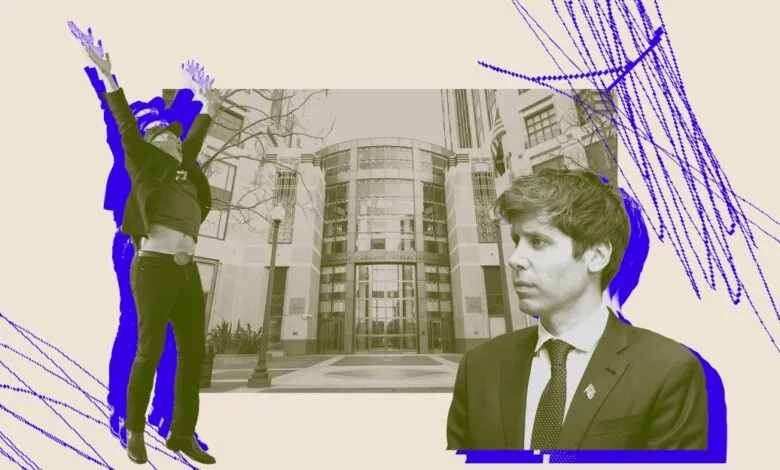
The trial between Elon Musk and Sam Altman is set to begin on April 27th in Oakland, California, and while the legal filings claim it’s about whether OpenAI defrauded Musk, the real story is far messier. Musk, who cofounded OpenAI and then left in a huff when he wasn’t made CEO, has returned with a lawsuit that feels less like a legal dispute and more like a personal vendetta. Over the past couple of years, his legal theories have ranged from breach of contract to unfair business practices to false advertising, but the timing is particularly charged. Musk’s xAI, now part of SpaceX, has filed for an initial public offering, and OpenAI is rumored to be considering its own IPO. Billions of dollars are on the line.
That the case has even reached trial is a victory for Musk, who seems intent on damaging OpenAI’s reputation through any means necessary. From lawsuits to general mudslinging to a homophobic dossier on Altman reportedly circulating in Silicon Valley via “Musk intermediaries,” the strategy is clear. Sam Brunson, a law professor at Loyola University of Chicago, noted that the case “only ended up at trial because Elon Musk can pay his attorneys to argue a losing case. If I were doing this on contingency, I’d assume I wouldn’t be getting paid.”
Over the next few weeks, high-profile figures like Microsoft CEO Satya Nadella and CTO Kevin Scott are expected to testify. Former OpenAI executives, including cofounder Ilya Sutskever and ex-CTO Mira Murati, may also be called, along with former board members involved in Altman’s temporary ouster in 2023.
Lawsuits appear to be Musk’s preferred alternative to therapy. He has sued perceived adversaries of his X platform, including a nonprofit in a case dismissed as “baseless” and another firm that forced him to follow through on buying Twitter. Tesla and SpaceX are litigation hotbeds, and his numerous family law matters involving 14 known children add to the chaos.
Musk has actually filed four lawsuits against OpenAI. The first, for breach of the founding agreement, was filed in 2024 and withdrawn just before a major hearing. The current case, also from 2024, alleges “Shakespearean” deceit, though several claims, including a laughable racketeering charge, have been dismissed. A third suit by xAI accused Apple and OpenAI of anticompetitive behavior by putting ChatGPT exclusively into iPhones; that case is ongoing. A fourth, alleging poaching and trade secret theft, was dismissed.
In court, Musk will argue three main claims: that Altman and Brockman breached OpenAI’s charitable trust, engaged in unjust enrichment at his expense, and committed fraud. His lawyer will tell a jury that Musk was duped into funding the company under promises that weren’t kept. He’s demanding that Altman and Brockman be removed from their roles, that OpenAI award money to its nonprofit, and that it cease its current structure as a public benefit corporation.
OpenAI has countered that Musk failed to prove any “cognizable promise” was made and that he lacks standing for some claims. The company pointed out that Musk could have intervened in its 2025 recapitalization but didn’t. “This suit is the latest move in Elon Musk’s increasingly blusterous campaign to harass OpenAI for his own competitive advantage,” OpenAI wrote. “Since launching a competing artificial intelligence company, xAI, Musk has been trying to leverage the judicial system for an edge. The effort should fail.”
OpenAI might argue it engaged in self-help, like starting its for-profit arm, because Musk pulled promised funding from the nonprofit, says Peter Molk, a law professor at the University of Florida. But that defense may not hold. “My walking away doesn’t mean you can break any agreement we have,” Molk says. Musk could argue that OpenAI should have sued him to force payment, though that would likely have bankrupted the company.
The trial’s revelations “will absolutely change [OpenAI’s] reputation, if it’s still trying to claim it’s doing this in some high-minded, ‘we want to make AI safe for humanity’ way,” says Deven Desai, a professor of business law and ethics at Georgia Tech. “The court documents and testimonies will make it harder and harder for OpenAI to keep claiming that’s what it’s about.”
Since the lawsuit was filed, OpenAI’s reputation has already cratered. Lawsuits from people who say ChatGPT encouraged suicides, constant executive reshuffling, and Anthropic’s dominance in enterprise products have cooled enthusiasm. There’s also the question of whether OpenAI, one of the most expensive startups ever, will turn a profit that meets investor expectations.
Discovery has already revealed that Sutskever and others worried about the success of Stability AI, a competitor open-source lab. Sutskever felt “betrayed” by early investor Reid Hoffman founding his own AI lab, and Altman responded, “I think at this point OpenAI has the leverage to ask for a soft promise for new investors not to invest in competitors.” Altman also failed to disclose to the board that he was personally running an OpenAI VC fund, according to former board member Helen Toner’s deposition.
Some of Musk’s demands, like unseating executives and changing the company’s structure, are likely unrealistic. State attorneys general from California and Delaware have already approved OpenAI’s restructuring. But Desai says even if the court doesn’t act, Musk might still get what he wants. The suit could do real damage, especially ahead of OpenAI’s IPO, with some shareholders reportedly questioning if Altman is the right leader amid allegations of untrustworthiness and manipulation.
Musk’s strategy isn’t just about winning in court, says Desai. It’s about “go[ing] after OpenAI as it currently exists. It’s to create enough issues around how it has evolved to cause trouble and possibly get to the point where even if Musk doesn’t win, he’ll have made it look like it’s not worth keeping Mr. Altman in his position.” Any scandalous information about OpenAI’s C-suite could derail the IPO.
Musk has his own AI project with xAI and is nakedly trying to damage a competitor, says Molk. Much of the damage,bad PR, litigation costs, and distracting executives as they prepare for an IPO,occurs outside the courtroom. “As long as there is some credibility [to Musk’s case], the motivation doesn’t matter,” he says.
The suit is part of a yearslong feud between Altman and Musk, whose personal and working relationships soured publicly. Musk’s xAI targets the same government contracts and consumer chatbot users as OpenAI. He also folded xAI into SpaceX, as he had planned to do with OpenAI and Tesla.
OpenAI is racing both SpaceX and Anthropic to an IPO, with more investor pressure than ever to generate revenue after raising billions without profit. Reportedly, even OpenAI’s CFO doesn’t believe the company is ready to go public in 2026 due to its spending commitments, though other executives want to beat Anthropic to the market. Any scandalous information about the C-suite could derail the IPO.
Musk is also vulnerable to mudslinging. SpaceX has filed confidentially for an IPO, possibly as soon as June. Anything revealed about xAI or Musk personally could affect investor interest, especially with the trial so close to the IPO. Discovery has already shown Musk actively recruiting from OpenAI.
Other sensitive topics include Musk’s relationship with Shivon Zilis, a former OpenAI board member and mother of several of his children. Zilis, once OpenAI’s “Elon whisperer,” has questioned the meaning of a “romantic relationship” in her deposition. “Relationship is a relative term. But there have been romantic moments,” she said. In a 2018 text, Zilis asked Musk if she should stay “close and friendly” to OpenAI to “keep info flowing.” She also told Musk that after he hung up on a call, Sutskever was “visibly devastated” and could be recruited.
Another key witness is Jared Birchall, Musk’s fixer who runs his family office. Birchall is likely privy to many of Musk’s secrets, and his testimony could be damaging. But as Brunson says, “I’m not sure how much reputation Musk has left to lose.”
(Source: The Verge)