Microsoft Executives’ Unfiltered View of OpenAI in 2018
▼ Summary
– Microsoft executives had reservations about funding OpenAI as early as 2018, when OpenAI was a small nonprofit, as shown in emails presented during the Musk v. Altman trial.
– In 2017, Microsoft executives noted OpenAI’s work focused on AI for video games and lacked imminent breakthroughs, and OpenAI needed five times more computing power than originally secured.
– Microsoft worried that not supporting OpenAI could push it to partner with Amazon, the dominant cloud provider at the time.
– In 2016, Microsoft agreed to provide $60 million in discounted cloud services to OpenAI, which OpenAI consumed twice as fast as expected.
– In 2017, OpenAI CEO Sam Altman requested $300 million in Azure services, but Microsoft’s analysis indicated a potential loss of $150 million, leading to internal reluctance and stalled discussions.
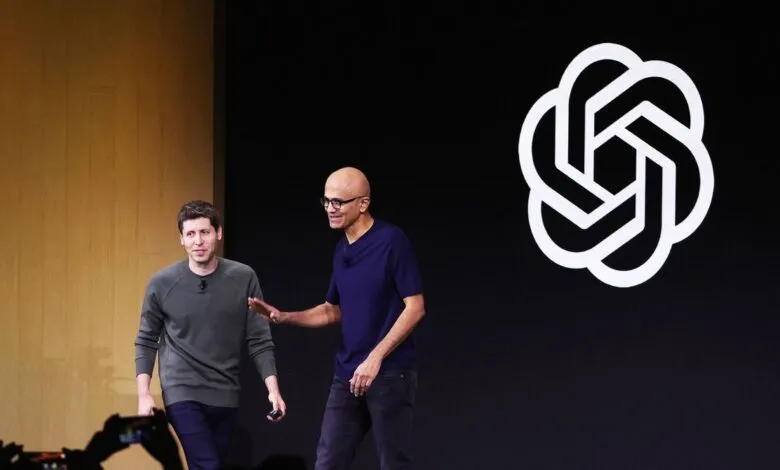
OpenAI’s partnership with Microsoft, once hailed as a landmark alliance in the tech industry, has become increasingly strained as the creator of ChatGPT evolves into a formidable competitor. Yet, internal doubts about financing the lab were brewing among Microsoft’s top brass as early as 2018, when OpenAI was still a modest nonprofit research entity. This was revealed through a series of emails between over a dozen Microsoft executives, including CEO Satya Nadella, presented in federal court on Thursday during the Musk v. Altman trial.
The correspondence sheds light on how Microsoft hesitated over what would later be celebrated as one of the most successful corporate collaborations in technology. Several executives expressed skepticism after visiting OpenAI, noting no clear signs of imminent breakthroughs in artificial general intelligence. Back in 2017, the lab’s primary achievements involved building AI systems capable of playing video games, which showed promise but required five times more computing power than originally arranged with Microsoft.
Despite these reservations, Microsoft feared that withholding support might drive OpenAI toward Amazon, then the dominant cloud provider. Roughly 18 months after the emails were exchanged, Microsoft announced a $1 billion investment in OpenAI, following the lab’s creation of a for-profit arm that offered the tech giant potential returns of $20 billion. Microsoft declined to comment on the matter.
Elon Musk’s legal team introduced the emails to highlight the shifting dynamics between the two companies. After Musk personally reached out to Nadella, Microsoft agreed in 2016 to provide $60 million in discounted cloud services to OpenAI. However, OpenAI consumed those resources twice as fast as anticipated.
The email thread began on August 11, 2017, when Nadella congratulated OpenAI CEO Sam Altman on winning a video game competition using AI that mimicked human players. Ten days later, Altman responded, requesting $300 million worth of Microsoft Azure cloud services. “We could figure how to fund some of it but not that much,” Altman wrote, also seeking financial aid and engineering assistance. “I think it will be the most impressive thing yet in the history of AI.”
Three days later, Nadella asked four senior executives for advice. Jason Zander, Microsoft’s executive vice president, reported that the AI team saw “no value in engaging” with OpenAI. The research team believed its own work was “more advanced,” while public relations staff opposed supporting a group promoting the idea of “‘machines beating humans.’” Zander suggested that Azure could benefit from associating with Musk and Altman but cautioned against taking a “complete bath,” or significant financial loss.
A subsequent analysis revealed that Microsoft might lose around $150 million over several years if it fulfilled Altman’s request. “Unless he can help us draw a more direct networking effect with OpenAI->Microsoft business value, we will wind up having to pass,” Zander wrote.
The discussion stalled for months but resumed on January 10, 2018, when Brett Tanzer, then a director on the Azure cloud unit, emailed Nadella. Altman had proposed licensing OpenAI’s gaming AI to Microsoft’s Xbox division in exchange for “$35-50 million in Azure Credits.” However, Xbox could not commit that amount. Tanzer’s email indicated that Microsoft planned to inform Altman there would be no further discounts after March.
(Source: Wired)