Vatican Enlists AI Firm Anthropic for Pope’s Encyclical Event
▼ Summary
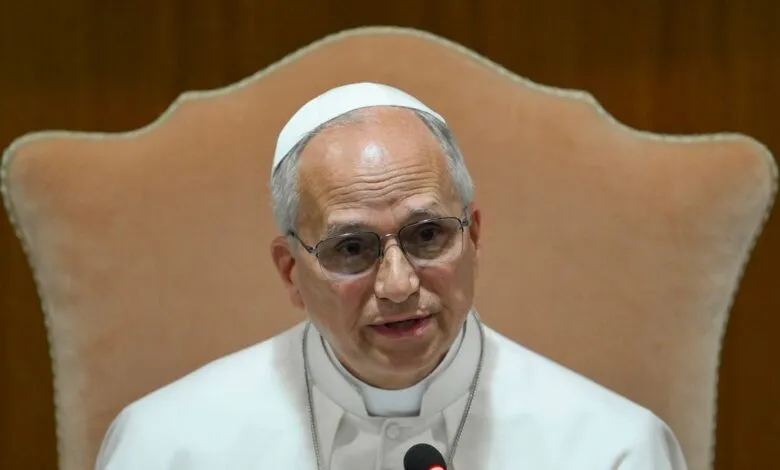
– Pope Leo XIV presented his first encyclical on AI, inviting Anthropic cofounder Christopher Olah to speak, signaling a new alliance between the Catholic Church and Silicon Valley.
– Anthropic was founded in 2021 by former OpenAI researchers who believed AI models were becoming too powerful for development driven solely by competition and speed.
– Anthropic builds its public image on AI safety, using “Constitutional AI” to train models with ethical principles rather than just correcting dangerous responses.
– The Vatican began engaging directly with the AI industry through the 2020 Rome Call for AI Ethics, later seeing Anthropic as a key partner due to its focus on safety over growth.
– Christopher Olah, a leading researcher in model interpretability, aligns with the encyclical’s concern about building technologies too powerful to be understood or controlled.
When Pope Leo XIV unveiled his first encyclical on artificial intelligence at the Vatican this week, the event featured an unexpected guest: Christopher Olah, cofounder of Anthropic. His presence marked a historic bridge between the Catholic Church and Silicon Valley, but the roots of this partnership trace back to the company’s very origins.
Why Anthropic? Founded in 2021 by a splinter group of former OpenAI researchers, including Dario and Daniela Amodei, Anthropic was built on a firm belief: AI models were growing too formidable to be developed solely under the pressures of competition and speed. Since then, the firm has staked its reputation on AI safety, striving to create not just powerful systems but ones that are controllable and ethically guided. This ethos is embodied in Constitutional AI, a framework that trains models using a set of principles rather than merely patching risky outputs.
The Vatican’s Convergence with AI did not happen overnight. Olah’s invitation was the product of a deliberate, multiyear effort by the Holy See to move from being a moral observer of technology to a direct participant in the AI conversation. The first major milestone arrived in 2020 with the Rome Call for AI Ethics, spearheaded by the Pontifical Academy for Life alongside Microsoft, IBM, and other global bodies. That initiative sought to establish shared ethical pillars for AI, such as transparency, inclusion, and accountability.
Initially, the Vatican focused on bioethics and moral quandaries. But the landscape shifted dramatically with the rise of ChatGPT, the intensifying U. S.-China tech rivalry, and the expanding influence of Big Tech. The Holy See concluded that the stakes had escalated beyond mere ethics to the future of humanity itself. In this context, Anthropic emerged as a uniquely valuable partner. Unlike many Silicon Valley giants built on relentless innovation and growth, Anthropic placed AI safety at the core of its identity.
The Vatican has zeroed in on one particularly critical area: AI alignment, the challenge of ensuring models act in accordance with human intentions and values.
Christopher Olah’s Role is pivotal here. While the Amodei siblings often handle media, Olah represents the more theoretical, almost philosophical dimension of AI research. He is globally recognized for his work on model interpretability, the effort to peer inside the black box of complex neural networks and understand their inner workings. On his personal site, Olah describes his mission as “transforming neural networks into algorithms understandable to human beings.” Few figures align more closely with the core of Pope Leo XIV’s encyclical, a document centered on the risk of creating technologies too powerful to be understood, controlled, or governed.
According to multiple journalistic accounts, contacts between Vatican circles and Anthropic likely intensified during global AI safety summits. The Holy See saw in Anthropic a company willing to publicly admit that the challenge of artificial intelligence cannot be solved by the tech industry alone.
(Source: Wired)