Elon Musk’s Latest Appearance Shows Petty Over Preparation
▼ Summary
– Elon Musk appeared flat and unprepared during his testimony in Musk v. Altman, contrasting with his charming performance in a previous defamation suit.
– Musk spent much of his direct examination bragging about his contributions to OpenAI, such as coming up with the idea and name, recruiting key people, and providing initial funding.
– He testified that OpenAI was created to prevent Google from having too much power in AI, stemming from a disagreement with Larry Page over AI safety.
– Musk’s testimony included claims of working 80 to 100 hours a week and a petulant tone, with most of the courtroom remaining silent during his attempts at humor.
– The trial’s core issue is whether OpenAI betrayed its mission and fooled Musk into making a charitable donation, but his testimony focused on distractions rather than a clear narrative.
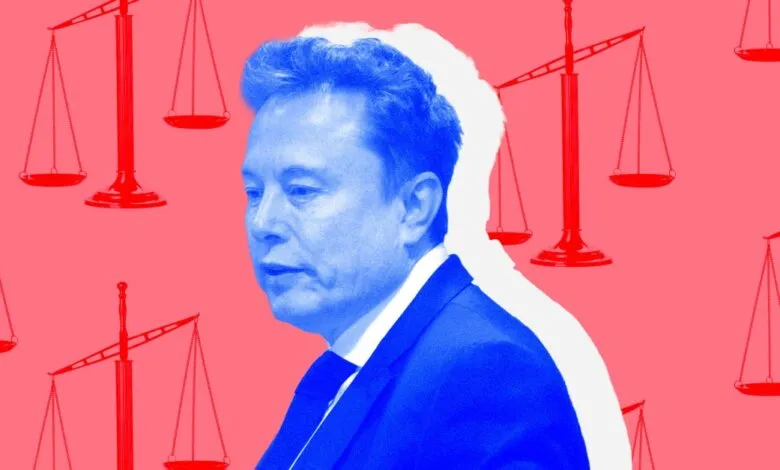
The first witness sworn in today in Musk v. Altman was Elon Musk himself, and I was struck by how lackluster he appeared on the stand. This isn’t the first time I have observed Musk in a courtroom setting. During his defamation trial, he exuded charm and charisma, and the jury ultimately acquitted him. Today, however, he seemed disoriented and unprepared. The only moments he genuinely came alive were when he boasted about his contributions to OpenAI.
Direct examination is essentially storytelling through questions, and clarity is critical for the jury to follow the narrative. In a lawsuit accusing Sam Altman of abandoning OpenAI’s founding mission, Musk spent a surprising amount of time focusing on himself, recounting his biography, and hyping up his unrelated ventures. “I came up with the idea, the name, recruited the key people, taught them everything I know, provided all the initial funding. Besides that, nothing,” Musk testified, pausing for laughter that barely materialized. Only a couple of people chuckled; the courtroom remained mostly silent. He sounded petulant.
For example, he told jurors he worked “80 to 100 hours a week” to achieve so much. It remains unclear whether his prolific social media posting counts toward that total. I hope the defense asks about that.
Eventually, the testimony turned to OpenAI, where Musk painted himself as the driving force. He claimed he had worried about AI since childhood and felt someone needed to stop Google from dominating the field. He described a conversation with Google’s Larry Page, asking, “What if AI wipes out all the humans?” According to Musk, Page essentially shrugged, saying that as long as the AI didn’t go extinct, things were fine. “I said, ‘That’s insane,’ and he called me a species-ist for being pro-human,” Musk recalled. For Musk, OpenAI was born specifically to limit Google’s power. Petty! He also noted that after recruiting Ilya Sutskever, a research scientist at Google, to OpenAI, “Larry Page refused to speak to me ever again.”
When asked what he actually did at OpenAI, Musk repeated his earlier boast: “I came up with the idea, the name, recruited the key people, taught them everything I know, provided all the initial funding. Besides that, nothing.” He added, “I could have started it as a for-profit and I chose not to.”
It is difficult to preempt the argument you expect without making it yourself.
I wonder how much of this the jury is absorbing. We raced through complex concepts, including “artificial general intelligence,” an imaginary threshold that many AI researchers fear. Musk defined AGI as when a computer “becomes as smart as any human, arguably smarter than any human.” Large language models are not the same as intelligence, and AGI has been defined downward for years, but this case is not about that.
At one point, Musk was asked to explain who former OpenAI board member Shivon Zilis was. “Shivon was the, um, my chief of staff and, uh, you know,” he said. Someone in the gallery, presumably aware that Zilis is the mother of several of Musk’s children, burst into loud laughter. The jury looked puzzled.
During discussions about how to secure massive funding for OpenAI’s computing needs, the testimony touched on a for-profit arm of OpenAI with Musk’s involvement. The strategy seemed to highlight that Musk’s intentions differed from the for-profit structure that eventually emerged. That is true: he did not get the 55 percent equity a proposed cap table suggested. But the discussion felt mushy, bogging down in Musk’s opinion on reasonable equity splits between founders and funders. It is hard to preempt the argument you expect without making it yourself.
This is also a distraction from the trial’s core question: Did OpenAI betray its mission and trick Musk into making a charitable donation? Agreeing to a for-profit model but not that for-profit model is not a strong argument.
We will return for more Musk testimony and presumably cross-examination. If the defense presents a clearer story, this trial is effectively over but for the shouting. I have seen Musk deliver a strong performance on the stand before. Today, he just did not seem dialed in. Maybe he knows this trial is wasting his time.
(Source: The Verge)