Sharing a Screenshot Could Land You in Jail in the UAE
▼ Summary
– UAE authorities arrested individuals for sharing misleading videos, AI-generated clips, and misinformation during Iranian missile and drone attacks, citing existing cybercrime laws.
– Article 52 of UAE cybercrime law criminalizes spreading false news or content that disturbs public peace, with penalties doubling during crises to a minimum of two years in prison and a 200,000 dirham fine.
– Legal consultant Ahmed Elnaggar explains that content during emergencies is judged by its potential impact on stability, not just accuracy, making unverified material risky to share.
– Screenshots of private communications become legally problematic if shared without consent, as the law holds the person disclosing the content responsible regardless of intent.
– Under UAE law, forwarding or republishing problematic content carries the same liability as creating it, since “publishing and republishing are treated in the same way.”
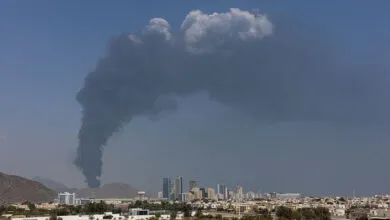
When Iranian missile and drone strikes targeted the United Arab Emirates earlier this year, the conflict wasn’t just visible in the skies. It also played out across digital platforms, drawing sharp attention to the nation’s cybercrime laws. Authorities quickly announced arrests linked to misleading videos, AI-generated clips, illegal filming, and the widespread dissemination of misinformation.
For many residents, the news came as a shock. How could a simple screenshot, a forwarded video, or a social media post escalate into a criminal offense? The answer lies in legal statutes that were already firmly in place long before the recent escalation.
During ordinary times, numerous forms of online misconduct can carry penalties under the UAE’s cybercrime framework. However, during crises, emergencies, or disasters, the legal stakes rise dramatically. Specifically, UAE law Article 52 criminalizes using the internet to spread false news, misleading rumors, or content that contradicts official announcements. It also targets material capable of disturbing public peace, spreading panic, or harming public order.
Under normal circumstances, the minimum penalty is one year in prison and a fine of 100,000 UAE dirhams. But during epidemics, crises, emergencies, or disasters, those figures double to a minimum of two years and 200,000 UAE dirhams. The recent conflict did not introduce a new law; it simply activated stricter penalties under an existing one.
Legal consultant Ahmed Elnaggar, managing partner of Elnaggar & Partners, explains that the rationale behind arrests for online activity is entirely consistent with this framework. “Content shared during emergencies is assessed not only for its accuracy, but also for its potential impact on stability, security, and public perception,” he says. “What might appear as commentary or documentation can, in such contexts, be interpreted as harmful or unlawful communication.”
Authorities ordered the arrest of defendants accused of publishing misleading videos, including AI-generated clips, and circulating material deemed harmful to public order and security. Abu Dhabi Police also announced the arrest of 375 individuals for illegally photographing designated locations and spreading misinformation online.
From a legal standpoint, Elnaggar warns that all content from unverified or unofficial sources during a conflict carries serious risk. “Only content issued by official, approved UAE public authorities should be treated as safe to share,” he says.
Long before the recent conflict, the UAE’s cybercrime framework has always extended well beyond hacking, stolen passwords, and online fraud. Under Federal Decree-Law No. 34 of 2021, it also covers privacy violations, false information, misuse of digital platforms, online defamation, and other forms of harmful online conduct.
For residents, tourists, creators, and anyone carrying a smartphone, the practical lesson is clear: Some common online habits can have serious legal implications.
When a Screenshot Stops Being Harmless
Screenshots have become a language of their own. They document conversations, settle arguments, provide evidence in disputes, and occasionally serve no purpose beyond making a group chat more interesting. But once a private exchange is copied and shared, it may no longer be treated as private. And under the law, intent is not always the deciding factor.
Elnaggar puts it bluntly: “The law does not distinguish between formal publication and informal sharing when the outcome is the same.”
A screenshot becomes legally problematic, Elnaggar says, when it exposes private communications without consent, distorts the context of what was said, or contributes to reputational harm. “The law assumes responsibility at the point of disclosure,” he explains. “Even if content was originally shared in confidence between two parties, redistributing it can transform a private exchange into a regulated media act with legal consequences.”
Many users assume that intent is the deciding factor. The law, broadly speaking, does not.
Forwarding Still Counts
A related misconception is that only the person who created problematic content carries any risk. That the person who wrote the message, filmed the video, or started the rumor is at fault, but not the person who simply passed it on. That assumption does not hold up under UAE law.
The legal definition of media activity is broad enough to capture not only original creators but anyone who participates in the circulation of content. “Publishing and republishing are treated in the same way. Liability is attached to the act of publication itself,” Elnaggar says.
(Source: Wired)