Tesla’s Cybercab enters production, but why is Musk pumping the brakes?
▼ Summary
– Tesla’s Cybercab has entered production at its Austin Gigafactory, but Elon Musk is cautious about the rollout.
– Musk said the robotaxi expansion is limited by rigorous safety validation to avoid accidental injuries, though Tesla has reported 14 crash incidents since the service launched.
– Musk acknowledged that Cybercab production will follow a slow S-curve, ramping up toward the end of the year and into next year.
– The Cybercab lacks traditional controls like a steering wheel, and Tesla is self-certifying compliance with safety standards rather than using a government exemption cap.
– Tesla has not solved full autonomy, and Musk admitted that unsupervised FSD or robotaxi revenue will not be material this year but may be significant next year.
Tesla’s Cybercab has officially entered production at the company’s Gigafactory in Austin, Texas, but CEO Elon Musk is striking an unexpectedly cautious tone about what comes next.
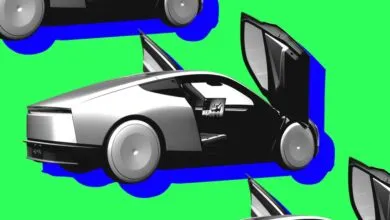
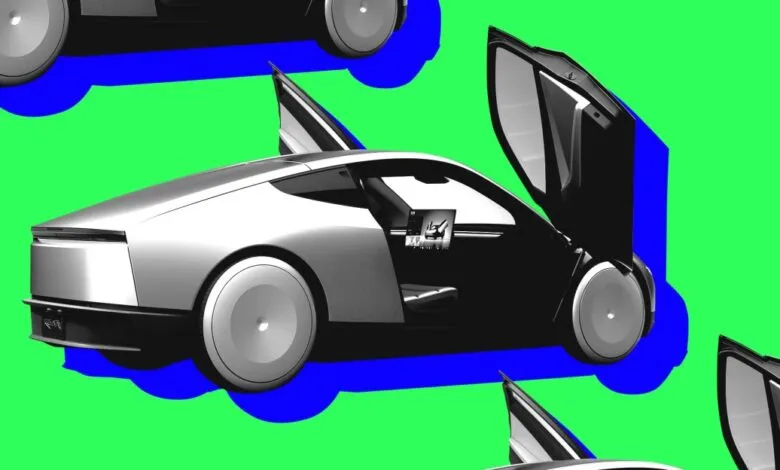
The news broke Thursday on X, where Tesla shared a video filmed inside a steering wheel-less Cybercab as it rolled out of the factory. The caption read, “Purpose built for autonomy.” While a handful of initial Cybercabs were built back in February, continuous production only began this month. Yet despite this milestone, the company’s robotaxi ambitions are moving far slower than many anticipated, and Musk’s typically exuberant promises are noticeably tempered.
During this week’s earnings call, Musk sounded unusually reserved when discussing Tesla’s robotaxi rollout. He offered few new details about the recent expansion into Dallas and Houston, where each city currently has just two vehicles operational a week after launch. When pressed on the sluggish pace, Musk emphasized safety above all else.
“The limiting factor for expansion is really rigorous validation, making sure things are completely safe,” he said. “We don’t want to have a single accidental injury with the expansion of Robotaxi, and we have, to the credit of the team, not had a single one to date.”
But that claim is hard to verify. Since Tesla’s robotaxi service launched in Austin, Texas a year ago, the company has reported 14 crash incidents to federal regulators. Unlike other robotaxi operators that disclose crash details and injury information, Tesla routinely redacts those specifics.
Musk’s subdued tone marks a sharp departure from his past bravado. He has long promised that unsupervised Full Self-Driving (FSD) was just around the corner, painting a future where drivers could let their cars navigate entirely without intervention. His supporters point to the success of Autopilot and FSD (Supervised) as evidence that, despite overpromising, he remains a pioneer in shifting transportation from human control to AI-driven autonomy.
Yet the record tells a different story. Hundreds of crashes involving Tesla vehicles using FSD and Autopilot have been documented, including dozens of fatalities. Multiple government agencies have investigated Tesla’s self-driving claims, and FSD appears to be nearing a major recall. Perhaps aware of this mounting scrutiny, Musk is reining in his predictions.
He acknowledged that Cybercab production would be slow at first. “Whenever you have a new product with a completely new supply chain, new everything, it’s always a stretched-out S curve, so you should expect that initial production of Cybercab and Semi will be very slow, but then ramping up, and going exponential towards the end of the year and certainly next year,” Musk said during the call.
Last year, Musk predicted that by the end of 2025, 50 percent of the U. S. population would have access to Tesla’s robotaxi service, calling the expansion “hyper exponential.” Today, the service operates only in Austin, Dallas, and Houston, plus an invite-only, human-driven ridehail service in San Francisco.
The Cybercab also faces regulatory hurdles. Because it lacks traditional controls like a steering wheel, pedals, and mirrors, it doesn’t meet Federal Motor Vehicle Safety Standards. The government offers exemptions, but caps production at 2,500 vehicles per company. Legislation to raise that cap has stalled in Congress for years. When asked on X if the Cybercab would be subject to that cap, Tesla’s vice president of Vehicle Engineering, Lars Moravy, replied simply, “No.” The company appears to be self-certifying compliance, similar to Amazon’s Zoox, which faced a federal investigation under the Biden administration that was dropped after President Trump took office.
The Cybercab is designed for full autonomy, with no human controls. But Tesla has yet to achieve that goal. Musk keeps pushing back the deadline for unsupervised FSD, especially for customer-owned vehicles. His past timelines have consistently proven inaccurate.
During the earnings call, Musk oscillated between caution and overpromising. He said Version 15 of FSD, described as “a complete overhaul of the software architecture,” would arrive by the end of this year or early next. But he also admitted that millions of Tesla vehicles equipped with Hardware 3 computers, sold between 2019 and 2023, would need serious retrofits to achieve unsupervised driving, contradicting earlier commitments.
“I think probably unsupervised FSD or Robotaxi revenue will not be super material this year, but I do think it’ll be material probably in a significant way next year,” Musk added.
(Source: The Verge)