Tesla Revenue Grows Amid AI and Robotics Push
▼ Summary
– Tesla reported Q1 2026 revenue of $22.4 billion and net income of $477 million, missing Wall Street revenue expectations.
– The company announced plans to begin building a large-scale Optimus robot factory, replacing its Model S and X production lines.
– Tesla is continuing work on its Dojo 3 supercomputer project, which was previously described as “space-based AI compute.”
– Recent operational developments include a robotaxi launch in two U.S. cities and regulatory approval for its Full Self-Driving system in the Netherlands.
– The company’s strategic focus is shifting toward AI and robotics, evidenced by discontinuing some vehicle models, though most revenue still comes from car sales.
Tesla’s latest financial results for the first quarter of 2026 highlight the company’s ongoing strategic pivot, where revenue growth continues to be fueled by its core automotive business even as leadership doubles down on a future defined by artificial intelligence and robotics. The electric vehicle maker reported $22.4 billion in revenue, a 16 percent increase from the $19.3 billion posted in the same period last year. Net income also rose 17 percent to $477 million, up from $409 million in Q1 2025. Despite this growth, the figures fell short of Wall Street’s revenue expectations, which had been set at approximately $22.64 billion.
The quarterly earnings materials underscored the scale of the company’s ambitions beyond cars. Preparations will begin this quarter for the first large-scale Optimus robot factory, which will occupy the former Model S and Model X production lines at the Fremont facility. This initial line is designed for an annual output of one million humanoid robots. A far more ambitious second-generation production line is planned for Gigafactory Texas, targeting a long-term capacity of 10 million robots per year. The update also noted continued development on the Dojo 3 supercomputer project, a space-based AI compute system that Elon Musk announced was back in development earlier this year.
This quarter’s modest 6 percent year-over-year vehicle sales increase provides an incomplete picture, as comparisons are skewed by unique challenges in early 2025. First-quarter sales last year were hampered by assembly line shutdowns for the Model Y refresh, a period that also coincided with significant executive distractions and public relations controversies.
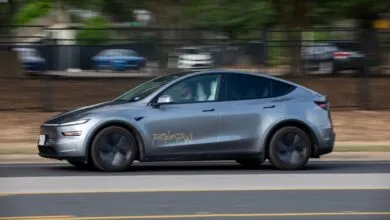
Recent months have presented a mixed operational picture. The launch of a robotaxi service in Dallas and Houston was hampered by severe vehicle shortages, limiting availability. In a regulatory win, the Netherlands became the first European country to approve Tesla’s Full Self-Driving (FSD) Supervised system for use on public roads. Meanwhile, the company addressed struggling Cybertruck sales by initiating bulk purchases from Musk’s other corporate entities.
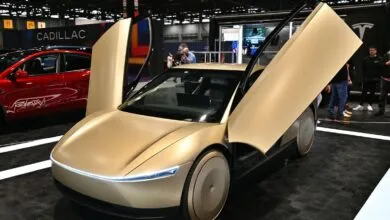
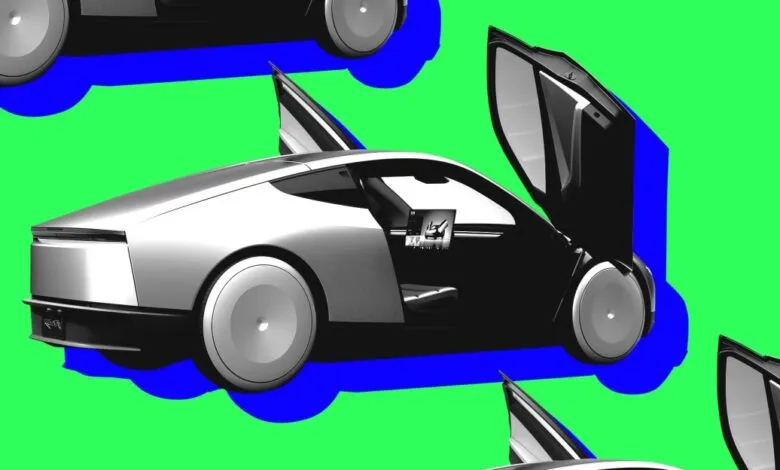
A growing consensus among observers is that executive focus has shifted decisively from mass-market vehicles to moonshot technology projects. This perception is reinforced by the discontinuation of the Model S and X to clear factory space for Optimus and sightings of the steering wheel-equipped Cybercab prototype. However, automotive sales remain the overwhelming source of the company’s revenue. This tension was illustrated by a recent report suggesting Tesla has revived plans for a new, affordable electric SUV, a project reportedly canceled two years prior, indicating the automotive business is still a critical part of the corporate equation.
(Source: The Verge)