Apple’s 24-Year Hardware Veteran Now Leads Its AI Strategy

▼ Summary
– John Ternus will become Apple’s CEO on 1 September.
– He is a mechanical engineer who improved product quality and oversaw the shift to Apple Silicon.
– He advocated for the creation of a separate iPadOS operating system.
– The hardware divisions he leads are responsible for about 80% of Apple’s revenue.
– His management approach focuses on solving systemic issues rather than assigning blame.
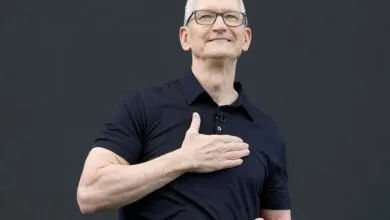
A major shift in leadership is now set to define the next chapter for one of the world’s most valuable companies. John Ternus, a 50-year-old mechanical engineer and a 24-year veteran of Apple, will assume the role of CEO on September 1. His promotion from Senior Vice President of Hardware Engineering places a leader with a deep hardware pedigree directly at the helm, signaling a strategic focus on integrating advanced artificial intelligence with Apple’s core physical products.
Ternus’s career at Apple is a chronicle of foundational hardware successes. He is widely credited with reversing a period of declining product quality, bringing a renewed emphasis on durability and reliability to the company’s flagship devices. His advocacy was instrumental in the strategic decision to create a dedicated iPadOS, recognizing the tablet’s unique potential beyond a scaled-up iPhone. Perhaps his most significant achievement was overseeing the monumental transition from Intel processors to Apple Silicon, a move that redefined performance benchmarks for Mac computers and tightened the company’s control over its entire ecosystem.
This hardware expertise now directly informs Apple’s AI strategy. The products under Ternus’s previous purview, including the iPhone, iPad, Mac, and AirPods, collectively generate approximately 80 percent of Apple’s revenue. His intimate understanding of these devices’ capabilities and limitations is considered a critical asset as the company seeks to embed generative AI and machine learning features that feel seamless and deeply integrated, rather than bolted-on. The challenge is to leverage AI to create tangible, useful enhancements to the hardware experience millions use daily.
Colleagues describe Ternus’s management approach as focused on systemic problem-solving rather than assigning blame, fostering a collaborative engineering culture. However, some observers note that his entire career has been built within Apple’s walls, raising questions about how external perspectives will influence the company’s direction in the rapidly evolving field of AI. His mandate is clear: to ensure that Apple’s next generation of innovation is powered by intelligence as sophisticated as the devices that deliver it.
(Source: The Next Web)