Bret Taylor Declares End of Button-Clicking Era
▼ Summary
– Bret Taylor, CEO of Sierra, believes human interaction with software will soon shift from traditional interfaces to natural language.
– Sierra’s tool, Ghostwriter, autonomously creates and deploys specialized AI agents based on user descriptions, aiming to replace click-based applications.
– Taylor argues that enterprise software like Workday is used infrequently, and natural language agents will let users complete tasks without navigating complex systems.
– Sierra achieved a $100 million annual revenue run rate in under 21 months and was valued at $10 billion after a recent funding round.
– Critics note current AI agent implementation is not fully autonomous, often requiring engineers to constantly update and fine-tune the systems for customers.
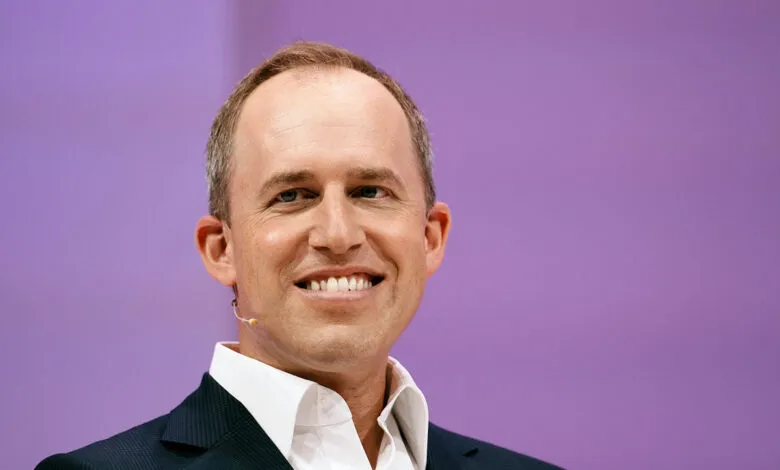
A fundamental transformation in how we use software is on the horizon, moving beyond traditional interfaces toward conversational commands. Bret Taylor, co-founder and CEO of the enterprise AI startup Sierra, argues that the era of navigating complex applications by clicking through menus is ending. He envisions a future where users simply describe their needs in natural language, and an intelligent system handles the rest.
Taylor’s company is actively building toward this vision. Last month, Sierra launched Ghostwriter, a tool designed to autonomously create and deploy other specialized AI agents. This agent as a service model allows businesses to replace specific software interactions with simple language prompts. A user can describe a task, and Ghostwriter builds a custom agent to execute it without requiring the user to learn the underlying application.
The driving force behind this shift, according to Taylor, is the infrequent use of many critical enterprise tools. The former co-CEO of Salesforce points to platforms like Workday, which employees might only use during onboarding or open enrollment periods. “Instead of learning to navigate complex systems,” Taylor explained at the HumanX conference in San Francisco this week, users will soon complete tasks through conversation, bypassing the software interface entirely. “I truly think that’s where the world is going,” he stated.
Sierra is already applying this technology at scale. Taylor claims the startup leverages Ghostwriter to deploy agents at unparalleled speeds, citing the implementation of a custom agent for retailer Nordstrom in just four weeks. The company’s rapid growth underscores market interest; Sierra announced last fall that it achieved a $100 million annual revenue run rate less than two years after its founding. A $350 million funding round led by Greenoaks Capital last September valued the company at $10 billion.
Taylor’s core thesis is that businesses seek outcomes, not software. “Most companies don’t want to make software,” he said. “They want solutions to their problems.” He believes AI agents represent that solution, acting as an intelligent layer that interprets intent and manages execution.
However, the path to fully autonomous agents is not without hurdles. Several technologists and investors note that current AI agent implementation remains far from the hands-off ideal. Many companies offering these systems, including Sierra and legal AI startup Harvey, rely on teams of forward-deployed engineers. These specialists must continually update and fine-tune the agents for each customer to ensure reliable performance, indicating that the technology still requires significant human oversight to function effectively in complex enterprise environments.
(Source: TechCrunch)