Rippling CEO: How to track which employees justify their AI costs

▼ Summary
– Rippling’s new Data Cloud product aims to consolidate the modern data stack (ingestion, storage, transformation, and visualization) into a single system, leveraging its built-in understanding of organizational structure to compete with dedicated BI tools.
– The product can surface hidden inefficiencies, such as identifying an employee spending $30,000 annually on an AI assistant with low ROI, which most companies currently cannot detect.
– Rippling Data Cloud allows users to create live dashboards by analyzing internal data, such as cross-referencing compensation review metrics or correlating support ticket volume from Salesforce with employee scheduling to reveal understaffed teams.
– The system can track AI token spend against employee performance, flagging engineers with high usage and high peer rejection rates on code reviews as potentially generating “slop,” and can automatically cut spending limits or alert managers.
– Rippling also launched a Business Banking product offering high-yield checking and same-day payroll processing, directly competing with fintechs like Ramp, while the company remains roughly two years from cash-flow positive and has no plans for an IPO.
Parker Conrad is making a bold argument: the future of data analytics belongs inside human capital management systems. It’s a claim that, unsurprisingly, positions his company Rippling , which began life as an HR software provider , as a direct competitor to established business intelligence platforms.
His core pitch is that the modern data stack , the sprawling collection of tools companies currently cobble together from multiple vendors , can be consolidated into a single system. Today, moving data from various business systems into a warehouse is a massive industry in itself, handled by companies like Fivetran and Airbyte. You then need a place to store and query it, such as Snowflake; a tool to transform and clean it, like dbt Labs; and finally a visualization layer, such as Tableau, on top. Conrad argues that Rippling knits all of that into one unified system and wraps it in something those other tools lack: an inherent understanding of your organization, its constantly shifting reporting structure, and everything that gets affected when any metric moves up or down. That’s the promise of Rippling Data Cloud, which launches today.
To demonstrate, Conrad shares his screen from his San Francisco office and offers a look at what Rippling discovered when it turned the product on its own workforce. “There were employees doing things like, ‘Claude is so helpful for me , it analyzes my calendar and my email and puts together a plan for me,’” he says. That employee was spending at a run rate of $30,000 a year for this. No one was doing anything wrong, he’s quick to add, but the ROI simply wasn’t there. It’s the kind of insight most companies currently have no way of surfacing.
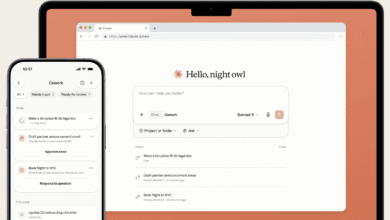
He then pulls up a live dashboard he built by simply asking Rippling AI to analyze the company’s most recent compensation review cycle , distributions of performance ratings, promotion rates by department, and salary ratios, all drillable to the individual level. Another dashboard cross-references support ticket volume from Salesforce with employee scheduling data, showing at a glance which teams are drowning and which aren’t. The enrollments team, he notes, is severely understaffed. The travel team has more than double the unresolved tickets of the platform team.
But the example Conrad seems most excited about is one that touches on a preoccupation many executives share right now: AI token spend. He shows a dashboard combining data from Anthropic’s usage logs, GitHub pull request data, and Rippling’s own performance ratings to see which engineers are actually getting value from their AI tools and which are burning money without much to show for it. “The high performers spend the most, which you would sort of expect,” Conrad says. But the dashboard also flags engineers with high spend and high peer rejection rates on code reviews , people whose colleagues are frequently asking them to redo something. “If your peers are telling you to go back and do this over all the time, maybe you’re just generating a lot of slop,” he says.
The analysis has already prompted Rippling to cut spending limits for certain employees. The product can also be configured to alert managers , or automatically shut off access , when employees blow past a spending threshold. On the question of impact to Rippling’s own margins when customers exceed their token allotments, Conrad doesn’t get specific , “it’s kind of early,” he says , but brushes back the idea that Rippling is subsidizing customer usage. “We’re not losing money,” he says, adding that the goal is to keep it “as affordable as possible for customers.” The base SKU, bundled with Rippling AI, runs around $20 a month, with usage-based charges kicking in for heavier consumers. About 560 companies are currently using it, with new revenue from the product running at roughly $5 million to $7 million a month.
As for which AI models power Rippling’s growing AI suite, Conrad says the company has a new favorite. “We’ve actually moved a lot of stuff from Anthropic to OpenAI recently,” he offers, deeming OpenAI’s 5.5 model as “both better and more cost-effective” for what Rippling is doing. He’s careful to note the balance keeps shifting and the company uses different models for different tasks.
Rippling Data Cloud is the most prominent launch this week, but it isn’t the only one. Earlier this week, the company also announced Business Banking, which offers a high-yield checking account and same-day payroll processing , a feature Conrad describes as eliminating the mental overhead of managing two timelines at once. Most payroll systems require processing two to four days in advance; Rippling’s banking product enables companies to run payroll on the day employees are paid, with changes accepted as late as 1 p.m. on payday. It’s an elbow thrown into territory occupied by fintechs like Ramp, which just raised $750 million at a $44 billion valuation , nearly three times the $16.8 billion valuation Rippling’s investors assigned the company last year , and which has been positioning itself as the financial operating system for companies navigating AI costs. Conrad welcomes the comparison, noting that Rippling’s banking business is far smaller than Ramp’s currently but is “growing very quickly and doing extremely well,” and that “there are some advantages to centralizing all of this.”
Conrad says overall, Rippling is still roughly two years from cash-flow positive, spending 45% to 50% of its revenue on R&D compared to the roughly 8% to 9% that public-market HR companies like Paylocity and Paycom spend. The cost of building everything in-house is the point, in other words, and the payoff is a system that can easily answer questions without pulling from four different vendor stacks to do it. As for an IPO, Conrad makes it very clear he’s in no hurry, even with the window wide open right now. “The public markets have become this retirement community for slow growth companies,” he says, adding that he’s “not religious one way or the other,” even as it sounds very much the opposite. For now, he says flatly: “We are not going public. Not even with a ‘wink, wink.’”
(Source: TechCrunch)