Jeff Bezos Envisions a Trillion-Person Solar System
▼ Summary
– Jeff Bezos envisions a future with a trillion humans living in the solar system to maximize innovation and resources.
– He argues that planetary surfaces are too small and limiting to support such a large civilization.
– His proposed solution is the construction of massive, rotating space stations that act as self-contained habitats.
– These stations would be built using materials from the Moon or asteroids and utilize solar energy for scale.
– His company Blue Origin, with rockets like New Glenn, is working on the foundational step of lowering space access costs.
Amazon founder Jeff Bezos has proposed a future for humanity that is staggering in its ambition. During a 2023 podcast appearance, he described a long-term vision where not billions, but a trillion humans could thrive across our solar system. For Bezos, this isn’t mere fantasy but a logical outcome of pursuing massive scale and leveraging the vast resources beyond our planet.
He argues that such a future would unlock unprecedented human potential. “If we had a trillion humans, we would have, at any given time, 1,000 Mozarts and 1,000 Einsteins,” Bezos stated. His point is that a dramatically larger population would proportionally increase the number of geniuses, artists, and innovators, accelerating progress for the entire civilization. This scale, he believes, is only possible by looking beyond Earth.
The core of his argument is that planetary surfaces are too small to support a civilization of that magnitude. Earth, with its finite land and resources, already sustains roughly 8 billion people. To expand to a trillion would require a fundamental shift in habitat. Bezos dismisses the idea of colonizing other planets as a sufficient solution, viewing them as similarly limited. Instead, he champions the construction of giant space stations.
These would not be small outposts but enormous, rotating habitats that function as floating cities. Built using materials harvested from the Moon or asteroids, they would simulate gravity and contain everything needed for large, permanent communities. “I think most people are going to want to live near Earth, not necessarily in Earth orbit, but near Earth vicinity,” Bezos noted, suggesting a future where humanity spreads across a populated solar neighborhood.
This vision aligns with his longstanding philosophy that Earth should be zoned residential and light industrial, preserved as a pristine home base while heavy industry and large-scale expansion move into space. The abundant solar energy and raw materials available in space make this concept theoretically feasible, offering a near-infinite ceiling for growth compared to planetary limits.
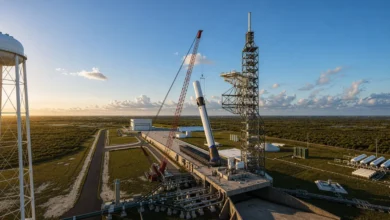
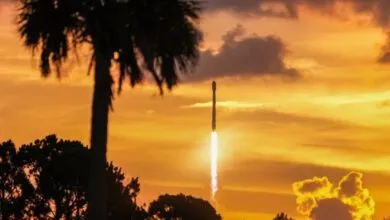
Realizing this future hinges on drastically reducing the cost of space access, a goal central to his aerospace company, Blue Origin. While the development of massive space habitats is likely decades away, projects like the New Glenn heavy-lift rocket represent initial steps toward making space-based industry and construction economically viable. The ultimate takeaway from Bezos’s comments is not an imminent timeline, but a provocative argument that humanity’s growth need not stagnate, it simply needs a new, much larger arena.
(Source: Yahoo Entertainment)