Pokemon Go Data Now Powers Food Delivery Robots
▼ Summary
– Pokemon Go players generated over 30 billion scans of real-world locations, which Niantic has repurposed to train its Visual Positioning System.
– This system, trained on rich metadata from player scans, now powers Coco Robotics’ delivery robots for precise urban navigation.
– Niantic’s CEO stated that the core technology for placing Pokemon and guiding robots safely through the world is the same problem.
– The Pokemon Go community has reacted with amusement, as many players were unaware their scans would train commercial delivery robots.
– The technology is already deployed in Coco’s delivery robots in the US and Europe, and players can still contribute through future game events.
For years, millions of people playing a popular augmented reality game have been quietly contributing to a technological advancement far beyond catching digital creatures. The vast dataset of over 30 billion real-world scans collected by Pokémon Go and Ingress players has been repurposed by Niantic to train its Visual Positioning System (VPS). This same sophisticated system is now being deployed by Coco Robotics to guide its fleet of autonomous delivery robots through complex city streets with remarkable precision.
While engaging with the game, players would often use their smartphone cameras to scan real-world locations like PokeStops and landmarks. This was part of completing in-game tasks to earn rewards. Unbeknownst to most, each of these scans was far more than a simple picture. It captured a detailed photo bundled with a wealth of metadata, including exact GPS coordinates, the angle of the camera, the time of day, local weather conditions, and even the player’s own movement through the space.
Niantic utilized this colossal, player-generated dataset to teach its Visual Positioning System how to recognize and understand the physical world. The AI learned to identify buildings, street signs, and other environmental features with a high degree of accuracy. This technology solves a critical problem for urban robotics: reliable navigation in areas where traditional GPS signals are weak or fail entirely, such as between tall buildings or under dense tree cover. The VPS provides the centimeter-level accuracy robots need to operate safely on sidewalks.
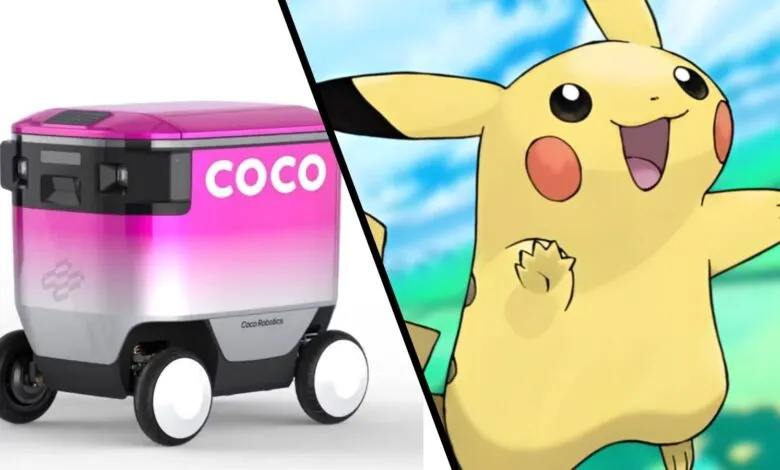
John Hanke, CEO of Niantic Spatial, highlighted the surprising link between gaming and logistics. He noted that the core challenge of making a digital character like Pikachu interact realistically with a real-world backdrop is fundamentally the same as enabling a robot to move safely and accurately through that same environment. The underlying technology for understanding and mapping spatial relationships is identical.
This revelation has generated a mix of amusement and contemplation within the Pokémon Go community. Many players knew their scans contributed to Niantic’s broader mapping ambitions, but the specific application to train commercial delivery robots came as a surprise. Online forums have seen a wave of humorous posts joking about Pikachu secretly mentoring robots, alongside more serious discussions about data usage and the nature of consent in the digital age.
The practical application of this player-trained technology is already underway. Coco Robotics is implementing Niantic’s VPS across its network of distinctive pink delivery robots operating in various cities across the United States and Europe. For players who might want to see a tangible impact, continuing to participate in game activities that involve scanning could, indirectly, help refine the navigation systems that make services like food delivery more efficient. The data gathered today continues to train the systems of tomorrow.
(Source: Dexerto)