800V EVs: How Doubling Voltage Transforms Electric Cars
▼ Summary
– For over a decade, most electric vehicles have used a standard 400 V battery architecture, but many automakers are now adopting 800 V systems.
– The shift to 800 V promises faster charging, better performance, and improved efficiency, as seen in models like the Porsche Taycan and Hyundai Ioniq 5.
– The core physics principle is that higher voltage allows the same power to be delivered with half the current, reducing heat and energy losses.
– A key engineering benefit is the ability to use thinner, lighter wiring and components, which reduces vehicle weight and improves packaging.
– This reduction in required current also makes charging station cables lighter and easier for users to handle compared to thicker 400 V cables.
The shift to 800-volt electrical architectures represents a fundamental change in electric vehicle engineering, moving beyond the long-established 400-volt standard. This technological leap is not merely a spec sheet upgrade; it fundamentally re-engineers the vehicle’s electrical system to enable faster charging, enhance performance, and improve overall efficiency. While 400V systems have powered the EV revolution to date, new models from Porsche, Hyundai, Kia, and others are demonstrating the tangible benefits of this high-voltage approach, reshaping expectations for what an electric car can do.
The core advantage hinges on basic electrical principles. Power delivery is calculated by multiplying voltage and current. By doubling the voltage from 400 to 800 volts, engineers can deliver the same amount of power with only half the electrical current. This reduction in current flow has profound practical implications. Lower current means significantly less electrical resistance and heat generation within the vehicle’s wiring, connectors, and battery pack. This allows for the use of thinner, lighter gauge copper cables and smaller components, which reduces vehicle weight and material costs. The weight savings are not trivial, as high-current wiring harnesses in modern EVs can be exceptionally heavy.
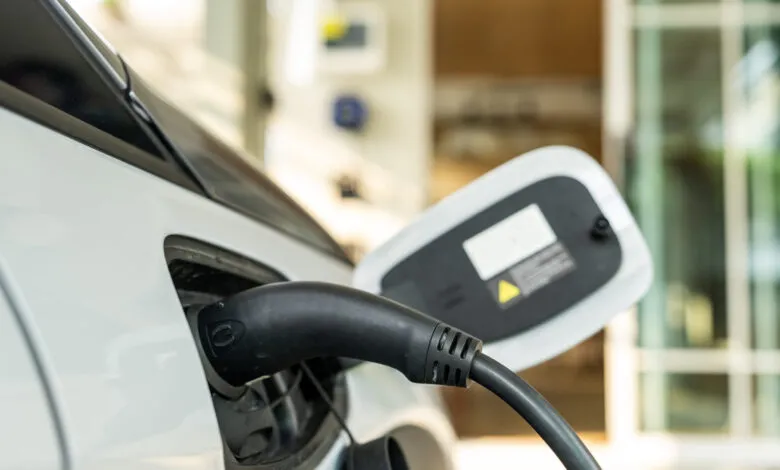
These benefits extend beyond the vehicle itself to the charging experience. High-power 400V charging requires thick, cumbersome, and often liquid-cooled cables to safely manage the immense current needed for fast charging. An 800V system, requiring less current for the same power, enables the use of lighter, more flexible charging cables at public stations. For the driver, this translates to a charging connector that is far easier to handle, removing a notable point of friction from the EV ownership experience.
Perhaps the most celebrated benefit is drastically reduced charging time. Because 800V architectures can accept more power with less thermal stress, compatible vehicles can sustain peak charging rates for longer periods. This allows them to add hundreds of miles of range in well under twenty minutes at capable ultra-fast chargers. Furthermore, the efficiency gains from reduced electrical losses can contribute to either better performance or extended driving range, while the lower heat generation supports sustained high-power output during spirited driving.
Adopting this technology is not without its challenges. It requires a complete rethinking of the vehicle’s electrical ecosystem, including more expensive silicon carbide semiconductors, redesigned electric motors, and sophisticated thermal management systems. There is also a transitional infrastructure hurdle, as many existing fast chargers operate at 400V. Most 800V vehicles use onboard boost converters to accommodate these stations, but to unlock their full potential, they need access to the growing network of ultra-fast 800V-capable charging hubs.
This move to higher voltage is a clear indicator of the EV industry’s maturation, focusing on refinement and solving practical limitations. As costs decrease and infrastructure expands, 800V systems are poised to become the new performance and efficiency benchmark, making electric vehicles more convenient, capable, and appealing to a broader range of consumers.
(Source: Ars Technica)