Tesla Veteran Behind OTA Updates and Robotaxi Exits After 11 Years
▼ Summary
– Thomas Dmytryk, a key director who built Tesla’s OTA update infrastructure and the Robotaxi platform, has left the company after 11 years.
– Under his leadership, the systems he helped develop scaled from supporting a small team to managing a global fleet approaching 10 million vehicles.
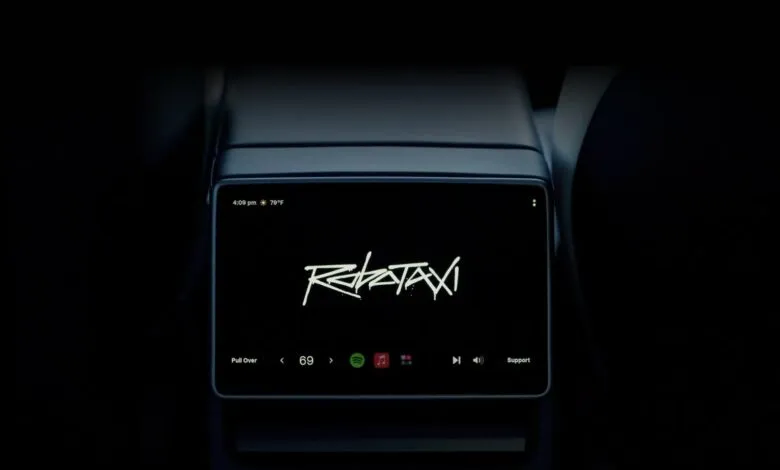
– His team’s later major project was creating the software backbone for Tesla’s newly launched Robotaxi ride-hailing service.
– Dmytryk stated he is departing to focus on his family rather than to take a new job elsewhere.
– The article also details Tesla’s use of the “haha, yes” hedgehog meme in order confirmations, highlighting the company’s whimsical, meme-heavy brand identity aimed at younger buyers.
The departure of a key engineering leader marks a significant moment for Tesla, as the architect behind its revolutionary over-the-air update system and the foundational software for its Robotaxi service has left the company. Thomas Dmytryk, a director who spent 11 years at Tesla, announced his exit, reflecting on a period of immense growth where the automaker evolved from a niche player to a global powerhouse. His work was instrumental in scaling the software infrastructure from supporting a small team to managing a fleet nearing 10 million vehicles, a system every Tesla owner interacts with through their app and software updates.
In a detailed LinkedIn post, Dmytryk recounted joining Tesla in early 2015, when the company had delivered just 50,000 cars and offered only the Model S and Model X. He led a compact five-person team responsible for OTA updates, vehicle connectivity, and remote commands, operating on what he described as a very simple technical stack. His early ambitions were clear: to automate processes, pioneer the concept of the software-defined vehicle, and modernize applications and infrastructure. That small team’s architecture successfully expanded to support Tesla’s explosive global growth, creating the seamless digital experience owners now expect.
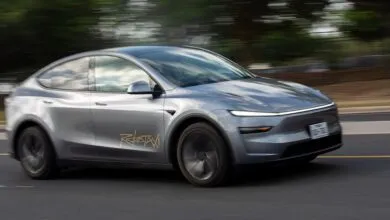
Perhaps his most critical contribution came with the development of Tesla’s ride-hailing capability, a project he called a “moonshot.” His team progressed from an initial proof of concept to building a full production-ready solution for the Robotaxi network, integrating numerous other groups within Tesla before its public launch. His departure coincides with the early-stage expansion of this very service, which is currently fine-tuning its operations and pricing model in initial markets such as Austin. Despite leaving, Dmytryk expressed strong confidence in Tesla’s future, stating the company is “just getting started.”
He clarified that his reason for leaving is not to pursue another position but to step away from Tesla’s famously intense engineering pace to prioritize his family. He plans to support his former colleagues from the sidelines as they advance Tesla’s ambitions in artificial intelligence and robotics. In a separate but characteristic display of Tesla’s unique culture, the company’s order confirmation process features an iconic piece of internet whimsy: the “haha, yes” hedgehog meme.
This image of a small white hedgehog making an “okay” hand sign has become a staple for new customers, replacing the formal corporate communications typical of other automakers. The meme, originating from a viral YouTube video over nine years ago, aligns perfectly with Tesla’s strategy to cultivate a relatable, internet-savvy brand identity that resonates with younger consumers. It signals to buyers that they are joining a community with a distinct personality, one that doesn’t take itself too seriously.
This playful approach extends throughout the Tesla ecosystem. The company frequently names features after pop culture references, particularly from 1980s sci-fi and comedy. Acceleration modes like “Ludicrous Speed” and “Plaid” are direct nods to the film Spaceballs, while the confirmation prompt for engaging Ludicrous mode humorously references classic video game difficulty settings. Features such as Sentry Mode take their name from the Portal video game series, and the software is peppered with Easter eggs, from a touchscreen sketchpad to a “Mars Mode” for the navigation display.
This consistent infusion of humor and nostalgia helps Tesla maintain a sharp distinction from traditional automotive brands, fostering a strong connection with a tech-oriented audience. The one exception to the hedgehog confirmation is for the Cybertruck, which receives a specially designed “cyber hedgehog” image that matches the vehicle’s angular, low-polygon aesthetic. As Tesla continues to innovate, this blend of serious technological ambition and lighthearted cultural engagement is likely to remain a defining trait of the brand.
(Source: Not A Tesla App)