Uncovering Prehistoric Europe’s Lost Cuisine
▼ Summary
– An analysis of prehistoric ceramic cooking pots indicates early Eastern European hunter-gatherer-fishers had a mixed diet of foraged plants and hunted fish/animals.
– Researchers combined multiple analytical techniques on 58 pottery pieces to study ancient food residues, dating from the 6th to 3rd millennium BCE.
– The study found these ancient populations often combined ingredients into region-specific recipes, as revealed by residue analysis.
– Identifying plant remains in ancient diets is particularly challenging, making this interdisciplinary approach valuable for new insights.
– The team selected pottery shards from various ecological settings and used methods like microscopy and lipid analysis to examine crusted food residues.
Understanding the specific foods and cooking methods of prehistoric societies offers a fascinating glimpse into our ancestors’ daily lives and cultural practices. A recent study published in PLoS ONE has shed new light on the culinary world of early Eastern European communities. By analyzing residues on ancient ceramic cooking pots, an interdisciplinary team discovered that hunter-gatherer-fishers in the region had a diverse diet and created distinct regional recipes. Their sustenance came from a mix of foraged plants, hunted animals, and caught fish, which they often combined in specific ways.
This field of research is rapidly expanding. Previous work, such as a 2020 project, involved scientists cooking maize-based meals in replica pots to test methods for analyzing chemical residues. They learned that different parts of a pot tell different stories. Charred bits at the bottom can reveal the final meal cooked, while the built-up patinas on the walls contain a layered history of many prior meals. The specific area sampled dramatically influences the results.
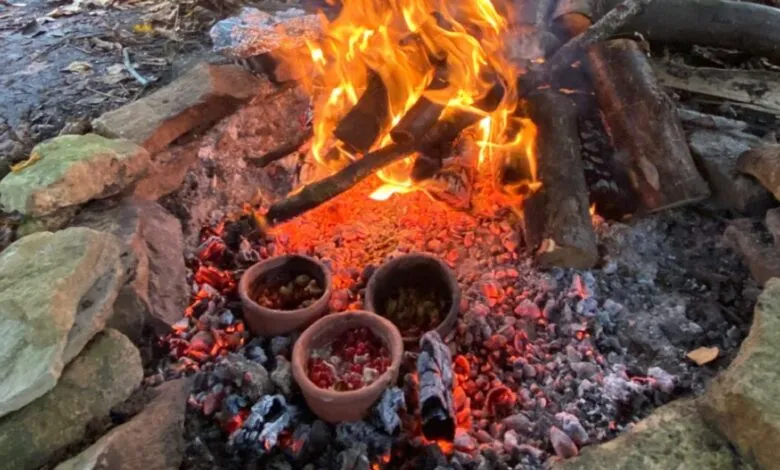
Historically, residue analysis has excelled at identifying animal fats but struggled to pinpoint plant materials. The authors of this new study tackled this challenge by employing a combination of advanced techniques on 58 pottery fragments from the 6th to 3rd millennium BCE. To better interpret their findings, they also conducted practical experiments, cooking various ingredient combinations in ceramic vessels over open fires to see what residues they left behind.
The research team carefully selected pottery shards from a variety of ecological settings, coastal areas, lagoons, riversides, and lakefronts, to ensure a broad geographic representation. They focused on pieces with substantial crusted food residues. Where possible, they also consulted local botanical records to understand which plants were available near each archaeological site.
Their analytical process was thorough. After an initial microscopic examination, they used scanning electron microscopy to capture detailed images of the most heavily crusted areas, revealing their fine structure. Further analysis of the lipids and bulk isotopes present in the residues provided crucial chemical fingerprints of the ancient ingredients. This multi-pronged approach allowed them to move beyond simple identification of animal products and start reconstructing the complex plant-and-animal mixtures that constituted prehistoric meals, offering a richer taste of lost culinary traditions.
(Source: Ars Technica)