AI Agents Will Transform Every Computer Job, Expert Warns

▼ Summary
– A top Anthropic engineer warns that advanced AI agents capable of operating computers will soon disrupt nearly every internet-based job in America.
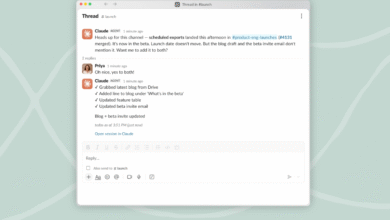
– These AI agents, like Anthropic’s Claude Code, can use digital tools to run commands, analyze documents, message colleagues, and complete tasks across apps.
– The engineer states that productivity per software engineer has increased sharply since Claude Code’s launch, and the job title may start to “go away” by 2026.
– He emphasizes that while the technology is advancing rapidly, it has not yet reached the skill level of a proficient human worker.
– His advice for workers is to experiment with and learn how these AI tools function, rather than being scared of them.
A leading engineer at a prominent AI company has issued a stark warning about the future of work, stating that a new wave of AI agents capable of operating computers will soon reshape nearly every internet-based job in America. Boris Cherny, the creator of Claude Code at Anthropic, believes these systems are advancing at a rapid pace and will fundamentally alter roles for software engineers, product managers, designers, and countless other knowledge workers. He emphasizes that this transformation is not a distant possibility but an imminent shift that will bring significant disruption.
During an appearance on “Lenny’s Podcast,” Cherny explained that unlike conventional chatbots that simply generate text, modern AI agents can actively use digital tools. These systems can execute commands, analyze complex documents, message colleagues, complete tasks across multiple applications, and even build websites. In essence, they are learning to interact with a computer in a manner increasingly similar to a human operator. Claude Code, Anthropic’s AI coding agent built on its Claude models, exemplifies this trend with its recent Opus 4.6 update.
Cherny predicts the impact will extend far beyond coding. “It’s going to expand to pretty much any kind of work that you can do on a computer,” he stated, adding that the transition will likely be painful for many people as job responsibilities evolve. He notes that his own engineering team has already seen a sharp increase in productivity per engineer since integrating Claude Code into their workflow, suggesting these tools are moving from conceptual promise to practical utility.
The engineer has made even more specific forecasts elsewhere, suggesting in an interview with Y Combinator’s “Lightcone” podcast that the traditional job title of software engineer will start to “go away” as soon as 2026. This underscores the speed at which he believes the landscape will change. However, Cherny is candid about the broader societal uncertainty this technology introduces, pointing out that the ability to build software could become vastly more accessible to anyone.
He advocates for a collective conversation about how to manage this shift, recognizing the profound implications for the workforce. For individuals concerned about their careers, his advice is straightforward: engage directly with the technology. He encourages workers to experiment with available AI tools and develop a practical understanding of how they function, rather than reacting with fear. By proactively learning to work alongside these advanced systems, people can better navigate the coming changes in the digital workplace.
(Source: Business Insider)