IEEE’s Crucial Role in Climate Change Negotiations
▼ Summary
– IEEE has strengthened its role as a trusted authority on technology for climate action, becoming the first technical association invited to a UN Climate Change Conference (COP).
– At COP30, IEEE representatives led and participated in sessions on topics like climate resilience, energy transition, and inclusive clean energy pathways.
– Following COP30, IEEE co-hosted the International Symposium on Achieving a Sustainable Climate (ISASC), focusing on deploying clean energy and addressing barriers like grid readiness and skills shortages.
– Key discussions emphasized that while necessary technologies exist, deployment is hindered by infrastructure, financing, and a need for region-specific strategies and coordinated technical standards.
– The events highlighted IEEE’s evolving partnership with global bodies to translate climate goals into action by connecting engineering expertise with real-world deployment challenges.
The Institute of Electrical and Electronics Engineers (IEEE) has solidified its position as a trusted and neutral authority on the role of technology in climate change mitigation and adaptation. This standing was prominently demonstrated when IEEE became the first technical association invited to a United Nations Conference of the Parties (COP) on climate change. Representatives actively participated in COP30 in Belém, Brazil, and subsequently helped host the International Symposium on Achieving a Sustainable Climate (ISASC) in Geneva, engaging with global policymakers, technologists, and industry leaders.
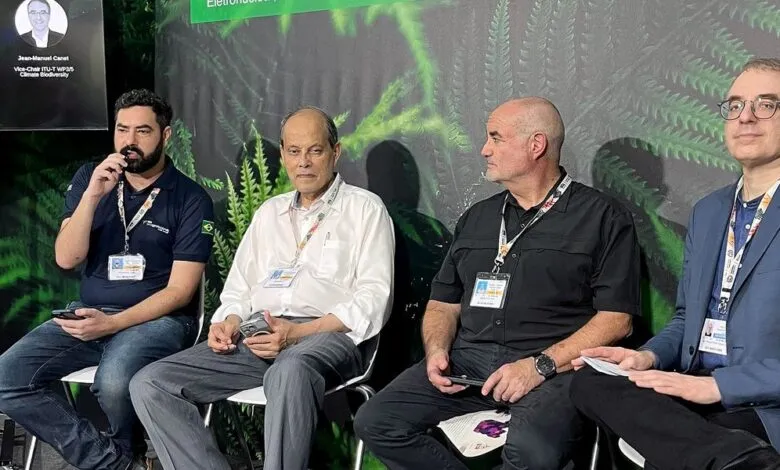
Leading IEEE’s delegation at both events was 2023 IEEE President Saifur Rahman, a noted power and energy expert. He observed that IEEE’s role has matured significantly. “Over successive COPs, IEEE’s role has evolved from contributing individual technical sessions to being recognized as a trusted partner in climate action,” Rahman stated. There is now a clear demand for engineering insight to design practical pathways for technology deployment, capacity-building, and long-term resilience. He was joined by IEEE Fellow Claudio Canizares, a professor and sustainable energy institute director, and IEEE Member Filipe Emídio Tôrres, an entrepreneur and chair of a Brazilian IEEE section.
The delegation engaged in numerous pivotal sessions. Rahman showcased a clean energy project from Shennongjia, China, designed to protect endangered wildlife, illustrating how renewable integration preserves ecosystems. He also chaired discussions on balancing decarbonization between industrialized and emerging economies. Together, the trio participated in panels on clean-tech solutions for remote areas, climate resilience career paths, and the critical need to include marginalized groups in the energy transition. Their visit to the COP Village facilitated conversations with Indigenous leaders about partnerships, acknowledging how climate change severely impacts their lands.
For Tôrres, representing IEEE was a transformative experience. He reported that it reaffirmed how engineering and technology, combined with respect for cultural diversity, are critical for a sustainable and equitable world. He emphasized integrating cutting-edge solutions with Indigenous wisdom to address the crisis effectively. In a follow-up webinar, Rahman and Canizares underscored IEEE’s unique role. “IEEE has a place at the table,” Rahman said, highlighting it as the first technical organization to bring engineering perspectives to COP. Canizares noted the growing collaboration with the UN, positioning IEEE as a vital provider of solutions as governments scale technology deployments.
The ISASC symposium, chaired by Rahman, concentrated on delivering clean energy. Discussions across six themes, energy transition, ICT, financing, case studies, technical standards, and public-private collaborations, yielded crucial insights. A primary takeaway is that while renewable technology exists, most power grid systems are not ready for deployment, hampered by transmission bottlenecks, permitting issues, and a skills shortage. Pathways must be region-specific, considering local resources and social conditions.
Information and communication technologies are central to climate solutions, yet their environmental footprint, especially from AI-driven data centers, raises concerns. The symposium stressed that technical standards are essential for accelerating adoption and building trust in green technology. Currently, fragmented standards hinder interoperability and erode investor confidence, slowing projects. IEEE’s global network was identified as a key channel for training and outreach, particularly in developing regions.
A significant outcome was the presentation of a prototype technology assessment tool. This web-based platform allows policymakers and investors to compare technology options against climate goals using expert-validated data. The overarching conclusion from ISASC is that the primary challenge is not inventing new technologies but aligning systems to deploy existing ones effectively. By connecting engineering expertise with real-world deployment challenges, IEEE is actively working to translate global climate ambitions into measurable, actionable progress.
(Source: Spectrum)