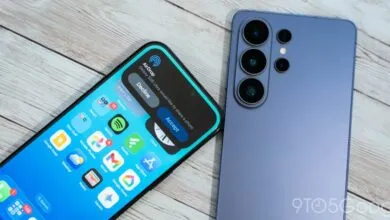
Realme’s New Phone Boasts Massive 10,001 mAh Battery

▼ Summary
– Realme is launching the Realme P4 Power, a smartphone with a massive 10,001 mAh battery, marking its first device after merging with Oppo.
– The phone’s huge battery, comparable to a power bank, is enabled by new “next-gen silicon-carbon anode” battery technology.
– Despite the large battery capacity, the phone’s design is not overly thick and it maintains a relatively light weight of 219g.
– The launch occurs amidst Realme’s transition to becoming a sub-brand of Oppo, raising concerns about the future of its unique software and brand identity.
– The broader context involves Oppo facing market pressures, making this consolidation a strategic move, though the long-term outcome remains uncertain.
Realme is generating significant buzz with the imminent launch of the Realme P4 Power, a smartphone centered around an extraordinary 10,001 mAh battery. This device, set to debut on January 29, promises to deliver exceptional endurance, positioning itself as a powerhouse in a market where battery life remains a top priority for users. The phone represents the first major release since Realme’s strategic move to operate as a sub-brand of Oppo, marking a pivotal moment for the company.
The core proposition of the Realme P4 Power is remarkably direct: it is a standard Android phone built around a colossal power cell. With a capacity equivalent to many standalone power banks and roughly double that of numerous flagship models, this battery is the phone’s defining feature. Realme asserts the device can last approximately 1.5 days on a single charge while maintaining a relatively svelte weight of just 219 grams. This impressive feat is attributed to what the company calls “next-gen silicon-carbon anode” battery technology, which allows for greater energy density.
Perhaps just as notable as the battery’s size is the phone’s design. Despite housing such a massive component, early glimpses suggest the P4 Power does not appear excessively thick. For context, the standard Realme P4 model features a 7,000 mAh battery within a 7.6mm chassis. While the Power variant will undoubtedly be larger, initial impressions indicate the designers have managed to contain the bulk effectively. The full technical specifications remain under wraps until the official unveiling later this month.
This launch arrives during a period of substantial corporate transition. It was recently confirmed that Realme is formally integrating with Oppo as a sub-brand, a strategy reminiscent of OnePlus’s move several years ago. Official statements frame this consolidation as a means to pool resources and reduce operational costs for both entities. However, this restructuring has been accompanied by reports of significant layoffs, leading to industry speculation about Realme’s future autonomy.
Observers are questioning whether Realme’s distinct software interface and brand identity might gradually be absorbed into Oppo’s ecosystem, a pattern witnessed with OnePlus in recent history. These concerns are difficult to dismiss outright. The broader context adds another layer of complexity; Oppo is among the manufacturers anticipated to face considerable pressure from looming memory shortages and rising production costs expected around 2026. In this challenging climate, consolidating sister brands under a unified strategy appears to be a logical, if uncertain, business maneuver.
The long-term implications for Realme’s product direction and market position remain unclear. What is certain is that the Realme P4 Power makes a bold statement with its record-setting battery, aiming to capture the attention of power users worldwide. Its market reception and the evolving relationship between Realme and Oppo will be closely watched in the coming months.
(Source: 9to5 Google)