Charity Speedrun Event Spotlights Indie Games
▼ Summary
– Games Done Quick (GDQ) is a major charity speedrunning event that significantly boosts visibility and sales for featured indie games.
– Developers report substantial sales increases and wishlist additions after their games, like *Bat to the Heavens* and *Small Saga*, are showcased at GDQ.
– While developers appreciate the exposure, they can feel apprehension as speedrunners often exploit glitches, potentially showing a broken or unintended version of the game.
– Some developers view speedrunning techniques as a natural extension of game design and note that a fast run doesn’t necessarily spoil the full experience for new players.
– Beyond commercial benefits, being featured at GDQ is a major personal achievement for developers due to the event’s positive, inclusive, and highly respected community.
The biannual Games Done Quick charity speedrunning marathon does more than raise millions for vital causes; it serves as a powerful launchpad for independent video games. For developers battling the immense challenge of visibility, a feature spot during the live broadcast can transform a project’s trajectory, introducing tens of thousands of viewers to hidden gems they might otherwise never discover.
Ceroro, creator of the platformer Bat to the Heavens, described the experience as “extremely exciting.” Her game, which tasks a character who cannot jump with ascending to the heavens using a bat, was featured during Awesome Games Done Quick 2026. As her first official release, the game had found success, but the GDQ appearance provided a significant surge. “Right after the AGDQ run, there was a large burst in sales and wishlists I haven’t seen since I initially released the game!” she noted.
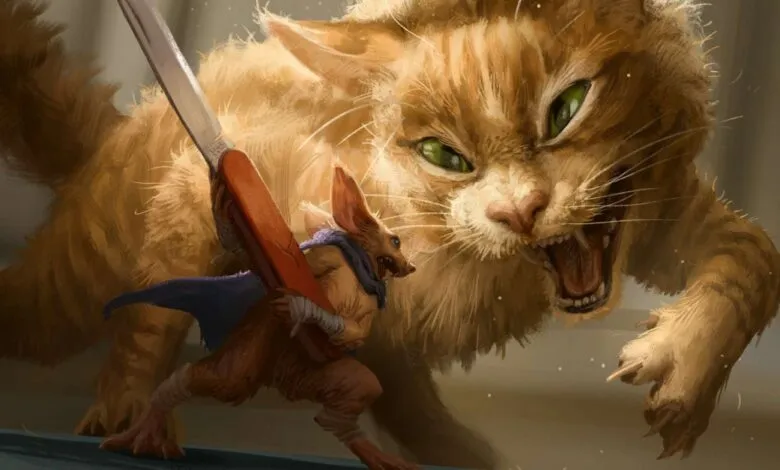
This boost is a common story. Solo developer Darya Noghani saw a similar uptick for Small Saga, a turn-based RPG about a mouse with deicidal ambitions. Following its GDQ feature, they observed a wave of attention. “A number of streamers played the game on Twitch, several commenters recommended the game on platforms like Bluesky, and there was a nice uptick in sales,” Noghani said.
However, this spotlight comes with a unique form of pressure. Watching a speedrunner dissect your creation can be nerve-wracking. “You’re in a state of apprehension,” Noghani admitted. Runners often exploit glitches and develop techniques to bypass large sections of gameplay, potentially presenting a fragmented or broken version of the experience. “Runners are pushing the game to break in particular ways, and you know this is adjacent to the game just crashing and ruining the run.” Fortunately, the Small Saga run was relatively clean, which Noghani considered a win.
Interestingly, some developers embrace this unconventional showcase. “Exploits and glitches are something that taps into the nature of game design,” Ceroro explained. While her game’s run didn’t heavily rely on bugs, she pointed out that the advanced movement techniques displayed were largely within the bounds of her intended design. She also isn’t concerned about the speedrun spoiling the experience for new players. “The speedrun for Bat to the Heavens went by too fast to actually get a good understanding of everything or how the game actually feels, so it’ll be a shock to new players,” she said.
Beyond the tangible sales bump, developers value the personal and professional recognition. Xalavier Nelson Jr., creative director at Strange Scaffold, whose Space Warlord Organ Trading Simulator has been featured, called it a “giant moment” in the development community. “I got about as many congratulations for appearing on Games Done Quick as I have for getting married. It’s that much of a touchstone, and that positive of an overall event and community.”
This community aspect is central to GDQ’s enduring appeal. The event has cultivated a reputation for fostering an inclusive and uplifting environment, implementing initiatives to highlight streamers from marginalized backgrounds. Within its sphere, expressions of support for causes like trans rights receive the same enthusiastic, communal response as a traditional sports chant.
For the developers, the achievement resonates deeply. “It’s been exciting,” Noghani reflected. “Because GDQ is genuinely well-loved by both players and developers, not just for its charitable causes, but because of the efforts they’ve taken to cultivate an uplifting community.” The event provides a rare convergence of philanthropic impact, community celebration, and a vital spotlight for creative work that deserves to be seen.
(Source: The Verge)