Nvidia’s Biggest CES 2026 Announcements Revealed
▼ Summary
– Nvidia launched its next-generation Vera Rubin AI architecture at CES 2026, which it describes as an efficient six-chip “AI supercomputer” for training large models.
– The company announced its Alpamayo portfolio for autonomous driving, aiming for Level 4 autonomy, with the first implementation coming to the new Mercedes-Benz CLA in the US.
– DLSS 4.5 is now available for all RTX GPUs, offering improved image quality and performance, with special benefits like a 6x frame generation mode for the latest RTX 50-series cards.
– Nvidia’s GeForce Now cloud gaming service will expand with native apps for Linux and Amazon Fire TV devices, and will add flight control support for Microsoft Flight Simulator 2024.
– A new line of G-Sync Pulsar monitors launches on January 7th, featuring 27-inch 1440p displays that automatically adjust brightness and color based on ambient room lighting.
The new year has kicked off with a significant wave of announcements from Nvidia at CES 2026, setting the tone for advancements in AI, gaming, and autonomous technology. While the company did not unveil a new generation of consumer graphics cards, it presented a substantial portfolio of innovations. These include the early launch of its next-generation Vera Rubin AI architecture, a major push into self-driving car technology to rival Tesla, and substantial updates to its DLSS, G-Sync, and GeForce Now platforms. This collection of reveals provides a clear roadmap for Nvidia’s expanding influence across multiple tech sectors.
Central to the announcements was the introduction of the Vera Rubin platform, a successor to the current Blackwell architecture. Named for the renowned astronomer, this new design is described as an integrated “AI supercomputer” comprising six key chips: the Vera CPU, Rubin GPU, NVLink 6th-gen switch, Connect-X9 NIC, BlueField4 DPU, and Spectrum-X CPO. Nvidia claims it can train complex “mixture of experts” AI models with the speed of Blackwell but with dramatically improved power efficiency, accelerating the development of next-generation artificial intelligence.
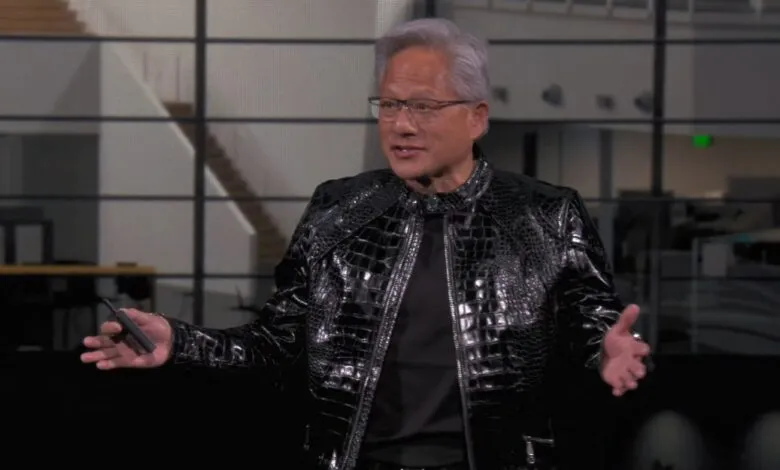
In the competitive arena of autonomous vehicles, Nvidia unveiled its Alpamayo portfolio. This comprehensive suite of AI models, simulation tools, and datasets is engineered to deliver Level 4 autonomy, enabling cars to operate without human intervention under defined conditions. Nvidia CEO Jensen Huang emphasized that the system doesn’t just process sensor data to control driving mechanics; it also performs advanced reasoning about its intended actions. The technology will debut in consumer vehicles with the new Mercedes-Benz CLA, featuring AI-assisted driving capabilities in the U.S. market this year, presenting a direct challenge to established players like Tesla.
For gamers, DLSS 4.5 is now available, bringing enhanced image quality and reduced visual artifacts to all RTX graphics cards. The update incorporates a second-generation Super Resolution transformer model and is supported in over 400 games and applications. This technology is particularly valuable for extending the life of older RTX cards by enabling higher resolution gameplay without sacrificing performance. Owners of newer RTX 40- and 50-series GPUs will see even greater gains, with optimized performance and a new 6x Multi Frame Generation mode exclusive to the RTX 50 series that can generate up to five extra frames for each one rendered.
Nvidia is also broadening access to its GeForce Now cloud gaming service. Native applications are in development for Linux, starting with a beta for Ubuntu 24.04, and for Amazon’s Fire TV Stick 4K Plus and 4K Max devices. This expansion aims to bring high-quality game streaming to users without dedicated gaming hardware. Additionally, the platform is adding full flight control support for Microsoft Flight Simulator 2024, allowing compatible joysticks and yokes from manufacturers like Thrustmaster and Logitech to function seamlessly over the cloud.
Rounding out the reveals is a new lineup of G-Sync Pulsar monitors, set to launch on January 7th. All four models are 27-inch IPS displays with a 1440p resolution and a 360Hz refresh rate, starting at $599. Their standout feature is a built-in ambient light sensor that automatically adjusts screen brightness and color temperature based on room lighting. In bright conditions, the display becomes brighter and cooler; in darker rooms, it dims and adopts warmer tones to reduce eye strain and glare, creating a more comfortable viewing experience tailored to the environment.
(Source: The Verge)