Nvidia solves 8GB RAM issue on one GPU – for a price
▼ Summary
– 8GB GPUs are becoming a bottleneck for gaming and AI, but memory shortages make it a bad time for GPU makers to fix the issue.
– Nvidia announced a RAM upgrade for the laptop GeForce RTX 5070 from 8GB to 12GB of GDDR7 in a blog post about a driver update.
– The 12GB mobile RTX 5070 is otherwise identical to the 8GB version, with the same 128-bit memory interface and 4,608 CUDA cores.
– The mobile RTX 5070 uses the GB206 die from the desktop RTX 5060, not the larger GB205 die from the desktop RTX 5070.
– Despite the RAM increase, the desktop RTX 5070 remains a much more powerful GPU than the laptop version.
Whether you’re trying to play the latest blockbuster at high resolution with maxed-out settings or running local AI models, an 8GB GPU has become a clear bottleneck. Unfortunately, ongoing memory shortages and price surges make this a particularly tough time for manufacturers to address the issue. Earlier this year, rumors suggested that Nvidia’s mid-generation “Super” refresh for the RTX 50-series,which would have boosted RAM,was quietly delayed or canceled, partly due to rising memory costs.
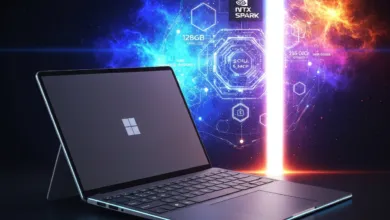
Now, one Nvidia GPU is finally getting a memory upgrade, though the announcement was buried at the bottom of a blog post about a routine Game Ready driver update. The laptop version of the GeForce RTX 5070 will jump from 8GB to 12GB of GDDR7 memory. That’s a 50 percent increase, which should ease performance bottlenecks and offer better future-proofing.
Otherwise, the 12GB mobile RTX 5070 is identical to the 8GB version. The memory still connects via a 128-bit interface, and the GPU still packs 4,608 CUDA cores. The mobile 5070 also uses the same GB206 silicon die found in the desktop RTX 5060, not the larger, more powerful GB205 die in the desktop RTX 5070. So despite the RAM boost, the desktop version remains significantly more powerful.
(Source: Ars Technica)