Our Political Language Is Breaking Down, Too
▼ Summary
– Charlie Kirk’s 2025 assassination triggered a national spectacle of performative grief, political opportunism, and immediate, desecrating internet memes, highlighting America’s deep social incoherence.
– The official response was marked by incompetence and leaks, forcing the Utah governor to read absurd, meme-engraved bullet casings to counter misinformation, yet the right still weaponized the event to launch a “war on antifa.”
– The alleged shooters left almost no traditional manifesto, their sparse, meme-based communications reflecting a generational shift toward “postliterate” political violence where actions eclipse explanatory words.
– The article argues that politics has moved beyond literate debate, with words now serving as performative acts for “owning” opponents or channeling vibes, while real-world violence is legitimized and normalized.
– Figures like Charlie Kirk built influence not through persuasion but by creating infrastructure that harvested enthusiasm for violence, making him a consequential actor in an era where the medium itself is the message.
In a society that functioned with even a basic sense of decorum, the death of a public figure would not be immediately met with threats of violence and crude sexual memes. Yet the America of 2025 proved incapable of such restraint. The assassination of Charlie Kirk arrived pre-loaded with its own wave of desecrating online content, setting the stage for a period of national incoherence where political language itself seemed to fracture.
An initial effort to foster solemnity was quickly overwhelmed. The president ordered flags to half-staff. Politicians and pundits, including ideological opponents, issued statements mourning a man they had relentlessly criticized, awkwardly recasting him as a master persuader. This forced reverence created a brittle atmosphere where any deviation was punished. Comedian Jimmy Kimmel learned this after a mild joke led to a campaign that briefly got his show pulled from the air, a move later reversed by public backlash. The cycle of performative grief and retaliatory outrage was familiar, a reflex of a polarized body politic. But the underlying communication had changed. A telling early sign was a video from the shooting scene, where a witness’s first instinct was to shout, “It’s your boy, Elder TikTok! Shots fired!” The event was being processed and broadcast not as a tragedy, but as content.
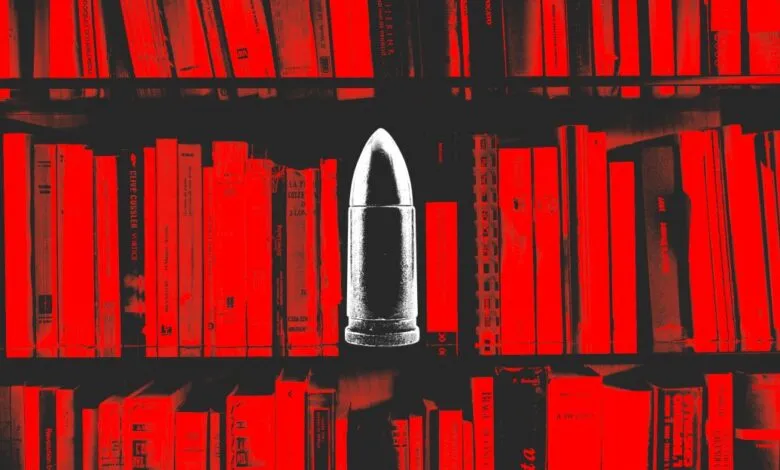
The memeing and conspiratorial theorizing continued unabated, even as official channels attempted a sustained canonization of Kirk. Figures on the right’s fringe floated baseless theories, while the dissonance between the solemn eulogies and Kirk’s own incendiary rhetoric became a source of mockery. The political sphere had entered a post-literate era, where coherent ideology was secondary to vibe and virality. This was made horrifyingly literal when, two days after the shooting, the governor of Utah held a press conference to read aloud the messages scratched onto the recovered bullet casings. The list ranged from a reference to furry roleplay to a video game button combo, ending with a juvenile taunt. It was a profoundly humiliating moment for public discourse, yet the governor was arguably performing a necessary act of transparency to counter rampant misinformation already leaking from law enforcement.
The right swiftly attempted to frame the shooting as an act of “antifa” terrorism, using fragments of the bullet messages as justification. This led to a sweeping but legally nebulous executive order declaring war on the anti-fascist movement. The investigation, however, revealed no clear manifesto or political declaration from the accused shooter. In texts, he allegedly called the engraved messages “mostly a big meme.” The violence was interpreted as political largely by circumstance, a pattern that repeated weeks later when a shooter at an ICE office left a bullet marked “ANTI-ICE.” That phrase, oddly formal and stilted, sparked confusion and further conspiracy theories, despite the shooter’s family insisting he had no strong political views.
The apparent lack of elaborate manifestos from these younger perpetrators marks a shift. Compared to the lengthy, plagiarized tracts of past decades’ political killers, their communications are laconic, fragmented, or ironic. This trend coincides with a broader decline in literacy and deep reading, exacerbated by pandemic-era learning loss. Politics, meanwhile, has grown increasingly detached from factual reality and logical coherence. When these two trends, declining literacy and rising political incoherence, collide, the result is a public square where meaning is unstable. The media’s struggle to impose narrative on meme-scrawled bullets highlighted the growing irrelevance of traditional literate analysis.
This confusion was epitomized by a prominent columnist’s eulogy praising Kirk for “practicing politics the right way” through debate. This perspective fundamentally misunderstood Kirk’s role. He was not merely a “Debate Guy” in a marketplace of ideas. His organization built real-world infrastructure, mobilized crowds, and legitimized political violence through rhetoric, calling for whips against migrants and the military deployment against protesters. His words were performative acts, designed to provoke and mobilize, not to persuade through reason. He understood that in a post-literate climate, words function as tools for aura farming and shitposting, not as vessels for coherent argument.
Consequently, significant resistance to this style of politics has also moved beyond traditional language. In protests, meaning is now carried by whistles, car honks, and absurdist inflatable suits, forms of communication that operate on a visceral, rather than literal, level. To call for civil debate is to miss the point entirely. Politics has transcended words. Where text appears, it often serves merely to express a meme or an aesthetic, a method to channel collective sentiment. Expecting words to carry stable, logical meaning is becoming an anachronism.
The rise in political violence exists on this same spectrum of illegibility. It is action for action’s sake, as crass and consequential as an online meme, reflecting a governing logic that has itself become incoherent. In this environment, the medium is the only message that remains clear, whether it’s a post, a podcast, a meme, a whistle, or a bullet.
(Source: The Verge)