Nvidia’s China AI Sales and Trump Influence Raise Expert Concerns
▼ Summary
– The recent summit between Donald Trump and Xi Jinping resulted in a temporary two-month extension of the trade truce without significant changes to AI regulation or export controls.
– Amidst these diplomatic talks, Nvidia is reportedly securing a major advantage as China considers relaxing restrictions on its banned chips for domestic tech firms.
– Chinese regulators have asked Alibaba and ByteDance to submit plans for importing Nvidia’s RTX Pro 5500 gaming chips to potentially power AI servers.
– Critics are raising concerns that Nvidia CEO Jensen Huang’s influence on President Trump may prioritize corporate profits over national security risks associated with frontier AI.
– Analysts warn that looming US controls could end the trade truce, prompting China to retaliate by cutting off exports of critical rare earth materials.
The Geopolitics of AI Hardware
The recent diplomatic meeting between Donald Trump and Chinese President Xi Jinping resulted in minimal shifts regarding artificial intelligence regulation. Export controls remained off the table, with neither side showing willingness to make concessions. The existing trade truce was extended for only two months, a fragile arrangement that analysts warn could collapse if impending US restrictions are implemented. Such a move would likely provoke China to retaliate by restricting exports of critical rare earth materials.
Despite the lack of high-level regulatory progress, Nvidia secured a significant strategic advantage behind the scenes. Reports indicate that China is considering relaxing its import bans to allow major domestic technology firms to purchase millions of previously prohibited Nvidia chips over the coming year. This potential shift suggests a pragmatic approach to maintaining technological competitiveness despite political tensions.
Gaming Chips Powering Data Centers
According to sources familiar with the discussions, China’s Ministry of Industry and Information Technology approached tech giants Alibaba and ByteDance to obtain detailed plans for acquiring Nvidia’s RTX Pro 5500 chips. While these processors are officially classified as gaming hardware, regulators require companies to outline their intended usage. The expectation is that these chips will be integrated into server infrastructure to support the computational demands of China’s most advanced AI models. This maneuver highlights the growing reliance on consumer-grade hardware to sustain enterprise-level artificial intelligence development.
Corporate Influence on National Security Policy
The intersection of corporate interests and national security policy has become a focal point of debate. As Nvidia cements its status as the world’s most valuable company, its financial success is closely tied to the minimization of geopolitical risks and the uninterrupted acceleration of frontier AI technologies. Critics argue that this dynamic creates a conflict of interest, where the pursuit of profit may overshadow legitimate concerns about technological safety.
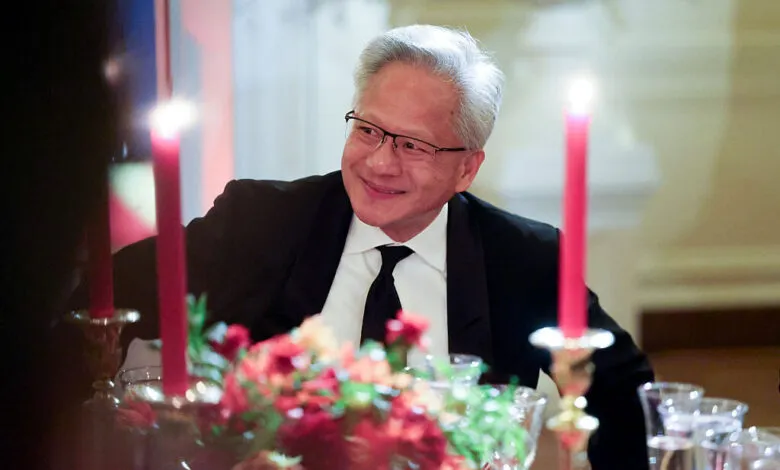
Some observers question whether Jensen Huang, Nvidia’s CEO, holds disproportionate influence over Trump’s decision-making process regarding AI strategy. There is growing apprehension among experts that Nvidia’s commercial motivations might be steering presidential thinking during a critical juncture. The concern centers on the possibility that economic incentives could lead to an underestimation of the risks associated with rapid AI deployment, potentially compromising long-term national security interests.
(Source: Ars Technica)