Nvidia CEO Says Kids Forget Math to AI
▼ Summary
– Nvidia CEO Jensen Huang expressed indifference toward research indicating that AI tools are causing children to forget basic math skills like long division and multiplication.
– Huang admitted that he personally has forgotten his own home address and telephone number due to reliance on technology, stating he can live with this loss of personal data.
– He argued that traditional skills such as basic arithmetic may no longer matter in an era dominated by artificial intelligence and systems thinking.
– The article criticizes Huang’s perspective, suggesting that losing fundamental intellectual dexterity could leave individuals unable to function without devices or explain logical processes.
– Despite acknowledging potential degradation in finer mental abilities, Huang maintains that society will adapt by developing new relevant skills and improved systems thinking capabilities.
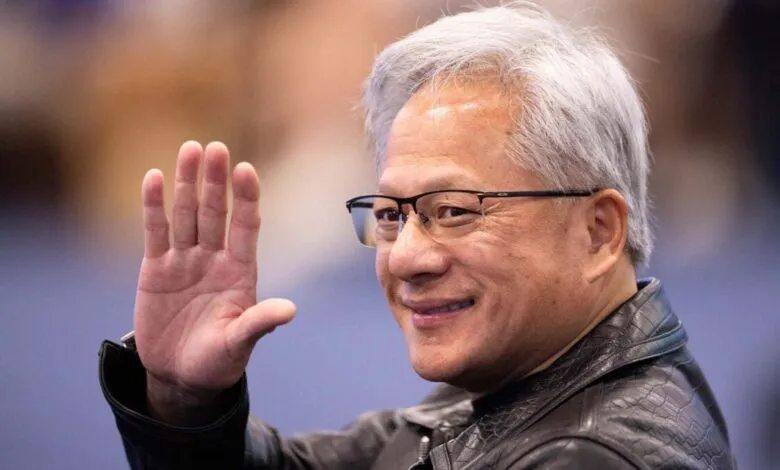
Jensen Huang, the chief executive of Nvidia and a prominent figure in the tech industry, has sparked controversy by suggesting that the decline in students’ grasp of fundamental mathematics is an acceptable trade-off for the rise of artificial intelligence. As Nvidia remains a dominant supplier of the hardware required to power global data centers and AI infrastructure, Huang’s perspective carries significant weight. He appears unfazed by concerns that reliance on AI tools may be eroding essential cognitive skills, including the ability to perform basic arithmetic or even remember personal contact information.
During a recent interview with The New York Times, Huang addressed findings from Chinese research indicating that while AI accelerates homework completion, it fails to ensure long-term knowledge retention. The study suggested that students’ performance on quizzes and tests was deteriorating because they were not internalizing the material. Huang acknowledged this trend but dismissed its severity as a critical issue.
“Try to get a kid to do long division right now,” said Huang. “The multiplication table is starting to be forgotten. Doing square roots, my goodness. Basic math is being forgotten. Does it matter? I don’t think it does. I don’t think it does.”
When pressed on whether certain foundational skills remain indispensable, Huang conceded that some abilities are important but questioned if traditional math ranks among them. He posited that society will likely “discover new ones” as technology evolves. This stance aligns with his personal experience, where heavy dependence on digital assistants has led to a loss of rote memory for everyday details.
“There are a lot of skills that don’t matter,” said Huang.
“My first confession: I actually don’t know my address. It’s completely true…[my wife] Lori will tell you. One day I had to pump gas,it was a few years ago. They needed my ZIP code, and I panicked. I didn’t know my ZIP code. I don’t know my telephone number. I forget these things. I can live with it.”
Huang argued that while individuals might lose some “finer intellectual dexterity” due to AI integration, the broader population would simultaneously evolve into more effective “systems thinkers.” The author of the original report found this explanation vague and unconvincing, interpreting the concept of a “systems thinker” as someone who becomes helpless without their devices. From this viewpoint, such a future entails a workforce incapable of performing simple calculations like 4 x 3 or navigating social interactions that require direct human communication and memory.
(Source: Kotaku)