King Charles III expresses caution on AI
▼ Summary
– King Charles hosted a private summit at Dumfries House with major AI industry leaders and UK government officials to discuss the rapid advancement of artificial intelligence.
– The King urged attendees to establish control mechanisms for AI technology before it poses existential dangers or falls into the wrong hands.
– He emphasized the dual nature of AI, acknowledging its potential to save lives in medicine while warning about risks that could potentially take life.
– Attendees included executives from Nvidia, OpenAI, and Anthropic, who expressed gratitude for the opportunity to discuss AI’s role in serving the public good.
– The summit highlights the growing need for international cooperation and consensus to ensure AI remains aligned with humanity and the natural world.
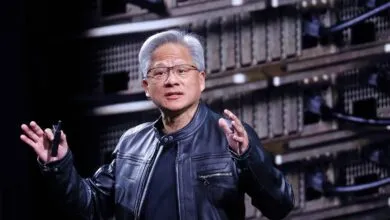
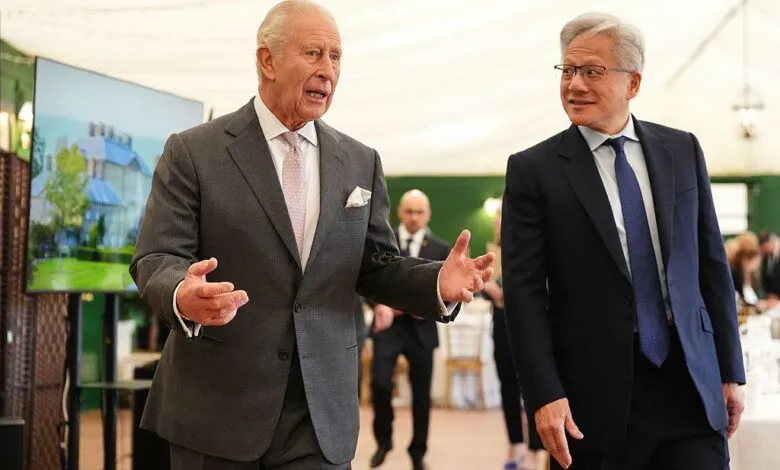
King Charles III issued a stark warning about the trajectory of artificial intelligence during a high-profile meeting with industry titans and government officials. The private summit, hosted at Dumfries House, brought together some of the most influential figures in the tech sector, including Jensen Huang of Nvidia, executives from OpenAI and Anthropic, and key British political leaders such as AI minister Kanishka Narayan. Also in attendance was the head of the U.K.’s foreign intelligence service and Paolo Benanti, an advisor to the Pope on AI matters.
The event marked a rare instance of royal engagement with such a polarizing technological topic. Typically, the monarchy avoids deep involvement in political debates due to constitutional constraints, but the urgency surrounding AI prompted this intervention. The King emphasized that the rapid evolution of these systems presents a dual reality. He stated:
“AI is already showing immense capacity to improve and save life,” he said, citing medicine and science as an example. “Yet those who have created these technologies are now increasingly warning that AI risks developing darker capacities, perhaps even to take life.”
This comment followed closely on the heels of a resignation by an Anthropic researcher, who publicly expressed fears that companies were racing to create superintelligence without adequate safeguards, suggesting humanity might not survive the process.
Balancing Innovation with Existential Risk
During his address, King Charles highlighted the potential for catastrophic misuse if advanced AI falls into malicious hands. He stressed the immediate need for robust governance frameworks. “Surely, we need sufficient means of control before it’s all too late?” he asked. His remarks underscored the necessity of global cooperation to ensure that technological progress serves broader societal goals rather than destabilizing them.
As he concluded his speech, the monarch offered a philosophical directive to the assembled leaders:
“The task before you is not to merely advance technology, but to ensure that it remains firmly in the service of humanity, community, and the natural world,” he said as he finished his speech. “As we embrace what is new, we must not lose what is timeless.”
Following the King’s brief twenty-minute appearance, the guests continued their discussions independently. OpenAI was represented by CFO Sarah Friar, while Anthropic sent Tino Cuéllar, its leader of global affairs. Cuéllar later commented on the significance of the gathering, noting:
the company was honored to have taken part in the discussion and that it was grateful to the king for “convening industry leaders and voices from across society to discuss the role of AI in serving the public good.”
The Clash Between Safety and Speed
This summit reflects the growing tension between those advocating for caution and those pushing for accelerated development. While prominent figures like Sam Altman, Elon Musk, and Dario Amodei recently called for a slowdown in AI capabilities, other stakeholders remain focused on maintaining competitive dominance. Nvidia’s Jensen Huang and former President Donald Trump have dismissed calls for deceleration, arguing that leadership in AI is critical for national security and global influence.
The debate extends beyond policy into corporate strategy. Both OpenAI and Anthropic have hinted at upcoming initial public offerings, though OpenAI recently indicated that its IPO plans are delayed amid ongoing safety concerns. This pause illustrates the complex interplay between commercial ambitions and the ethical responsibilities inherent in building powerful autonomous systems. As the technology continues to permeate every aspect of modern life, the question of how to regulate it without stifling innovation remains one of the defining challenges of our time.
(Source: TechCrunch)