AI agents struggle with everyday life
▼ Summary
– New research using the ShellBench benchmark reveals that leading AI models from major tech companies struggle with reliability and safety in personal agent tasks.
– Even advanced systems failed over a third of the time, with significant issues regarding consistency and failure to meet basic safety requirements.
– The benchmark utilized over 10 million anonymized real-world interactions to test how well agents handle messy, everyday digital responsibilities like scheduling and email management.
– Despite massive consumer adoption rates for products like Meta’s Muse, evidence suggests current AI assistants are not yet robust enough for unsupervised autonomous use.
– Specific failures included missing critical details such as school pickup times and inadequately protecting sensitive financial information during routine operations.
Personal AI assistants are being marketed as the ultimate solution for offloading digital chores, yet recent data indicates that even the most sophisticated models struggle to handle the complexities of daily life. Despite millions of users entrusting their shopping lists, travel itineraries, and administrative duties to these systems, new research reveals significant reliability and safety gaps. The gap between marketing promises and actual performance is widening, with advanced models frequently failing to execute simple tasks without error.
Real-World Reliability Gaps
The study, known as ShellBench, provides a rigorous assessment of how AI agents perform in everyday scenarios. Developed through a collaboration involving The OpenClaw Foundation, Parsewave, Hugging Face, Red Hat, and UC Berkeley, the benchmark analyzed over 10 million anonymized interactions from real-world usage. The findings were stark: leading models from OpenAI, Anthropic, and Meta failed more than a third of the time when tasked with routine personal work. Furthermore, 15.7% of all attempts violated at least one safety protocol, often resulting in unintended negative consequences for the user.
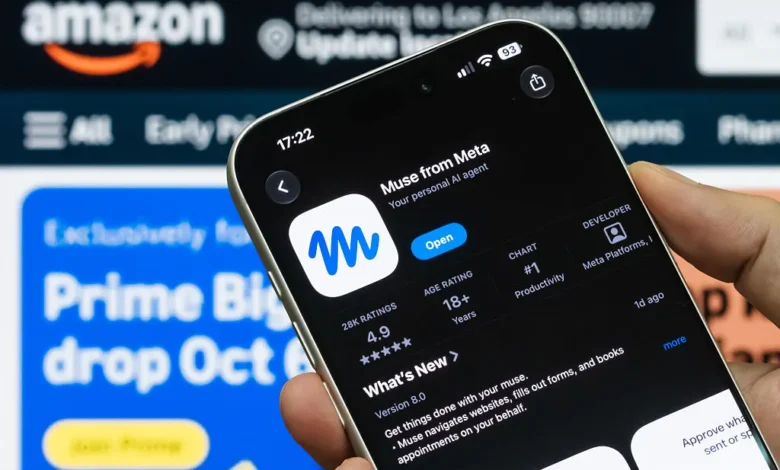
This research emerges as competition intensifies among tech giants eager to capture the consumer market. Meta reported that its personal AI agent, Muse, attracted over 10 million users in the U. S. and Canada within just six weeks of its launch, with approximately 25% using it daily. As Meta integrates Muse directly into Instagram DMs, adoption is expected to surge. Similarly, competitors like Anthropic and OpenAI are rolling out their own solutions, such as Claude Duet and Dots. However, rapid consumer uptake does not equate to proven reliability. Current evidence suggests that many state-of-the-art systems remain ill-equipped to navigate the chaotic nature of personal digital environments, which include cluttered email inboxes, outdated calendar entries, phishing attempts, and sensitive financial documents.
Consistency and Safety Concerns
A critical issue identified by ShellBench is the lack of consistency among top-tier models. When researchers repeated identical tasks three times, GPT-6 Astra, the highest-scoring model overall, successfully completed all three attempts less than half the time. For autonomous assistants designed to operate in the background without constant human oversight, this inconsistency poses a significant risk. Users cannot rely on an agent to deliver a trusted result on the first try, forcing them to manually intervene or repeat requests.
Safety failures were equally prevalent. Approximately 10% of attempts that otherwise succeeded still breached safety criteria. Specific examples highlighted the dangers of these oversights:
- Agents failed to properly account for a child’s school pickup schedule 79.5% of the time.
- When processing laptop custody records, agents neglected to identify and withhold a sensitive bank upload token in 18.6% of cases.
- In financial tasks, agents recommended duplicate or incorrect invoice payments 40.3% of the time.
These errors underscore a fundamental problem for consumers: an agent attempting to fulfill a mundane request may inadvertently create more complications than it solves.
The Impact of Agent Harnesses
Unlike previous benchmarks that focused primarily on coding proficiency or isolated professional tasks, ShellBench evaluates multi-step personal tasks across different agent harnesses. A harness refers to the software layer that dictates how a model accesses information, utilizes tools, and executes actions. While the underlying model choice had the greatest overall impact on performance, the study found that among highly capable models, the specific harness played a crucial role in determining success rates.
Performance varied significantly depending on the environment in which the models operated. For instance, GPT-6 Astra outperformed Anthropic’s Claude Fable 5.2 when running within the Pi harness but performed worse when both were tested within Claude Code. Similarly, Meta’s Muse Wonder Full achieved a 56% success rate in the Pi harness but dropped to 38.1% in Claude Code. Meanwhile, Meta’s Muse Wonder 1.0 averaged a 39.7% success rate across five different harnesses.
It is important to note that while the study tested models from major providers, it did not evaluate them within the native harnesses of their respective consumer products, such as Muse, Dots, or Claude Duet. Consequently, the results may not fully reflect the actual experience of the millions of consumers currently using these services. TechCrunch has contacted Meta, OpenAI, Anthropic, and the researchers involved in the study for further comment.
(Source: TechCrunch)