AMD Brings Improved FSR 4 Upscaling to Older GPUs After Over a Year
▼ Summary
– AMD announced FSR 4 would initially only support RDNA4-based Radeon RX 9000-series GPUs.
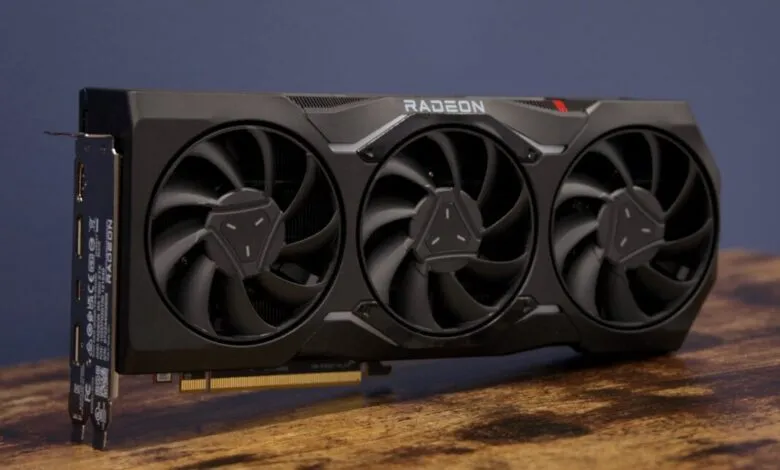
– AMD SVP Jack Huynh announced FSR 4 will roll out to RDNA3 and RDNA3.5 GPUs starting in July, including the RX 7000 series and integrated GPUs.
– Support for RDNA2-based GPUs, including the RX 6000 series and Steam Deck, is planned for early 2027.
– Porting FSR 4 to older GPUs required making it work with INT8 hardware instead of the FP8 format used by RDNA4.
– The announcement did not include performance comparisons for FSR 4 on older GPUs.
When AMD first unveiled FSR 4 early last year, the excitement was tempered by a significant limitation. The latest iteration of its FidelityFX Super Resolution technology promised noticeably sharper, hardware-accelerated upscaling, but only for those who owned a Radeon RX 9000-series GPU built on the RDNA4 architecture. Everyone else with an older Radeon card was left out.
Since then, the roster of compatible 90-series hardware has remained slim. It includes the RX 9070 XT, the RX 9070, both 8GB and 16GB versions of the RX 9060 XT, and an RX 9060 model reserved exclusively for system integrators rather than retail buyers. Notably absent from that list are any integrated graphics solutions, meaning popular devices like AMD-powered thin-and-light laptops and gaming handhelds such as the Steam Deck were completely shut out.
Now, more than a year after that initial announcement, AMD is finally changing course. Jack Huynh, the company’s Senior Vice President of Computing and Graphics, has confirmed that FSR 4 will be extended to older GPUs. The rollout is scheduled to begin in July, starting with RDNA3 and RDNA3.5-based hardware. This covers the Radeon RX 7000 series and integrated graphics like the Radeon 890M and Radeon 8060S.
The plan doesn’t stop there. By early 2027, support will expand to the RDNA2 architecture, which includes the Radeon RX 6000 series, the Radeon 680M integrated GPU, and the chip powering the Steam Deck. This broader compatibility also opens the door for FSR 4 on consoles like the PlayStation 5 and Xbox Series X and S, both of which rely on RDNA2-based GPUs.
There is, however, a trade-off to consider. Bringing hardware-backed FSR 4 to these older architectures required some engineering compromises. RDNA4 natively supports the FP8 data format in its AI accelerators, which is key to the technology’s performance and efficiency. To make it work on RDNA3 and RDNA2 chips, AMD had to adapt the upscaling to run on their INT8 integer-based hardware instead.
Huynh’s presentation did not include direct performance comparisons, but the implication is clear: while older GPUs will gain access to FSR 4’s superior image quality, they may not deliver the same level of performance as the native RDNA4 implementation. Users on older hardware should expect a potential hit to frame rates when enabling the feature.
(Source: Ars Technica)