Robot Butler Dreams Lack Legs
▼ Summary
– Humanoid robots are gaining attention at tech shows like CES and IFA, with companies showcasing human-shaped bots for domestic use.
– The author argues that fully humanoid housekeepers are impractical due to the unpredictable nature of homes and difficulties with tasks like opening bottles or navigating stairs.
– Historical tech trends suggest that specialized gadgets perform better than expensive multi-purpose machines that struggle with specific functions.
– Safety concerns are highlighted, noting that heavy mechanical robots pose risks to pets and humans in close proximity.
– A more practical solution is proposed: an AI-powered smart home controller that orchestrates existing autonomous devices rather than relying on a single humanoid robot.
The dream of a humanoid robot serving as a household butler has long remained in the realm of science fiction. While technologies like hoverboards and self-tying sneakers have faded into obscurity, the prospect of a mechanical housekeeper entering our homes felt distant until recently. This year, however, marks a significant shift. The consumer electronics landscape has been dominated by humanoid figures, with dozens appearing at CES, including several models specifically engineered for domestic use. US-based company 1X has already deployed its $20,000 Neo robot in private residences to perform chores, albeit with heavy reliance on remote human assistance. Meanwhile, the upcoming IFA tech show in Berlin will feature a runway event showcasing around half a dozen humanoids, primarily from China, demonstrating rapid advancements in mobility and skill acquisition.
Despite this surge in hype, one must question whether we truly need 170-pound metal constructs capable of accidental harm to manage our households. After extensive interaction with these devices, two distinct realities emerge regarding the future of home automation.
The Impracticality of Full Humanoids
A fully humanoid robot housekeeper is simply not practical for modern living. Unlike controlled factory environments, homes are chaotic and unpredictable spaces. Furthermore, most residences contain stairs, which require robots to either fly or possess legs capable of exerting immense force. Neither solution is ideal for a family setting; consider the failure of Ring’s Always Home flying camera, which struggled with the complexities of aerial navigation in residential settings.
History also suggests that few gadgets excel at multiple tasks simultaneously. We do not need an expensive “jack of all trades” that masters none. During recent trade shows, I challenged various humanoid robots to open a standard bottle of laundry detergent. None succeeded, often citing a need for further learning data. This highlights a critical gap: dexterity remains a formidable hurdle for general-purpose robots.
A Smarter Path: The Robot Brain
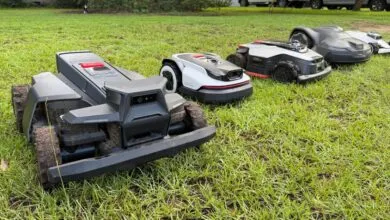
Rather than a single monolithic machine, the more viable solution is a robot brain: an AI-powered controller that orchestrates existing smart home devices. Instead of buying a new robot to handle every chore, imagine a system that proactively manages your environment based on real-time needs. It could dispatch a robot vacuum immediately after a pet spills food, trigger the washing machine during off-peak energy hours, or command a lawnmower when grass reaches a certain height.
Current smart homes rely heavily on manual triggers or rigid routines. An autonomous system would use reasoning to adapt to unpredictability. Concepts like Samsung’s Ballie (which never launched) and LG’s CLOiD hint at this vision, aligning with long-term goals set by Amazon’s Alexa Plus and Google’s Gemini for Home. While no company has fully realized this yet, Tuya is launching Doova, an AI companion for seniors. Though it lacks arms, Doova uses dynamic facial expressions and cameras to monitor residents, initiate emergency video calls, and control lights and appliances.
The Middle Ground: Wheeled Robots with Arms
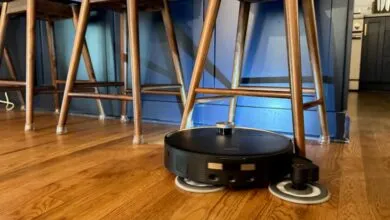
The appeal of manual assistance cannot be ignored. Tasks like picking up clutter or loading dishwashers require hands, even if they are clumsy. Testing a robot vacuum with an arm revealed that while the concept is sound, execution is currently flawed. However, the industry is moving toward a middle ground: wheeled robots with arms.
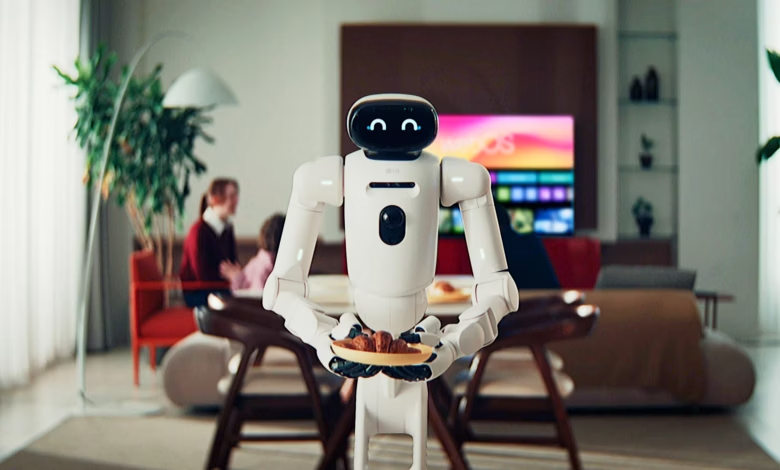
LG’s CLOiD exemplifies this approach. Equipped with arms boasting seven degrees of freedom and five individually actuated fingers, CLOiD can perform simple physical tasks such as folding clothes, retrieving items from the fridge, and loading washing machines. At CES, I witnessed CLOiD successfully handling these duties, though it still struggled with complex manipulations like unscrewing a detergent bottle.
To accelerate development, LG is training hundreds of CLOiD units at a new data factory in Seoul. By year-end, this initiative aims to generate 100,000 hours of training data,equivalent to 12 years of experience,fed into a robot foundation model built on Nvidia Cosmos technology.
Ultimately, the future of home robotics does not lie in a single, all-powerful butler that few could afford. It lies in a coordinated team of specialized robotic machines managed by a central intelligent system. If that system includes a pair of hands capable of opening a stubborn laundry detergent bottle, so much the better.
(Source: The Verge)