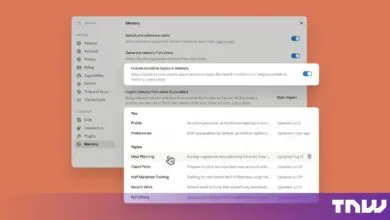
Claude Cowork Now Remembers Your Chat History

▼ Summary
– Anthropic has merged the memory systems of Claude chat and Claude Cowork to allow seamless context sharing between research and action phases.
– Users can now view, edit, or delete retained information, giving them greater control over their AI’s long-term memory.
– The update eliminates the frustration of rebriefing the AI by maintaining continuous context across different interaction modes.
– Memory is updated in real-time during chats rather than summarizing only at the end, facilitating smoother transitions between tasks.
– Sensitive personal data is excluded by default but can be enabled by users, while strictly prohibited items like government IDs remain unsaved.
Anthropic has unified the memory systems of Claude Chat and Claude Cowork, ensuring that the AI assistant retains context across different modes of interaction. This significant update addresses a major pain point for users who previously had to repeatedly rebrief the AI when switching between casual conversation and collaborative workspaces. By merging these distinct memory architectures, Claude now operates as a continuous digital assistant rather than two fragmented tools, allowing for a seamless transition from research to execution.
Seamless Context Retention Across Modes
Prior to this integration, users often experienced frustration when moving from brainstorming ideas in chat to implementing them in Cowork. The AI would lose track of project details, forcing users to manually re-enter information such as project scope, key stakeholders, or specific constraints. With the new system, any relevant data learned during a chat session is immediately available in Cowork. For example, if a user discusses conference logistics in chat, including speaker names, locations, and attendee counts, Cowork will already possess this context when drafting agendas or updates. This eliminates redundant input and allows the assistant to focus on actionable tasks based on established knowledge.
The architecture behind this change also alters how information is stored. Instead of waiting for a conversation to conclude before summarizing and saving insights, Claude now adds topics to its memory pool in real time. This dynamic updating ensures that even ongoing chats contribute to the shared knowledge base instantly, facilitating smoother transitions between the two interfaces without data lag or loss.
Enhanced User Control and Privacy Standards
Anthropic is providing greater transparency and control over what information is retained. Users can now view, edit, or delete specific memories related to any topic directly within the interface. This feature empowers individuals to curate their AI’s knowledge base, removing outdated or irrelevant details while preserving important context.
Privacy remains a central pillar of this update. By default, Claude is configured to exclude sensitive personal information from its memory storage. This includes health data, race, ethnicity, religious beliefs, political affiliations, and gender identity. However, recognizing that some users may require deeper personalization, Anthropic offers an opt-in toggle labeled “include sensitive topics in memory.” If enabled, the app will notify users whenever such sensitive data is saved, ensuring awareness and consent.
Strict prohibitions remain in place for certain categories of data. Claude will never store government-issued identification numbers, Social Security numbers, criminal history, immigration status, or any other information that violates the company’s acceptable use policy. These safeguards are designed to protect user privacy and maintain ethical standards in AI interactions.
Availability and Implementation
The updated memory feature is automatically enabled for all users on Free, Pro, and Max plans. It is accessible across web browsers, desktop applications, and mobile devices. To take advantage of these improvements on iOS and Android, users must update their apps to the latest version. This widespread availability ensures that both individual creators and professional teams can benefit from a more cohesive and intelligent AI experience without additional configuration barriers.
(Source: TechCrunch)